Online Reporter
Mthabisi Tshuma, [email protected]
FROM the borderlands of Mangwe District in Matabeleland South, Simphiwe Vuyelwa Mguni is carving her own path in Zimbabwe’s media and political space.
The daughter of the late former Zanu PF deputy chief whip Cde Obedingwa Mguni and ex-Mangwe legislator Cde Hlalani Mguni, she grew up immersed in politics but never envisioned herself in public office.
Instead, she set her sights on working behind the scenes to inform communities about the developments shaping their lives.
That changed when fellow young leaders in the province urged her to step forward.
Today, she serves as a Proportional Representation councillor with Mangwe Rural District Council. She also holds roles as National Secretary for Information and Publicity at Citizens Against Economic Sanctions Zimbabwe, continental head of Communications and PR at Arise Women of Africa, and founder of the Mat South Information Desk.
In this interview with Chronicle Mat South Edition, reporter Mthabisi Tshuma (MT) speaks to Clr Mguni (SM), who reflects on her journey into public service, her drive to amplify rural voices, and what keeps her focused on community-led change.
MT: What first pushed you to get into politics as a young person?
SM: My journey into politics began in a very memorable manner. I hadn’t thought of myself as someone who wanted to hold any active political role at this age. On my way back from a function in Esigodini in 2023, I was called by a Youth League leader from the Zanu-PF Matabeleland South Youth League, whom I had become acquainted with through my work in the province with Youths in Tourism. They asked me to meet them in Bulawayo to discuss something.
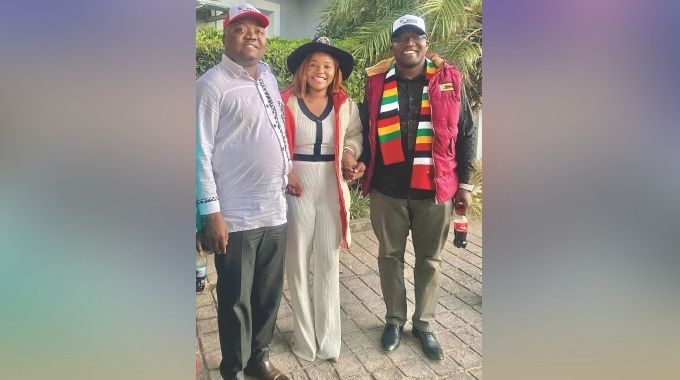
In Bulawayo, I found Zanu-PF National Secretary for Economic Affairs Cde Admire Ndlovu, Provincial Chairman Cde Moses Langa, Provincial Treasurer Cde Lulamani Nleya, Provincial Political Commissar Cde Lance Phiri, and now Deputy Director of the Disability Department of Zanu-PF Thokoza Hlongwane, who was then a Provincial Executive member. Previously, a few of the leaders had, in their individual capacities, approached me about applying for the Women’s Quota PR councillor position. I had politely declined, as I did not want to take on an active role in politics at the time.
What I believed would be an ordinary meeting to exchange pleasantries became an intervention of sorts. They strongly encouraged me to submit my application for the Women’s Quota councillor post in Mangwe, as they collectively believed it would be an excellent fit for me. I could not refuse, and now, the rest is history.
MT: Was there a specific moment or issue in your community that made you say “I need to be in this room”?
SM: I remember hearing statistics on Zimbabwe’s population, showing that the youth age group, those aged between 18 and 35, is now the largest demographic in the country. When examining the last three census trends, the youth population has been steadily increasing.
I recall hearing this statistic, verifying that it was indeed the case for Mangwe District, and thinking: I belong where I am. If youths are the largest demographic group, then surely they need more representation in governance. Surely there is a need for me to play an active role.
MT: What’s the one thing you want people in your district to say about you five years from now?
SM: In five years’ time, I would like people in Mangwe District to say, “She did her best to uplift the people of Mangwe, empower the youths and create sustainable development.”
MT: How does your vision for the community differ because you’re coming in as a young woman in politics?
SM: My vision for the community aligns with that of His Excellency President Emmerson Dambudzo Mnangagwa — to see an upper-middle-income economy by the year 2030. I would like to see Mangwe District achieving that status as well.
Where my vision differs may be in my emphasis on youth participation. I want to see young people driving development as active participants, not bystanders.
MT: What projects are you driving through the RDC, and which are you especially proud of?
SM: There are two projects I am particularly proud of. The first is coordinating the Tonganyika Skills Development Programme in Mangwe District. The programme has seen over 1 000 youths gain practical skills to improve their livelihoods. Three businesses have already been started by graduates, while others have secured employment locally and internationally. We continue to monitor and guide the graduates, working closely with the Ministry of Youth Development, Empowerment and Vocational Training.
The second is the Mangwe RDC Investment Committee, which is expected to be the vehicle through which council drives development in the district. After much lobbying and debate in the council chambers, the committee was formed and began operating in early 2025. I was honoured to be appointed chairperson, and I believe that, if properly utilised, it can drive tangible economic development and help achieve an upper-middle-income economy for Mangwe by 2030.
MT: What has been the biggest challenge in getting those projects off the ground, and how are you handling it?
SM: The biggest challenge has been securing buy-in for ideas, along with navigating gender social norms. By this, I mean that stakeholders are often reluctant to embrace new ideas or concepts that I present, and this reluctance is sometimes amplified by the fact that I am a young woman. Ideas around economic development or empowering large groups of youths are often expected to come from older individuals, mostly men.
I overcome this by being persistent, resilient and tenacious. I do not get discouraged easily. I continue presenting my ideas until stakeholders come on board and implementation can begin.
MT: How do you balance the demands of the RDC with your other responsibilities without burning out? What’s your system?
SM: Burnout is inevitable; however, balance is key. I intentionally schedule time to relax and enjoy being at home, whether by reading books or catching up on series, so that I do not become overwhelmed by my duties.
MT: Who has been your biggest mentor or support system in this journey so far?
SM: My biggest mentor has always been my late father, Cde Obedingwa Mguni. He taught me a great deal during his lifetime. He ensured we travelled together so that I could fully understand what work in governance and public service, particularly in Mangwe District, entailed.
My support system is my family — my brother Bongani Mguni and my mother, Hlalani Mguni — along with my political seniors who have become like family away from home. These include Hon Minister Dr Evelyn Ndlovu, War Veterans League NPC Cde Ntombiyakhe Ndlovu, Provincial Chairman Hon Minister Nqobizitha Mangaliso Ndhlovu, Hon Minister Albert Nguluvhe, Hon Fisani Moyo, Hon Deputy Minister Dingumuzi Phuti, Cde Nyengeterai Mahofa, the Zanu-PF Matabeleland South and Bulawayo Metropolitan Province Youth Leagues, Citizens Against Economic Sanctions (CAES) Zimbabwe leadership, Arise Women of Africa leadership, the Mat South Information Desk, Mangwe District government departments, Zanu-PF Mangwe District Women’s League, the Plumtree diaspora community, and the Plumtree Town business community, among others. Together, these stakeholders form a strong support system that keeps me going.
MT: What is your dream for yourself politically, and what’s your dream for young people who want to follow a similar path?
SM: My dream in politics is to leave a legacy of “high impact”. I may not have a specific position in mind, but I am very clear about the type of legacy I want to build.
For young people in Mangwe, my challenge is this: I would like to see them taking a more active role in governance, contesting in more elections, and becoming drivers of the empowerment and development they wish to see in their communities.
They must pursue their goals with confidence, knowing that if they fall, those of us who have walked the path before them will be there to support them. — Follow on X: @mthabisi_mthire