Theseus Mauruki Shambare
Features Writer
THE first sign that agriculture is changing in rural Nyanga, does not come from the fields, but from a phone.
A WhatsApp message flashes on a cracked smartphone screen.
“How much for 50kg kidney beans?”
The sender is not a neighbour looking for food. It is a buyer connected to a wider market system in Harare.
Within minutes, a rural farmer who once depended on physical markets is negotiating through a digital platform that links village production to urban demand.
For 23-year-old Desmond Tatenda Nyahokwe, this has become normal.
But behind the convenience of digital agriculture lies a deeper contradiction shaping farming across Southern Africa.
Young farmers are entering markets faster than systems are allowing them to own them.
They are producing. They are connecting with buyers. They are embracing technology. But the power to determine prices, standards and value remains largely outside their hands.
In Samanyika village, Ward 13 in Nyanga, agriculture is not a new venture for Nyahokwe. It is a family inheritance.
“My parents and grandparents used to produce paprika, maize, sorghum, millet, groundnuts and peanuts,” he said.
After studying commercial agriculture at Magamba Training Centre, he returned home with ambitions beyond traditional farming.
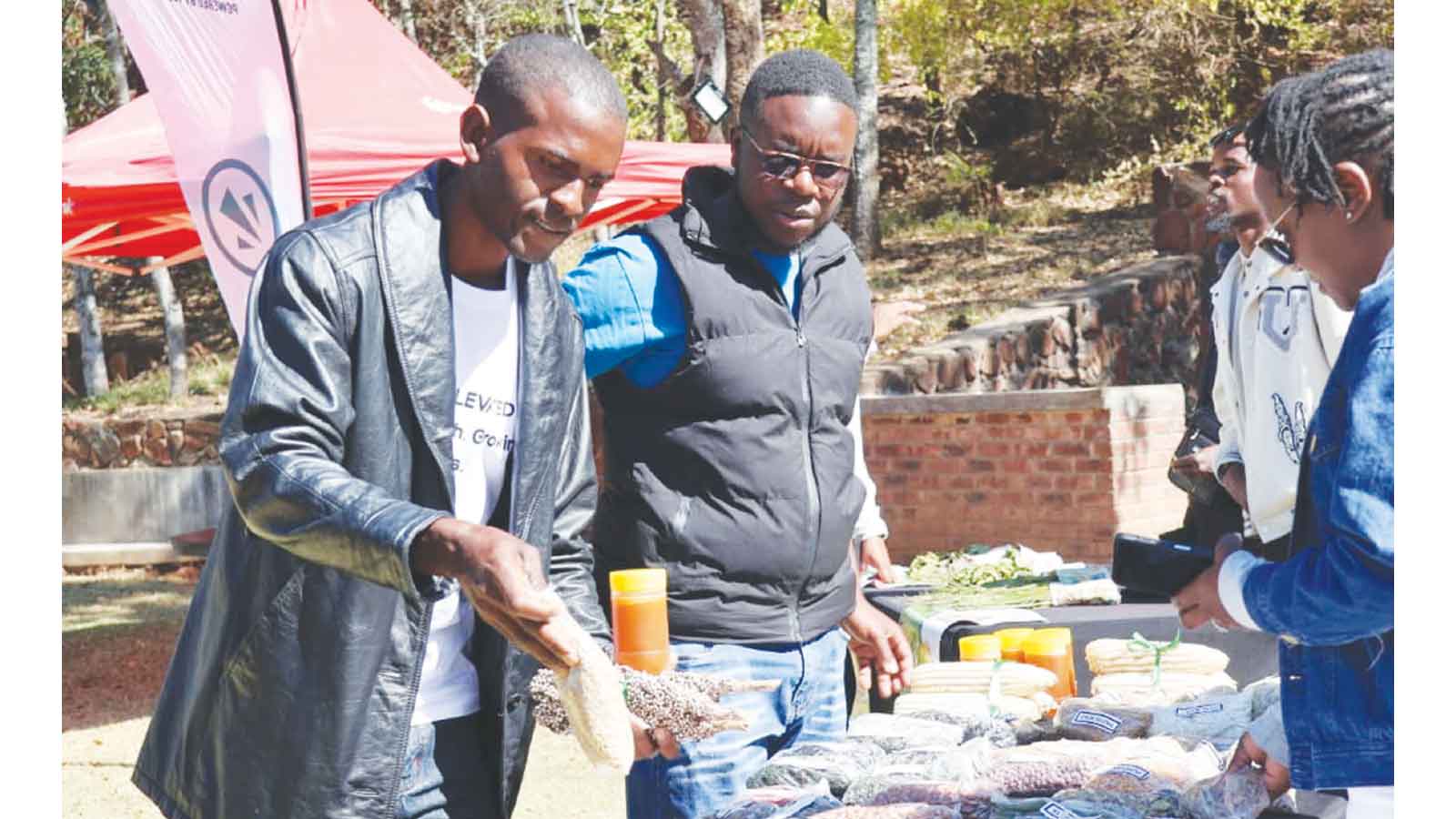
Today, he produces honey, maize, sugar beans, butter beans and processes maize.
But the biggest transformation has not been what he grows.
It has been how he sells.
“We use WhatsApp, TikTok and Instagram. These are no longer just social platforms. They are markets,” he said.
Through youth-led agribusiness programmes supported by Restless Development, Nyahokwe and other young farmers are increasingly connecting directly with supermarkets, processors and commercial buyers.
The challenge is that demand is no longer the biggest obstacle.
Capacity is.
“The demand has now grown that we are struggling to meet it,” he said.
Yet this success reveals the biggest weakness in Southern Africa’s agricultural transformation. Youths are producing, but they are not entering the systems that determine value.
A bag of beans produced in Nyanga does not end its journey at the farm gate. It enters a wider regional food system shaped by transport networks, aggregation companies, retailers and cross-border demand.
Agriculture in Southern Africa is already integrated. But the integration is uneven. Produce moves, while value does not always move with it.
At a collection point in Nyanga, the reality becomes clear.
A buyer arrives to inspect a consignment of beans destined for a larger market. However, part of the produce is rejected, not because it cannot be consumed, but because packaging and market requirements do not meet standards demanded by the aggregation system.
The farmer is left with fewer options. The market connection exists, but the farmer’s control ends early.
This is the hidden challenge of regional agricultural integration. Small producers are connected to markets, but often remain at the weakest point of the value chain.
Across Southern Africa, the same pattern is emerging.
Young people are increasingly participating in agriculture, but barriers around land, finance, storage, logistics, certification and market access continue to limit enterprise growth.
The Food and Agriculture Organisation of the United Nations (FAO) has repeatedly highlighted that agrifood systems remain among the largest sources of employment for young people, particularly in developing countries, but many youths remain concentrated in informal and low-return activities.
FAO Partnerships and UN Collaboration Division director Lauren Phillips has noted that agriculture has the potential to create opportunities for young people, but structural barriers, such as access to land, continue limiting their ability to build viable enterprises.
The challenge is not that young people are avoiding agriculture. It is that agricultural systems have not adapted to the generation already entering the sector.
This reality is captured in the youth-led study “Driving Growth: Catalysing Youth-led Agribusiness for Zimbabwe’s Economic Revival”, conducted under the Agri-ELEVATE D project.
The research, involving 521 participants across Harare and Nyanga, found that youth participation in agriculture is significant but constrained by limited access to resources required for growth.
Restless Development Zimbabwe Hub Director Lesley Garura said young people were already contributing to economic activity but lacked systems that enabled them to transition from participation to ownership.
“Young people are already central to economic activity,” he said.
“But systems have not evolved to support their transition from participation to ownership.”
Researcher Mitchell Tembo said young farmers were demonstrating innovation despite structural limitations.
“Young people are innovating, but they lack secure access to land and reliable financing systems,” he said.
The problem follows a familiar agricultural pattern. Youths enter at the beginning of the value chain — production. But their influence declines at the stages where wealth is created: aggregation, pricing, processing and retail.
This explains why increased youth participation has not automatically translated into increased youth wealth. Participation is not ownership.
Zimbabwe’s agricultural transformation agenda recognises the need to strengthen youth involvement through frameworks, including the Comprehensive Africa Agriculture Development Programme (CAADP), National Development Strategy 2 and the Agriculture Food Systems and Rural Transformation Strategy.
Mr Clemens Bwenje, Chief Director for Strategic Planning and Business Development in the Ministry of Agriculture, said youth inclusion was central to future agricultural growth.
“Over 60 percent of our population is youth. Agricultural policy must reflect that reality,” he said.
The issue has also become a regional priority.
At the recent SADC Committee of Ministers responsible for Agriculture, Food Security, Fisheries and Aquaculture meeting held in Victoria Falls, regional leaders acknowledged that agricultural integration must go beyond trade and production towards inclusive participation across value chains.
SADC Committee of Senior Officials chairperson Mr Mooketsa Ramasodi said transformation required systems that allowed producers to benefit from agricultural growth.
“Transformation must go beyond policy alignment and focus on building systems that enable real participation across value chains,” he said.
South Africa’s Agriculture Minister John Henry Steenhuisen, who chairs the SADC Committee of Ministers, said regional food systems must ensure benefits reach smallholder and emerging producers.
“Regional food systems must be strengthened so that agricultural growth delivers real and measurable benefits to farmers across the SADC region,” he said.
For young farmers across the region, the challenge is familiar.
In Zambia, emerging farmers often depend on buyers who influence pricing. In Malawi, limited finance and market access restrict expansion. In Mozambique, logistics remain a barrier to stronger regional participation and in South Africa, land access continues shaping entry into commercial agriculture.
Different countries. Same challenge. Youths are producing the food system but they are not yet controlling it.
Development economist Professor Calestous Juma argued that Africa’s agricultural transformation depends on innovation-driven systems that connect technology, markets and young entrepreneurs.
Agricultural economist Professor Ousmane Badiane similarly stressed that young people must enter value chains not only as labourers, but as business owners.
In Nyanga, that transformation is already visible.
A young farmer checks prices on a phone before walking into his fields. The farm is no longer isolated. It is connected to supermarkets, regional markets, logistics networks and digital platforms.
The question facing Southern Africa is no longer whether young people belong in agriculture. They already do.
The question is whether agricultural systems will evolve fast enough to recognise the businesses, technologies and markets young farmers are already creating.