Andrew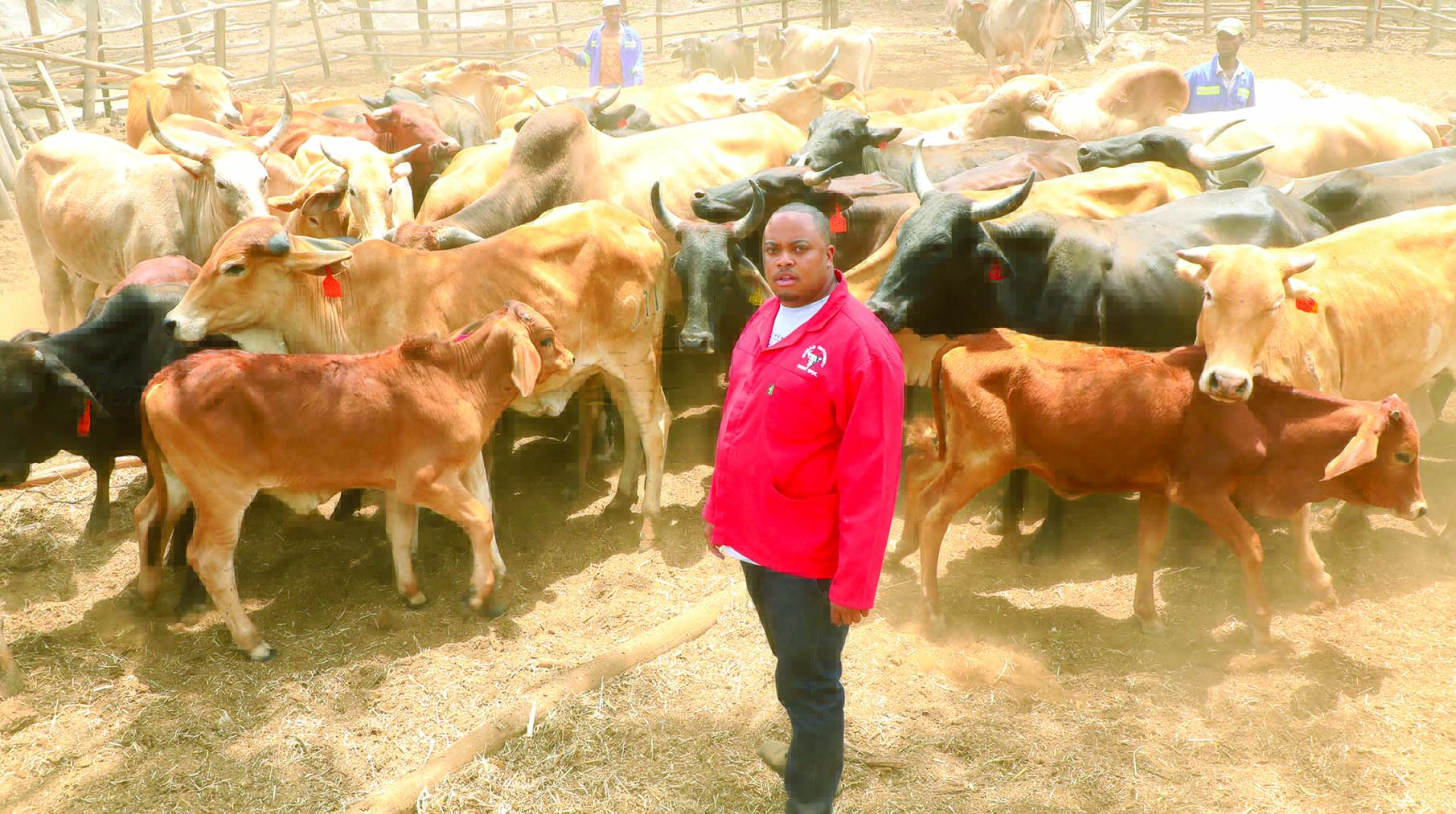
Youth Buzz
Fatima Bulla-Musakwa
Owning a big herd of cattle used to be uncommon for youths.
However, young people are increasingly venturing into livestock production and are mastering the art.
Tafara Evans Chidavanyika, a 33-year-old livestock farmer from Makoni district, which is 13 kilometres from Rusape, is writing his own success story to prove there are no limits to what young people can achieve if they put their mind to it.

Over the past few years, the young farmer’s herd has grown to the current 200 cattle.
It all began when the enterprising Chidavanyika could not get quality meat to sell at his two butcheries in Rusape.
He saw an opportunity and decided to venture into livestock production.
Initially, he bought one heifer to kick-start the project.
However, two years ago, the project got a timely boost, when he received support from Government to increase his herd.
Chidavanyika has become so successful that his 200 cattle have outgrown the 30-hectare piece of land he has.

He has since resorted to renting land as his farm is too small to provide enough grazing space.
To ensure his herd is healthy, the young farmer constructed a dip-tank on his farm and avoids mixing his animals with other herds to limit exposure to diseases.
His cattle are slaughtered at a nearby abattoir and sold at his butcheries.
“Unfortunately, I am facing a major challenge with land and I mostly depend on supplementary feed, which tends to be very expensive for the project,” he said.
His long-term plans include building his own abattoir, as the nearest one is 15 kilometres away.
“In future, if funds permit or we get help from Government, we will be able to construct our own abattoir so that we keep lowering our prices to the final consumers in the community. At the moment, we are trying to sort out the paperwork for the abattoir,” he said.
Chidavanyika lauded the Department of Veterinary Services for helping the project flourish.
“Information and assistance come mainly from the Veterinary Department and farmers who are also carrying out similar projects. There is also the Zimbabwe National Breeders Association.”
Another target he has set for himself is to contribute towards producing beef whose quality will be good enough to be sold to European markets.

“With the passion and experience we have, we know it’s not impossible,” he added.
Chidavanyika, who currently employs 16 workers, also plans to produce yellow maize for cattle feed, as well as keep pigs and poultry in the near future.


 Online Reporter