Online Reporter
Sukulwenkosi Dube-Matutu, [email protected]
COLLECTIVE expertise and stakeholder involvement have been identified as essential in developing effective strategies to combat corruption, as Zimbabwe intensifies efforts to achieve a corruption-free society.
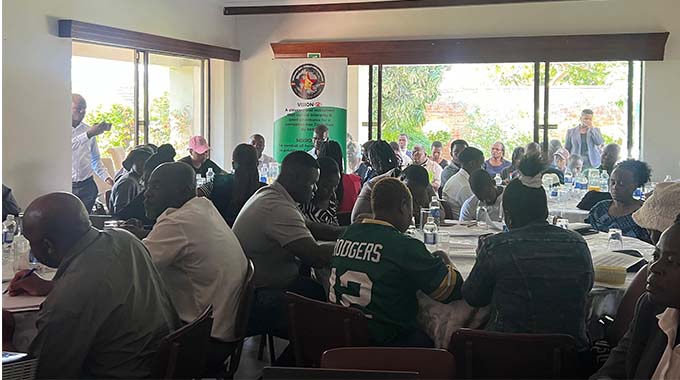
The Zimbabwe Anti-Corruption Commission (Zacc) held a consultative meeting in Gwanda, Matabeleland South Province, as part of the process of formulating the National Anti-Corruption Strategy (NACS2), which will guide the country’s anti-corruption efforts over the next five years.
Stakeholders in attendance included Government departments, civil society organisations, parastatals, faith leaders and residents’ associations, among others.

The first National Anti-Corruption Strategy (NACS1) was launched by President Mnangagwa in July 2020 and achieved a notable 61 percent success rate over its four-year tenure.
Zacc announced that NACS2 will focus on regional and international co-operation, targeting offshore havens and cross-border syndicates that undermine accountability efforts.
Speaking during the meeting, Zacc Commissioner for Prevention of Corruption and Corporate Governance, Chido Madiwa, said NACS2 will further strengthen efforts to combat corruption and promote transparency and accountability across the country.
The development of NACS2 will be anchored on five critical pillars: public engagement, legal reform and institutional reform, enforcement and priority areas.
“I urge all participants to actively engage in this consultative process, sharing your insights and expertise to ensure the successful development of NACS2. Your contributions are vital in shaping a strategy that truly reflects our collective commitment to fighting corruption.
“The success of NACS2 depends on the involvement of every citizen. We must move beyond the misconception that fighting corruption is the responsibility of a select few. Corruption affects us all, and it is time for a united response,” said Commissioner Madiwa.
Commissioner Madiwa noted that the first strategy did not fully address all corruption challenges. She emphasised that sustainable anti-corruption efforts cannot be imposed from above but must emerge organically from within society. She added that such efforts must be owned, championed, and defended by the very people whose lives are diminished by corruption.
“To our private sector representatives — you are the engine of our economy, the creators of jobs and wealth. We need your commitment to ethical business practices and your refusal to pay bribes.
“To our traditional and community leaders, your input is vital to this strategy. You are the custodians of our cultural heritage and the bridge between formal state structures and grassroots communities,” she said.
Commissioner Madiwa stressed that when all sectors are genuinely invested in the anti-corruption agenda, implementation becomes more effective. She said that the Government enforces laws, civil society monitors implementation, the private sector adopts ethical practices, communities exercise social accountability, and citizens must refuse to offer bribes and report corruption.
The new policy, now at the consultation stage, comes four years after the launch of NACS1. While the first strategy helped strengthen institutions, close legal loopholes, and digitise key public services, it faced challenges — particularly the absence of whistle-blower and witness protection laws, which left citizens vulnerable to reprisals for exposing corruption.
In a speech read on her behalf by Director of Finance, Administration and Human Resources, Mr Edward Mandeya, the Secretary for Matabeleland South Provincial Affairs and Devolution, Mrs Latiso Dlamini-Maseko, said that principles of equity and inclusivity are central to the fight against corruption.
“Our vision is not just about economic growth, but about ensuring that no one and no place is left behind. We aim to build a society where every individual, regardless of background, location, or socio-economic status, has access to opportunities and resources.
“Corruption undermines development, erodes trust and perpetuates inequality. It is a major obstacle to achieving our development goals and ensuring that everyone benefits from our progress. But I believe that together, we can make a difference,” she said.
Mrs Dlamini-Maseko emphasised the need for an all-stakeholder approach to build a transparent, accountable and inclusive society.
NACS2 is being developed through inclusive consultations across all 10 provinces, engaging Government, civil society, the private sector, academia and the public.
Consultative meetings have already been held in Bulawayo, Gweru, Mutare and Harare. These engagements aim to identify corruption risks, review lessons from NACS1, align Zimbabwe’s strategy with the United Nations Convention against Corruption (UNCAC) and foster national ownership.