


 tawandamusarurwa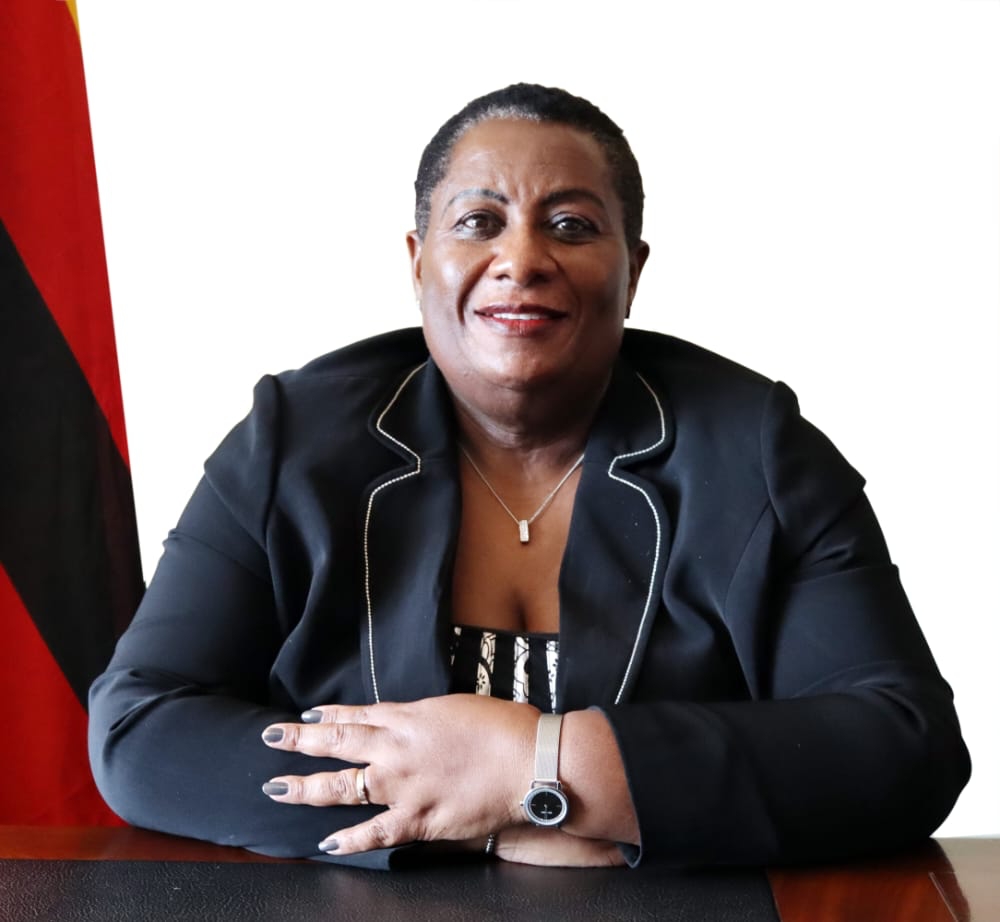
The Zimbabwe Anti-Corruption Commission (ZACC) is geared to strengthen its investigations department this year and focus on investigating high-profile cases, in line with the Second Republic’s policy of zero tolerance to graft. The Sunday Mail’s WALLACE RUZVIDZO (WR) spoke to ZACC chairperson Justice Loyce Matanda-Moyo
(LMM) on the anti-graft body’s targets for 2023.
*******************
WR: Can you begin by giving us a roundup of ZACC’s performance so far this year?
LMM: This year, ZACC continues with its fight against corruption through investigations for purposes of prosecution and asset recovery and through producing preventive measures to ensure all opportunities for corruption are closed.
The commission is on course and has made 61 arrests and referred 68 completed dockets to the National Prosecuting Authority (NPA).
For asset recovery this quarter, investigations into unexplained wealth are at advanced stages and the commission is confident that by the end of the year, it will have seized assets valued at US$1 billion.
On the prevention side for 2023, we expect improvement in the number of institutions that have been assisted to develop prevention of corruption programmes through compliance spot checks, systems reviews and the training of integrity committees.
Hence, ZACC continues to conduct compliance and systems review checks, having conducted checks at independent commissions, ZUPCO, Ministry of Transport and Infrastructural Development and Harare City Council.
This year, the commission has engaged 40 institutions to establish integrity committees.
Training is in progress for the 72 institutions that had established integrity committees in 2022.
ZACC is also facilitating the signing of integrity pledges at universities, local authorities, ministries as well as public entities, and has engaged the Corporate Governance Unit in the Office of the President and Cabinet, and the Public Service Commission.
Another programme that ZACC is spearheading is implementation of the Auditor-General’s recommendations.
We cannot continue to have the same report year after year and fail to take action.
Seventy-four institutions have responded to ZACC, outlining the measures they have put in place to ensure compliance with the Auditor-General’s recommendations.
Under the public awareness programme, ZACC is conducting rural public education campaigns, public education blitzes and media campaigns.
This is in realisation that the public needs to be educated on the advantages of good governance and participate in promoting it.
The public should be able to demand honesty and integrity in all Government business.
To date, the commission has conducted one provincial rural campaign in Manicaland covering 10 districts.
This campaign ensured that ZACC took the corruption fight to the rural areas, where Zimbabwe’s most marginalised population is, and, in the process, ZACC has managed to engage with the local leadership on the importance of fighting corruption.
This campaign was important as ZACC has decentralised to Manicaland province and the citizens had to be made aware of ZACC’s presence in the province.
Part of the campaign strategy included coverage through television and national and community radios such as Nyangani, Diamond and Chimanimani FM.
ZACC identified anti-corruption champions in the different districts, who will constantly work with the public in educating and preventing corruption.
For the year 2023, ZACC is targeting to undertake 80 awareness campaigns, five of which will be provincial campaigns in all Matabeleland provinces, as well as Mashonaland East and West provinces.
Under the research initiative, ZACC, in collaboration with the Zimbabwe Revenue Authority (Zimra), is conducting a corruption risk assessment study at all exit and entry points in Zimbabwe.
WR: Can you outline ZACC’s targets for this year in terms of investigations and recommending prosecutions?
LMM: ZACC is targeting to refer 400 complete dockets to the NPA.
WR: How much are you looking to recover in terms of proceeds of corruption?
LMM: ZACC’s 2023 target, in terms of seizing ill-gotten wealth, is US$1 billion.
WR: What other mechanisms are you putting in place to ensure ZACC effectively deals with corruption?
LMM: Zimbabwe has experienced widespread corruption in virtually all sectors of the economy.
As an institution mandated to fight corruption, ZACC aims to continue reinforcing the implementation of measures to combat corruption, and we plan to broaden our efforts to tackle a broader array of governance vulnerabilities by strengthening the role of the National Anti-Corruption Strategy (NACS) and other related instruments.
In 2023, ZACC will be intensifying the fight against corruption in the private sector, civil society organisations and the non-governmental sector.
The mining sector will also be under intensified scrutiny from both investigations for prosecution and asset recovery.
ZACC will ensure that institutions are strengthened through the development of corruption prevention policies and establishment of structures such as integrity committees.
In addition, all public entities will be expected to continue with the implementation of the Auditor-General’s recommendations programme that ZACC piloted in 2021.
Mainstreaming anti-corruption content in the formal school curriculum is an important preventative tool.
ZACC is currently working with the Curriculum Development Unit in the Ministry of Primary and Secondary Education to input teachable content in school syllabuses.
Establishment of anti-corruption clubs in schools and colleges, and appointment of anti-corruption champions in both urban and rural communities are tools that will be used.
ZACC will work with religious groups in raising anti-corruption awareness and ensure the integration of efforts from both the public and private sectors in raising anti-corruption awareness.
You will recall that ZACC’s focus for 2021-2025 is to ensure the increase of its services by digitalising ZACC services, decentralisation, recruitment and capacitation of critical staff.
We will continue to pursue these strategies.
In addition, the commission will ensure prioritisation of asset recovery involving high values, investigation of high-profile cases to ensure that 400 cases are completed and referred for criminal prosecution and enhancing regional collaboration.
Lastly, we will be roping in the print and electronic media in disseminating anti-corruption messages to ensure that we correct the public perception of ZACC.
WR: Last year, ZACC’s conviction rate stood at 72 percent of all cases referred for prosecution. Do you think it will increase this year?
LMM: We have fully capacitated our investigators through the capacity-building training we conducted in the past four years.
We have enhanced cooperation between the NPA and our Prosecution Liaison Unit to ensure that more cases are brought to trial.
The commission has recruited and capacitated more legal officers to assist in the vetting of dockets so as to ensure that watertight cases are referred to court.
For the year 2023, there have been three trials completed, with several at different stages.
From the three completed trials, there have been two convictions of a magistrate, who was sentenced to four years imprisonment; and a former Zimbabwe National Road Administration chief executive, who was sentenced to 36 months imprisonment.
We look forward to more convictions in cases that are currently before the courts.
Twitter: @RuzvidzoWallace



 Bongani Ndlovu
 Online Reporter