

 malvernmugadzikwa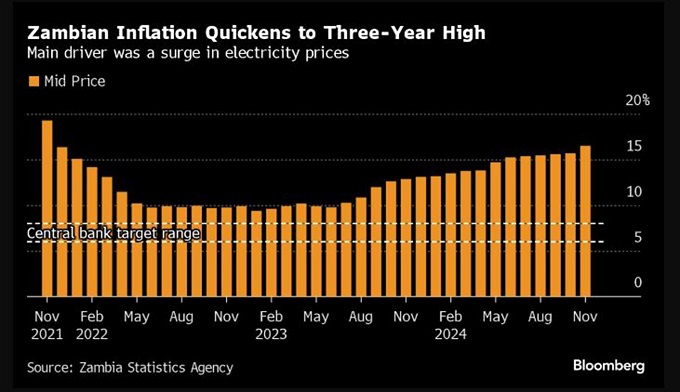
Zambia’s annual inflation rate jumped to its highest level in three years in November as the nation’s worst drought in more than a century and the kwacha’s continued weakness stoked electricity and food prices.
Consumer prices rose 16,5 percent, compared with 15,7 percent in October, acting Statistician-General Sheila Mudenda told reporters Thursday in Lusaka, the capital.
The kwacha has slumped 3,5 percent against the dollar so far this quarter as the southern African nation has been forced to increase costly food and electricity imports to deal with the shortfalls caused by the drought.
Last month its energy regulator approved the state-owned power utility’s request to raise electricity prices by 115 percent from Nov. 1 for consumers with large power demands to pay for the imports.
Zambia relies on hydropower for about 85 percent of its electricity generation, making it extremely vulnerable to reduced water supply.
Its central bank this month raised its key interest rate to 14 percent, a seven-year high, to contain price pressures and prop up the kwacha.
“The bank stands ready to take appropriate action should inflation persist above the 6 percent-8 percent target band,” Governor Denny Kalyalya said on November 13. Annual inflation has been above the central bank’s target since May 2019.
Non-food inflation accelerated to an annual 14,1 percent, from 12,2 percent last month. Food-price growth was 18,2 percent in November, the same as the prior month. — Bloomberg


 Online Reporter