admin
adminPatience Nyasha Mandeya
It is critical to remind those in authority that solving the current economic downturn is key to winning hearts and minds of all Zimbabweans, moreso in building a united and peaceful State. Of note are recent protests which have all carried an economic concern in one way or another in expression of some discontent and anxiety, depicting misgivings about certain economic policies and impatience with the status quo.
As we continue to map the way in achieving economic growth and trade, particular emphasis on the export component should pre occupy the depth and breadth of any policy formulation matrix. Orthodox classical economists as well as the modern liberal view trade as an engine of economic growth.
The proponents of the exports promotion strategy such as David Ricardo work on the principle of identifying comparative advantage, where a country specialises in a product, which it can produce competitively. Goods and services become available to the global community at relatively cheaper prices due to efficiency gains as markets are extended.
Internal and external economies are attained with positives outcomes being registered through an increase in income and employment levels. Consequently the process of economic development is facilitated. In a nutshell, putting more emphasis on the promotion of exports would permit the optimal allocation of resources at a global scale thereby uplifting economic livelihoods in the process of attaining economic growth.
Generally, economists contend that the path to economic growth and development can never be void of export development.
Exports can rescue a stagnate economy in many ways propping up foreign currency earnings, generating high paying jobs, improving competitiveness and ultimately, increasing opportunities for growth and profitability for firms, justifying the export-led growth hypothesis.
Over the years Zimbabwe has been battling to push export revenue past the US$4 billion mark.
The ratio of exports to GDP for Zimbabwe have been low at 29,5 percent in comparison to countries like Angola (55,8 percent), Botswana (55,1 percent), Congo (76,5 percent), Ghana (42,2 percent), Swaziland (56,3 percent) and Zambia (41,9 percent).
Given the dollarised nature of Zimbabwe’s economy, exports must be the anchor of economic growth.
By the end of the first half of 2016, exports, which contribute over 60 percent of the liquidity flows into the country, totalled US$1,124 billion.
In comparison with the corresponding period in 2015, exports declined by nine percent from US$1,232 billion according to national statistics agency Zimstat.
The decline in export performance is a reflection of the overall slowdown in real economic activity in 2016, weighed down by the following factors.
Drought-induced contraction in agriculture where for example horticulture which used to be a major sub-sector with quick export returns of about US$143 million at its peak in 1999-2000 only realised about US$54 million from exports in 2015.
Zimbabwe derives its comparative advantage from the commodities sector hence agriculture plays a vital role in accounting for exports on the GDP.
Although there is a decline in agriculture output, tobacco, which is Zimbabwe’s main source of liquidity and export crop, recorded sales of 201 million kgs of crop in 2016 which surpasses the targeted crop of 170 million kg for the year with an average price of US$2,94/kg.
Conversely, the maize harvest for 2016 was estimated at 511 816 tonnes, which falls short of national grain requirements of 2,2 million tonnes.
Government interventions to provide for the national maize deficit of 1,7 million tonnes, which is being complemented by private sector and development partner imports.
Moreso, a decline in mineral commodity prices from their peak, against the background of then strong demand, mainly from China, perpetuate or undermine mineral proceeds realisations from exports.
However, the value of mineral output for the first half of 2016 was up by 8,8 percent to US$806 million, from US$741 million during the comparable period in 2015. Suppressed capacity utilisation at about 36 percent in the manufacturing sector also plays a role in inhibiting export.
In the manufacturing sector, perennial challenges related to the weakening rand, influx of cheap imports, porous border posts, and the liquidity crunch, among others, continue to constrain capacity utilisation.
Furtherance to this, manufacturing is constrained by intermittent municipal water supplies, unreliable bulk rail services, and other challenges.
Key sub-sectors in the manufacturing industries which have strong linkages with the agricultural sector such as textiles and ginning, wood and furniture, metal and metal, fertilisers, chemicals, pharmaceuticals and transport and equipment remain subdued, thereby exacerbating shrinkage in exports.
Lack of affordable external lines of credit has not helped the situation.
Also compounding the situation is the weakening of regional and other trading partner currencies, mainly the rand wherein South Africa is our major trading partner.
The relatively high import level has also meant a high current account deficit, which is estimated at US$2,5 billion during the first half of the year, and constituting 12 percent of GDP. This represents a significant and unsustainable outflow of liquidity from the domestic economy.
The containment of over dependency on imports should limit the overall balance of payments projection to a deficit of US$397,6 million for 2016.
It is of paramount importance that all efforts be directed towards stimulation of exports. Government is applauded for its sterling effort in which encapsulates revitalisation of agriculture through Command Agriculture.
The five percent incentive scheme is yet another intervention to prop up exports, where farmers will receive US$28 million in bond notes, which would be the incentive from the bank for exporting, while the economic blue print while Zim-Asset emphasises beneficiation and/or value addition to our agricultural and mineral resource endowments to grow the export base and achieve economic growth.
Efforts by Government to increase capacity utilisation in manufacturing, which have seen the regulation of imports through SI 64, will also yield positive export returns as the local manufacturing sector expands its footprint beyond the country`s borders in search of lucrative export markets.
In addition, special economic zones are expected to create fertile ground for export promotion as they are expected to provide the impetus for FDI.
Further support is need from Government, which includes incentives targeting crops such as flowers, fruits, coffee, tea and others that have a quick turn-around.
Also, export restrictions in the form of permits will be removed as part of the Ease of Doing Business Reforms.
Export-led growth which encompasses robust industrial growth is underpinned by the need to retool, construct or acquire modern technologies and equipment which requires huge domestic and foreign investment.
It is, therefore, apparent that Government should effectively create a conducive and an enabling environment in ensuring and facilitating investment for the country to realise growth in exports. The focus on domestic resource mobilisation is noble, ensuring efficiency gains in resource exploitation in the public sector and quasi-Government institutions.
Notable economic successes around the world such as the Chinese economic revolution and the economic miracle of the Asian Tigers — Singapore, Hong Kong, South Korea and Taiwan — bear concrete witness to the combination of strong export-led growth complemented by effective domestic resource mobilisation.
As the ruling Zanu-PF — which gives direction to Government — prepares for the Annual National People`s Conference in December, the people of Zimbabwe are anxious for resolutions that will deliver economic growth through strategies that boost export competitiveness.
The party must remain relevant in the economic discourse as the masses hope for the attainment of total economic emancipation which resonates with Zanu-PF’s ideals as alluded to in the party’s constitution, Article 2:11, which clearly states that the party seeks “to establish and sustain a society firmly based on our historical, cultural and social experience and to create conditions for economic independence, prosperity and equitable distribution of the wealth of the nation in a system of economic organisation and management in which elements of free enterprise and market economy, planned economy and public ownership are combined”.
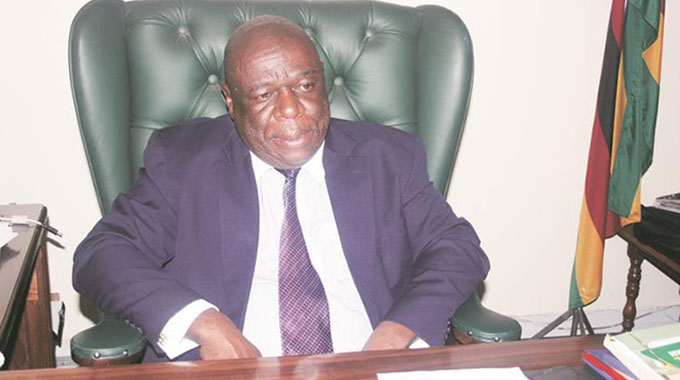
Cde Nyasha Patience Mandeya is Zanu-PF Director for Economic Affairs.



 Online Reporter