

 admin
admin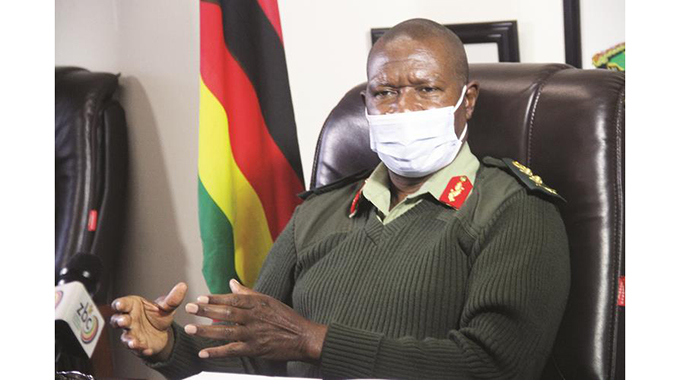
August is the month people of Zimbabwe recognise and celebrate the contribution of men and women in the Zimbabwe Defence Forces (ZDF) as they pursue their constitutional mandate of ensuring that peace and tranquillity prevails at all times. Peace and tranquillity are key enablers for building prosperous and better life for the people of Zimbabwe. Ahead of the commemorations, our reporter Columbus Mabika (CM) caught up with Commander of the Zimbabwe Defence Forces, General Philip Valerio Sibanda (GPVS) to discuss on the journey the ZDF has travelled since its formation four decades ago.
CM: It is now four decades since the establishment of the ZDF. General, can you share with us some of the successes and challenges that ZDF experienced in the first decade of its establishment?
GPVS: The first decade of the now ZDF establishment covers period 1980-1990. This period was characterised by various important programmes and activities. Key among these, were the integration process, establishment of key training institutions the ZSC and AABS, deployment in Mozambique. Let me shade more light on these three aspects.
Integration process: The process of merging three armed forces; the former ZANLA and ZIPRA forces and the former Rhodesian army units was meant to standardise command structure, weapon systems and doctrine to facilitate cohesion within the rank and file. Some of the challenges faced during the integration process were acts of sabotage attacks on military facilities at Inkomo and then Thornhill Air Base and the clashes between ZANLA and ZIPRA combatants at Chitungwiza, Connemara and Entumbane. Despite the challenges encountered, the process was successful.
Advanced Training: The successful completion of the integration process saw new training needs emerging which were more focused towards developing individual capacity to carry out their duties proficiently. There was therefore urgent need to introduce courses that would cater for different levels of leadership. Thus, two important training institutions were established, ZSC and the BBS now AABS. At its infancy, the ZSC focused mainly on standardizing staff procedures and developing individual capabilities for staff and regimental duties. The AABS focused on developing individual and collective capabilities for operational unit command and control.
Deployment of the ZDF in Mozambique: The state of instability that prevailed in Mozambique in early 1980s had the potential not only to threaten our routes to the sea but also the possibility of spill-over effects that could generate a state of insecurity in the country. This necessitated the deployment of the ZDF in Mozambique while in its infancy to thwart this threat.
CM: The beginning of the second decade of the ZDF existence 1990-2000 was marked by increased participation in UN-mandated peacekeeping and peace enforcement operations. General, can you share with us some of the key programmes and activities in the second decade?
GPVS: The second decade was characterised by various programmes and activities. Key among these was the participation of ZDF in UN-mandated peacekeeping and peace enforcement operations. Let me shade more light on these other activities that were dominant in the second decade.
Participation in PSO: In 1989, the UN started inviting Zimbabwe to participate in UN peacekeeping missions. The first ZDF UN Peacekeeping mission was UNAVEM I; 1989 to 1991 which was an observer mission. This was followed by UNAVEM II; 1991 to 1995 and later UNAVEM III from 1995 to 1997. Parallel to these missions, the ZDF also participated in UNAMIR from 1993 to 1994, Operation Restore Hope in Somalia 1992, UNOSOM I 1992 to 1993 and UNOSOM II 1993 to 1995. The Zimbabwe Defence Forces successes in the peace missions can be attributed to proper training and high level of professionalism.
ZDF withdrawal from Mozambique: The ZDF withdrawal from Mozambique after the signing of the general peace agreement in 1992 clearly demonstrated that the ZDF had developed to be a reliable and capable force that could be entrusted to diligently fulfil internal and external obligations.
The ZDF withdrew from Mozambique with immeasurable operational experience from the campaign. Some of the lesson learnt include; planning and conduct of joint operations, the value of efficient logistics to successful operations and the importance of competent junior leadership in combating insurgents.
Establishment of peacekeeping training centre: In a bid to expand the scope of ZDF capabilities in line with emerging trends that were characterised by the rise in internal conflicts, the Peacekeeping Training Centre was established at the ZSC in 1992. The knowledge and skills gained through the Peacekeeping Training Centre enabled the ZDF to plan and host the first major peacekeeping exercise in the SADC region Exercise Blue Hungwe.
The success of Exercise Blue Hungwe led to the establishment of the RPTC: In addition, the success of the exercise prompted various countries in the SADC region and beyond to request for slots on the Junior and Joint Command and Staff Course signalling the increase of allied students attending courses at the ZSC.
Operation Sovereign Legitimacy: The ZDF took part in Operation Sovereign Legitimacy under SADC auspices starting from 1998. The main objective of the operation was to ensure that the sovereignty of the DRC was protected against armed groups who were keen on using force to seize power from a legitimate government.
Training of pilots and officer cadets: At independence, the ZDF adopted the long standing tradition of restricting the training of AFZ pilots to male members only. In a bid to demonstrate that the organization’s desire for gender equality, in 1994, the AFZ had the first group of females being enrolled to train as pilots. While the ZNA from 1980 had female officers in its rank and file, they had not joined the officer corps through the officer cadet course. In 1996, the ZNA had its first group of female recruits being enrolled on the officer cadet course, joining their male counterparts on this rigorous course, a trend that has been maintained to this date.
CM: The third decade of ZDF existence 2000-2010 was marked by ZDF involvement in dealing with the after effects of natural disasters. General, can you share with us some of the key programmes and activities in the third decade of ZDF existence?
GPVS: The third decade of the ZDF existence brought to our attention was characterized by various programmes and activities. Key among these were;
Response to natural disasters: The ZDF started paying serious attention to developing its capacity to deal with natural disaster and related relief efforts following lessons learnt after experiencing the devastating effects caused by Cyclone Eline in February 2000. Some of lesson learnt from Cyclone Eline induced disaster, was the need for early warning to minimize loss of human lives. The need for coordinated speedy reaction is critical in order to minimise human suffering.
Operation Sovereign Legitimacy: The ZDF withdrew from the DRC after having successfully accomplished its mission of establishing peace and stability in the country following destabilisation by armed insurgents. Some of the major lessons learnt during the DRC campaign are; the situation was constantly changing as the insurgents tactics were always mutating from insurgents’ tactics to semi conventional war.
This characteristic required that at all times the ZDF maintained balanced combat groups to effectively respond to any type of threat. Unlike in Mozambique, the vast expanse of the DRC resulted in extended lines of logistics which in most cases covered a thousand kilometres or more. This called for maintaining reserves at all times. The complexities of operating in a multinational peace enforcement mission require identifying the strength of each contingent and employing them to best advantage.
Strategic level courses: While in the first decade we had officers who had attended courses pitched at the strategic level such as the NDC, from the year 2000, the ZDF decided to increase the number of officers attending the NDC programme. Since at that time the ZDF had not yet introduced the course in its training programme, ZDF officers had to undertake the course in countries such as China, Russia, India, Pakistan, Malaysia and Indonesia, among others.
In addition to the strategic level courses, the ZDF has benefited through course programmes being offered by our African brothers – Botswana, Kenya, Nigeria, South Africa, Tanzania and Zambia who have continued to offer slots for training in their countries.
Academic education: Academic education programmes in the ZDF had started as far back as 1984 when officers were encouraged to improve their level of education to at least Ordinary or Advanced level. In the second decade, officers were encouraged to enrol for degree programmes at various universities. Most of degree programmes were social science related. The improvement in the level academic qualifications has made it possible for ZDF members to compete favourable for posts at the AU and UN headquarters.
Training and education cooperation with other institutions: The ZDF through the ZSC signed an MoU on training and education cooperation with the University of Zimbabwe 2004. The MoU facilitated the granting of associate status to the ZSC to run the Diploma in Adult Education under the supervision of the UZ. This arrangement elevated the status of the ZSC to being a centre of academic excellence.
Assistance to Land Reform programme:. The ZDF found itself having to deal with challenges associated with the land reform programme. The involvement of the ZDF was to ensure that tensions between the former land owners and new resettled farmers did not escalate to a level of generating a state of insecurity.
CM: The fourth decade of ZDF existence 2010-2020 was marked by expansion of training programmes to enhance the intellectual capacity of ZDF officers. General, what can you say have been key programmes and activities in the third decade of ZDF existence?
GPVS: The fourth decade was characterised by various programmes key among these were Research and Development. In a bid to enhance ZDF capability in the identification and development of equipment and materials that are compatible with emerging technologies, it entered into joint Research and Development cooperation agreements with various institutions.
The ZDF has R and D cooperation agreements with the Scientific and Industrial Research Development Centre and higher learning institutions such as Harare Institute of Technology and the University of Zimbabwe among others. Through R and D, the ZDF has been successful in the production of some aircraft components, field kitchen, and production of machine and vehicle components.
Response to Natural Disasters. The frequency of severe disasters has risen in recent years and Zimbabwe has had a fair share of natural disasters mainly in the form of cyclone induced floods. As a result, ZDF has directed more attention towards preparedness and response to mitigate against the after effects of natural disasters.
During this decade, the ZDF was called upon to assist in mitigating against the after effects of Cyclone Dineo in 2017 and recently Cyclone Idai in 2019. Lessons learnt from these most recent disasters and those before indicate that the ZDF should play a major role particularly at the initial stages of the response efforts.
Participation in peace support operations The ZDF continues to deploy its members in peace support operations under the auspices of the AU and UN as part of the country’s contribution to international peace and security. The ZDF has seen an increase in invitations from the UN and AU to participate in peace missions mainly as staff officers and military observers. Currently, the ZDF has 29 officers deployed on UN missions as follows; two female officers deployed at UN HQs in New York, 27 female and seven male officers deployed in various peace support missions in Africa. We also have seven officers deployed on AU mandated missions.
Zimbabwe National Defence University. In a bid to raise the intellectual capacity of ZDF officers, the NDC now the ZNDU started running the National Defence Course with a parallel Master of Science in International Studies in 2012. Since the transformation of NDC to ZNDU, additional degree programmes are now being run by the institution. In 2020, the flagship training institution of the ZDF, the ZNDU introduced three Bachelor of Science Honours degrees in Software Engineering, Aircraft Systems and Operations and Air Traffic Management.
This year 2021, the ZNDU introduced two Social Sciences degrees in Defence and Security studies, and in Security and Disaster Management. The ZDF has also taken opportunities to subscribe to slots allocated to it by friendly defence forces so that our personnel are kept abreast with technological developments obtaining in other countries. The human capital development efforts are meant to ensure that the ZDF officers, men and women are capable of interpreting the emerging non-traditional threats and the dynamics of global security challenges.
Community assistance projects. Since 1980, the ZDF has been engaged in community assistance projects although at a small scale mainly to rural communities.
It was from 2010 that community assistance projects became widespread and gained prominence. As part of its Corporate Social Responsibility, the ZDF is using the abundant skills within the organisation to contribute towards socio-economic development through community assistance programme. The programme has seen many communities in the country benefitting from the construction of bridges, schools and clinics.
Some of the recent projects that were completed are, Maternity Ward at Mberengwa District Hospital, two classroom blocks at Charleswood Primary School, Chimanimani, two classroom blocks at Zhompepe Primary School in Beit Bridge, Tongogara Polyclinic in Shurugwi by the ZNA, Neromwe Clinic in Chiredzi. Rutanhira (Hwedza) and Negove (Mberengwa) Clinics. In order to give focus and proper planning, all future community assistance projects, will take cognisance of the devolution concept so that assistance is aligned to provincial priorities.
CM: The 41st anniversary of the ZDF mark the beginning of the fifth decade. General, what are key programmes that you are going to pursue in order to enhance the capability of the ZDF.
GPVS: Key programmes in the fifth decade are being carried within the context of vision 2030 and also my vision of the ZDF which is to have a well-trained, disciplined professional land and Air Force capable of carrying out the organisation’s constitutional mandate to contain traditional and non-traditional security threats.
In order to achieve this capability, the ZDF should be well trained and equipped with modern equipment, highly mobile and motivated. The ZDF leadership’s commonly shared vision is on the importance of training and education as the foundation of success in fulfilling our constitutional mandate. Thus, training has and remains central towards generating the desired ZDF defence capability.
In this regard, in the fifth decade, there is going to be major transformation in the Officer Cadet Training. A new syllabus which encompasses science degree programme will be introduced soon so those young officers from Army and Airforce Cadet Courses graduate with a degree in science.
Research and development programmes remain central in keeping pace with technological developments taking place in developed countries. The ZDF will intensify and expand its R and D projects for the improvement of the organisation’s capabilities.
The ZDF has not been spared from the COVID-19 pandemic raging across the world which has become a threat to international peace and security because of the far reaching socio-economic consequences affecting the developed and much worse for developing countries. With no known preventive or curative drugs in place, we must comply with WHO guidelines on combating and prevention of the pandemic.
In this regard, the ZDF embarked on awareness campaigns, prevention mechanisms and vaccination as part of its efforts in combating the pandemic. Further, the ZDF has also been called upon to assist the Ministry of Health and Child Care and the Government in the fight against this pandemic as part of military assistance to civil ministries.



 Online Reporter