Online Reporter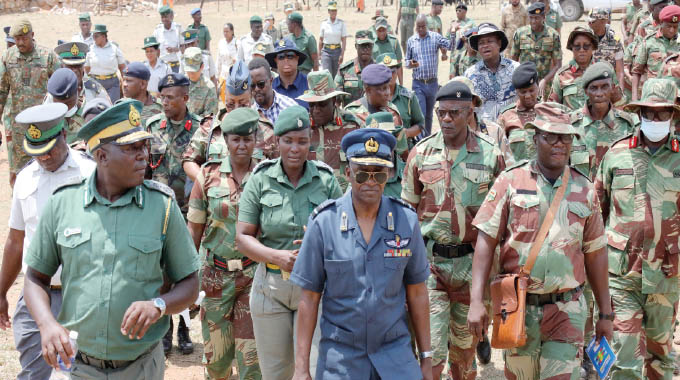
Tanaka Nkala, Court Reporter
THE Zimbabwe Defence University (ZDU) on Monday conducted a domestic study tour at Khami Prisons Complex, situated on the outskirts of Bulawayo, as part of its educational and national security studies programme. The initiative aims to foster a deeper understanding of the country’s correctional and rehabilitation systems.
The Khami Prisons Complex comprises five correctional institutions — Khami Maximum, Khami Medium, Khami Remand, Mlondolozi, and Khami Workshop — making it one of the largest correctional facilities in Zimbabwe.
Commissioner Mkhulunyelwa Ngwenya, Officer Commanding the Zimbabwe Prisons and Correctional Services (ZPCS) in Bulawayo Province, welcomed the delegation and emphasised the importance of collaboration between the two national security institutions.
“Our mandate as the Zimbabwe Prisons and Correctional Service is to protect citizens from criminals, and this aligns closely with the broader mission of the Zimbabwe Defence Forces,” said Commissioner Ngwenya.
He said that the ZPCS places a strong emphasis on rehabilitation and skills development, with the goal of reintegrating inmates into society as productive citizens.
“During their incarceration, inmates undertake various rehabilitation programmes and training courses to familiarise themselves with life outside prison,” he said.
Commissioner Ngwenya also revealed that Khami Prison has embraced technological advancements, including facilities that enable international inmates to communicate with their families via supervised video calls — a significant step towards more humane correctional standards.
Brigadier-General Lindiwe Ngwenya from the ZDU stated that the visit formed part of the institution’s annual academic programme, conducted during the first term, which aims to expose students to key national institutions.
“We not only tour Khami but also travel across the country to visit national monuments and institutions that showcase what Zimbabwe has to offer,” she said.
The delegation also visited historical cells where President Mnangagwa and other liberation war stalwarts were once incarcerated, offering participants a deeper appreciation of the country’s liberation history.
“The younger generation learns that our leaders endured imprisonment during the liberation struggle. Coming here allows them to connect with that history and appreciate the sacrifices made,” said Brigadier-General Ngwenya.
The study tour included visits to the medical centre, dining hall, agricultural projects, and Mlondolozi Prison — a facility that accommodates female inmates and mental health patients.
Inmates showcased an impressive array of products, including wooden animal sculptures, handcrafted bags, and window and door frames, reflecting the creativity nurtured through vocational training within the prison system.
The visit also highlighted the international collaboration fostered through the ZDU programme, which this year included military representatives from Malawi, Pakistan, Zambia, Botswana, and China.