admin
admin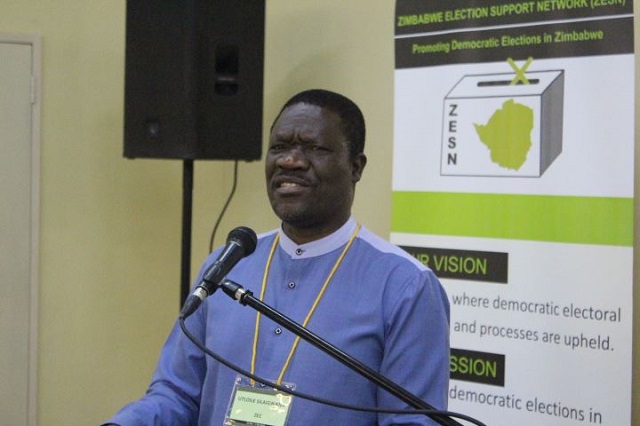
Mashudu Netsianda, Senior Reporter
THE Zimbabwe Electoral Commission (Zec)yesterday dismissed claims by opposition political parties and some sections of civil society that it is militarised and full of security agents.
Zec’s acting chief elections officer, Mr Utoile Silaigwana, who was speaking during a workshop organised by the Zimbabwe Electoral Support Network (ZESN) in Bulawayo, said there was no serving military personnel in the electoral body.
“I want to categorically make it clear that there are no serving members of the military working for Zec. I am an ex-Zipra cadre who served in the army and served for 20 years before I retired and joined Zec. In fact, it is not a crime that I once served in the Zimbabwe National Army,” he said.
Mr Silaigwana said it was his constitutional right to change careers. “It is my constitutional right to change careers just like any other Zimbabwean and I challenge you to check with the army whether I am still on their payroll,” he said.
Mr Silaigwana’s comments follow claims by MDC-T spokesperson Mr Obert Gutu that Zec was infiltrated with security and military personnel.
Mr Gutu questioned the rationale behind the employment of Major-General Douglas Nyikayaramba and former Attorney-General Mr Sobusa Gula-Ndebele at the Electoral Supervisory Commission (ESC), which was replaced by Zec.
Mr Silaigwana responded: “Major-General Nyikayaramba and (Mr) Sobusa Gula-Ndebele never worked for Zec, but yes, they both worked for ESC and legal processes were followed in their recruitment. We need to have a progressive mind rather than to think in retrospect.”
Mr Silaigwana urged sceptical opposition parties to embrace the new biometric voters roll for the 2018 harmonised elections.
He said the new technology would be subjected to thorough public scrutiny by the electorate for purposes of transparency, accuracy and credibility.
“The biometric voters’ roll is aimed at making our electoral system more transparent and credible. It is informed by regional and global experiences in ensuring credibility. Privacy of information is enhanced and we should remove negativity about this new technology,” said Mr Silaigwana.
He said the new process, which requires about $50 million, would be completed in 2017 in readiness for the 2018 elections. “We have 10 000 polling stations in the country that ZEC intends to use as biometric voter registration centres”.
Mr Silaigwana urged political parties and civil society organisations to conduct voter education on the biometric voters roll.
He said the electoral body is crafting a new voters’ roll to replace the existing one and eligible voters who fail to register in the exercise to be conducted by next year will not be eligible to vote in the 2018 harmonised elections.
@mashnets



 Online Reporter