

 Online Reporter
THE 2025 edition of the Zimbabwe Economic Development Conference (ZEDCON) enters its second day in Bulawayo today, with high-level delegates set to continue tackling crucial topics under the theme: “Macroeconomic and Sectoral Policies for Broad-based Economic Transformation.”
Now in its fourth edition, the indaba has attracted researchers, academics, corporates, think tanks and development partners, all converging for robust dialogue on shaping Zimbabwe’s economic trajectory in line with Vision 2030.
Zimpapers Business Hub senior reporter Nqobile Bhebhe and chief photographer, Eliah Saushoma are attending the conference and will give us live updates.
ZEDCON 2025 Day One: Call for Honesty in Economic Policy Discourse

Opening discussions on day one, Deputy Minister of Finance, Economic Development and Investment Promotion, David Mnangagwa made a clarion call for honesty in policy discourse.
“Honest and robust engagements grounded in facts and empirical evidence are essential,” he said.
“Candid and constructive dialogue is a service not only to each other but to our beloved nation.”
Deputy Governor of the Reserve Bank of Zimbabwe (RBZ), Dr Innocent Matshe, reinforced the central bank’s credibility, urging stakeholders and citizens to place their confidence in the RBZ’s stewardship of the economy.
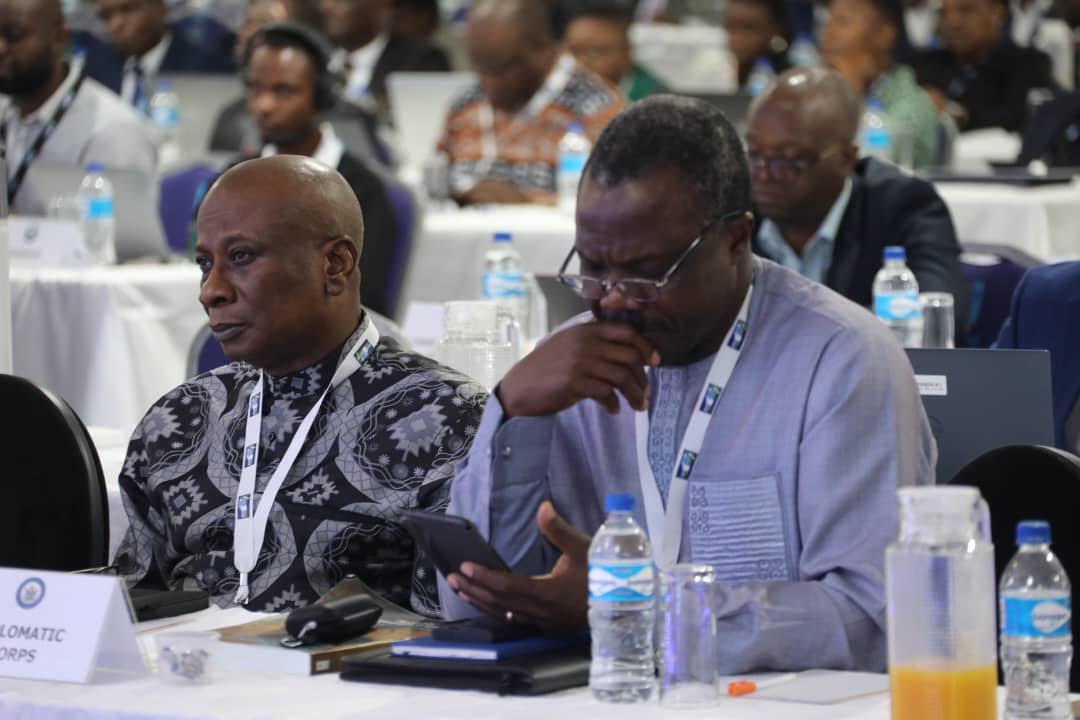
“The track record that we have speaks volumes and deserves recognition,” said Dr Matshe, as he outlined a compelling series of fulfilled economic forecasts that he said underscore the bank’s transparency and results-driven approach.
Delegates also underscored the urgency of scaling up digital infrastructure, noting that Artificial Intelligence (AI) has the potential to significantly boost Zimbabwe’s Gross Domestic Product (GDP) both in the short and long term.
As discussions intensify, ZEDCON continues to position itself as a vital platform for thought leadership, policy recalibration and national economic renewal.
One of the key topics is on diaspora remittances and their impact on the country. Zimbabwe is in the final stages of crafting a new diaspora policy.
ZEDCON 2025: Experts Call for Diaspora Investment Incentives

CALLS have intensified for the Government to establish Incentives for Diaspora Business Investment (IDBI) and launch Diaspora Bonds or Investment Funds aimed at financing key national infrastructure and development projects.
This strategic proposal was tabled during the ongoing Zimbabwe Economic Development Conference (ZEDCON 2025) in Bulawayo, where experts underscored the transformative power of Zimbabwe’s diaspora community in driving economic growth.
Zimbabwe’s diaspora is increasingly being recognised as a critical pillar in the nation’s economic revival due to its proven capacity in remittances and a rich reservoir of global skills and expertise.
With thousands of Zimbabweans excelling abroad in sectors such as finance, technology, healthcare and engineering, there is a growing call to tap into this human capital for national development.
Diaspora professionals, often in positions of influence globally are already contributing through knowledge transfer, innovation and promoting global best practices.
Zimbabwe Open University lecturer Mr Charles Mushaka, who presented on Harnessing Diaspora Potential: International Case Studies said diaspora communities are transformative partners in national development.
“Zimbabwe can unlock this potential by adopting proven strategies from lndia, Ethiopia and Ireland.
“For Zimbabwe, integrating these lessons into a national diaspora engagement strategy could unlock significant developmental potential,” he said.
In policy recommendations, Mr Mushaka said there is need for creation of Incentives for Diaspora Business Investment (IDBI).
“It include provision of tax incentives, simplified registration, and land access for diaspora-led ventures eg, the Global Irish Network streamlined support for diaspora investors encourages return and investment by reducing entry barriers.
“Launch Diaspora Bonds or Investment Funds to fund national infrastructure and development projects. For instance, Ethiopia used diaspora bonds to fund the Grand Renaissance Darm,” he said.
He added that it is critical to introduce diaspora fellowships and visiting scholar programs. facilitate platforms for diaspora experts to contributor skills via online mentoring and consulting eg India’s Global Initiative of Academic Networks (GIAN)
“Launch a Diaspora Database and Digital Platform. Zima Diaspora Digital Hub (ZDDH) can be developed to map skills, location, and interests of Zimbabweans abroad and link them to local opportunities.
“This is critical as centralised data makes engagement strategic and measurable.”
Child President decries digital divide in AI access for learners

Child President Lionel Mazarire has raised concern over the widening digital divide in the education sector, warning that limited access to Artificial Intelligence (AI) tools among rural learners is placing them at a significant disadvantage in national examinations.
Speaking at the ongoing Zimbabwe Economic Development Conference (ZEDCON) in Bulawayo, Mazarire said the disparity in access to digital resources such as internet connectivity, computers and AI applications was undermining the principle of equal opportunity in education.
“Because in Zimbabwe, we have a digital barrier, we see that every child is expected to sit in the same ZIMSEC exam,” he said.
“But a child in an urban area is given AI and digital tools, while a child in the rural area is not given that.
“But, however, they are expected to pass the test.”
The Child President, who is a Lower Sixth learner at Chinhoyi Technical High School, described the situation as unjust, adding that technological literacy and access should not be a privilege but a right afforded to every Zimbabwean child.
“There is not enough internet and computers in some areas and also many people do not know how to use AI very well,” he added.
Mazarire, who is serving as the 33rd Child President of Zimbabwe, challenged policymakers and education stakeholders to prioritise inclusive digital infrastructure and training as the country embraces Education 5.0 and moves toward a knowledge-based economy.
His remarks come at a time when global learning systems are rapidly integrating AI into classrooms.
Government is making frantic efforts to close the digital gap by empowering rural schools with the latest technology.
IPEC Empowered to Garnish Employers’ Accounts for Pension Arrears

The Insurance and Pensions Commission (IPEC) has been empowered with garnishing authority in a landmark legal reform expected to transform the regulatory landscape of Zimbabwe’s pensions and insurance sector.
Speaking at the ongoing Zimbabwe Economic Development Conference (ZEDCON) in Bulawayo, IPEC Commissioner Dr Grace Muradzikwa said the policy reform is pivotal in restoring public confidence and enforcing compliance among delinquent pension contributors.
“We now have garnish orders, just like ZIMRA,” Dr Muradzikwa told delegates.
“We can garnish employers’ accounts who are not remitting pension contributions. We are working on enhanced regulation and supervision of the sector.”
The garnishing powers now place IPEC on stronger legal footing to hold defaulting employers accountable, marking a significant shift from previous years when regulatory teeth were limited.
Dr Muradzikwa emphasised that IPEC’s strategic focus has shifted decisively toward legal reforms aimed at reinforcing supervision and consumer protection, key pillars in the Commission’s post-reform agenda.
“A lot of our work right now is really centered around legal reforms to strengthen supervision and consumer protection,” she said.
“And I think one of the legal reforms that we are very proud of is that we now have garnish orders.”
She added that these reforms directly address the longstanding concerns raised in the Justice Smith Commission of Inquiry, which unearthed widespread malpractices in the sector.
“We have done a lot of work to address some of those mischiefs that were identified by the Justice Smith Commission,” she said. “And I just want to share with you, because a lot of you, when I meet, you are talking about the Justice Smith Commission, the recommendations.”
The Commissioner did not shy away from confronting the persistent issue of declining public confidence in pension schemes.
“The level of patient contributions has also gone down significantly,” she noted.
“So, colleagues, this is the big elephant in the room for us as a regulator for the insurance sector. We are working on confidence restoration measures.”
IPEC, established under the Insurance and Pensions Commission Act, is the statutory body mandated to oversee the soundness and stability of Zimbabwe’s insurance and pension sectors.
The introduction of garnishing powers aligns with broader Government-led reforms aimed at safeguarding workers’ retirement savings and enhancing transparency in financial service delivery.




 Bongani Ndlovu