Chronicle Editor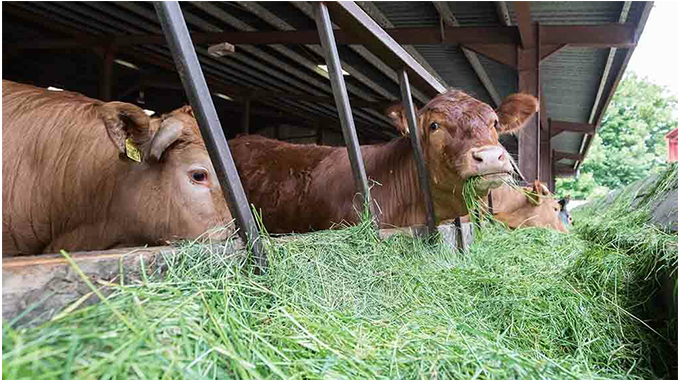
Stanford Chiwanga
DROUGHT has become frequent in Zimbabwe that farmers now don’t expect but hope for abundant rains. Every year they prepare their land with dread at the back of their minds that they could be facing another drought soon.
Rains have been scarce for years now and the scarcity hits hard. Almost every year it is heart-wrenching to see cattle grazing on little grass and struggle to cope with the lack of water and food. A perennial problem that is now threatening the beef industry in the country.
The farmers are not spared as the suffering of the cattle sees them feel the mental, emotional and financial strain caused by the drought. Already thousands of cattle have died as a result of thirst and lack of food. According to the Famine Early Warning Systems Network, over 10 000 cattle died in 2018 in Matabeleland North and Matabeleland South.
But while most cattle farmers have left the survival of their cattle to fate, some enterprising farmers in Matabeleland South have turned to zero grazing, a preserve of dairy cows, to not only save their cattle, but to make a profit.
Zero grazing is a system where the cattle are usually kept in the farm and farmers bring the feed and water to the animals. Due to reduced communal grazing land, farmers in Matabeleland South have adopted zero-grazing.
The aim of a zero-grazing system is to maximize the efficiency and sustainability of livestock production by improving animal productivity while reducing the number of animals. For this reason, zero-grazing is usually practiced only with high-yielding improved breeds. With good planning, many animals can be kept on a relatively small piece of land, making this system suitable in areas where a farmer owns a limited amount of land for grazing. Under zero-grazing, individual attention in terms of feeding is possible in times of drought as the cattle do not spend the limited energy they have searching for food. Zero-grazing also makes disease and vector control easier.
According to the Food and Agriculture Organisation of the United Nations (FAO 2017), the limited availability of pasture due to climate change which has seen a shortage of food for cattle during droughts makes zero grazing the ideal method to address the risk of cattle dying as farmers can save natural fodder resources and store fodder.
Not only that, zero-grazing helps in reducing animal pressure on the land such as overgrazing eventually leading to desertification.
FAO wrote:
“Zero-grazing helps reduce animal pressure on the land and limit the spread of disease amongst animals, a risk that could increase with climate change. Easier manure collection because of enclosures could also help reduce soil fertility loss induced by climate change.”
“Zero grazing is the only option we have at the moment in this drought prone region. We were hoping to receive sufficient rains for pastures but this has become one of the worst rainy seasons to date. There is not enough grass to feed our cattle,” said Mr Arnold Moyo from Zezani in rural Beitbridge pointing to the wilting grass pastures where his cattle usually graze.
Most villagers in the area have ventured into full time zero grazing which has become the lifeline of their cattle. The zero grazing project involves feeding the cattle for two to three months before selling them.
Farmers said they harvest fodder to feed the cattle throughout the dry season. Cattle under the feeding scheme gain about two kilogrammes in weight per day.
Freedom Dube of Makado said as a result of the drought, the only hope for the survival of their in cattle was in zero grazing. He said some non-governmental organisations were training them and providing information about fattening projects and small livestock production.
“Zero grazing projects can save our cattle from recurrent droughts as well as enable communities to realise more from selling their livestock. We ventured into zero grazing to save our cattle from dying and to grow them such that they fetch a better market price,” said Mr Dube.
Successive droughts in Matabeleland South have forced many farmers and villagers to sell their cattle before they succumb to drought.
This year, most communities in the Matabeleland region which falls under agro-ecological region four and five have recorded a near-total maize failure. A few reaped small quantities of sorghum and millet.
Low rainfall, which experts blame on climate change, has been one of the reasons behind crop failure in the region and other areas across the country.
Matabeleland South provincial veterinary officer, Dr Enat Mdlongwa encouraged communities to form groups to venture into zero grazing as it can be an expensive venture if done at household level. He said zero grazing projects did not require much time before one could sell a beast.
“It only takes 90 days which is about three months of feeding before one can sell the cattle. But the food for the animals can be expensive, people have to at times buy the hay to feed the cattle or to travel long distances looking for grass and other cattle foods. It can be labour intensive because instead of the cattle looking for its own food, the farmer has to bring the food.
“The other good thing about zero grazing is that it improves household income, reduces expenditure on pests and disease management through livestock isolation from other animals. It also reduces labour by cutting and storing fodder for use over a period instead of grazing in distant pastures daily,” said Dr Mdlongwa.
The chairman of Livestock Farmers Trade Union, Mr Sifiso Sibanda, said zero grazing was ideal because it not only saves the cattle from drought but it protects the little crops that withstand the drought.
“The free grazing livestock often damage crops and this a huge problem in a time of drought. Zero-grazing protects crops and reduces land conflicts among farmers competing for little pastures that are available. In addition, enclosures make it easier to collect manure which can be used for sustaining soil fertility in cropland,” said Mr Sibanda.
The Minister of Lands, Agriculture and Rural Resettlement Perrance Shiri said there was need for increased awareness about the effects of climate change on livestock in order for farmers to implement sustainable farming methods.
He said: “Traditional grazing is under attack from climate change so it is heartening that some farmers are now doing zero grazing. This not only helps save the cattle from drought but it helps the pastures to recover. Farmers have to find ways to practice sustainable agriculture and as government we are there to assist them. We encourage them to partner academia to find ways to other than zero grazing save our cattle.”



 derick.khumalo