admin
admin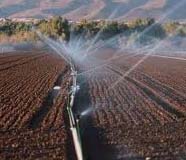
The move by the power utility has thrown farming plans by the 200 plot-holders at the irrigation scheme, situated at Donkwe-Donkwe, about 6km from Kezi Business Centre into disarray.
The disconnection of power supplies was taken at a time when the plot-holders had heaved a sigh of relief as the European Union under its Irrigation Aid Scheme repaired pumps that broke down in August 2009.
In an interview at the weekend, the secretary of the irrigation scheme committee, Mr Joram Mlilo, said the Zesa bill was hindering efforts to supply water to the plots, as the new pumps needed electricity to function.
“The bill as of the end of October, was US$43 000. In 2009 it was US$17 000,” said Mr Mlilo.
“The bill was not paid for 24 months and Zesa has also been factoring interests as well as hitting us with the fixed charge and that is why it has reached the US$43 000 figure.”
He said officials at Zesa had agreed to restore power if the villagers made a down payment of US$10 000.
“So far we have raised US$9 700 towards the bill. We did this through contributions from villagers,” said Mr Mlilo.
He said for the past 24 months there was not much yield because of low rainfall and this year they had decided to plant cash crops to generate income.
“We were trained by an organisation called Bulawayo Project Centre. We trained in planting potatoes, onions, garlic, beetroot and paprika,” said Mr Mlilo.
He said the irrigation scheme was the source of livelihood for villagers considering that the district always received erratic rains.
“The other problem we have is that the rubber pipes used to draw water have been damaged by weather elements,” said Mr Mlilo.
Turning to water problems affecting the district, Mr Mlilo said there were 4 500 homesteads that were affected.
He said the water shortages have led to teachers from Donkwe-Donkwe Primary School threatening to leave the school.
Meanwhile, villagers in the same area were taking their cattle to Kezi Dam for water, 15km away.
The village head of Mhlasi, Mr Mark Ndlovu, said the situation had become serious, as they have lost 40 cattle due to thirst in the past two months.
He said the main problem in the area was water and this had led to villagers resorting to fetching water from Kezi Dam.
“Cattle go as far as Kezi Dam to get water. There are 15 homesteads that have lost cattle,” said Mr Ndlovu.
He bemoaned the donor syndrome that has made the community perennial beggars, where villagers did not want to till land but wanted to wait for food aid.
However, Mr Ndlovu said villagers have started planting in anticipation of the rains.
“We have started dry planting waiting for the onset of the rainy season. We anticipate a drought this season as the rains have delayed,” he said.
Mr Ndlovu appealed to well-wishers to sink more boreholes, as this would go a long way in alleviating the water crisis in the area.



 Online Reporter