admin
adminpricing model has been rendered unworkable in terms of ensuring future infrastructure refurbishment by the extensive debts its owed by its clients.
This limited financial capacity has resulted in the power authority failing to institute significant levels of infrastructure refurbishment and upgrades at its power stations.
“Blame can also be equally apportioned to the Rate of Return (ROR) price determination model, which only caters for revenue collection meant to cover recurrent expenditure, but not capital expenditure which is very high for Zesa at the present moment.
“The implicit assumption built in the ROR methodology is that infrastructure rehabilitation and development should be met from the returns on assets which is pegged at 8,5 percent of the net asset value.
“However, Zesa has not been able to get a return due to the inability of consumers to pay.
“Even if the consumers where in a position to pay the 8,5 percent of the net asset value, it is still inadequate to improve the dilapidated power generation, transmission and distribution infrastructure given the fact that the funding needs of Zesa are in excess of US$8 billion,” he says in a draft “Infrastructure Rehabilitation and Improvement in Zimbabwe” report that was recently submitted to the Zimbabwe National Chamber of Commerce.
The ZNCC — in conjunction with the University of Zimbabwe — recently instituted a study into Zimbabwe’s state of infrastructure and the role of PPPs in rehabilitation and improvement.
The issue of determining an effective tariff model for public infrastructure was also a topic of note at the recent Euromoney Investment Conference, where experts in the field generally agreed that an effective tariff rate should cover operating costs while simultaneously allowing for some capital expenditure.
Zesa has tried to redress the tariff issue by effecting a 51 percent tariff increase about eight months ago, but this has not been accompanied by any significant improvement in terms of electricity output.
Although the tariff determination model per se may be dysfunctional, some observers contend that the issue is not one of increasing the tariff rate.
In recent investigation into Zesa’s operations by the Competition and Tariff Commission, the commission said it was illogical for Zesa to hike its tariff in view of an apparently unrecoverable debtors book, and limited capacity of consumers to pay high charges due to the liquidity crunch.
Accordingly, it proposes that Zesa would be better off finding a strategy to recover monies owed to it by consumers.
Dr Mumvuma says Zesa has not carried out any major infrastructure rehabilitation work, which has contributed to declining service levels. “Existing infrastructure has not been expanded through new investments for more than 20 years and most of it was built between the 1940s and 1960s.
“Due to the decomposition of the national grid, for example, transmission loss currently stands at 4,5 percent and distribution loss is at 10 percent,” he said.
The World Bank, however, carried out an assessment of the country’s energy sector last year, and in October reported that the Zimbabwe Power Company and Zimbabwe Electricity Transmission and Distribution Compan have made “concerted efforts” to rehabilitate dilapidated power infrastructure aimed at restoring system stability and security.
The Bretton Woods institution noted in particular progress that had been made in stabilising the weakened ash dam at the Hwange Power Station thereby reducing safety and health risks.
It also said significant investments have been made by ZETDC to rehabilitate protection systems, which have helped to reduce the risk of catastrophic destruction of equipment, and to replace distribution infrastructure destroyed by vandalism.
Nonetheless, a significant power supply/demand gap still exists which can only be offset through significant new investment in power generation infrastructure.


Online Reporter
- Herald
- October 3, 2026
- 48 views
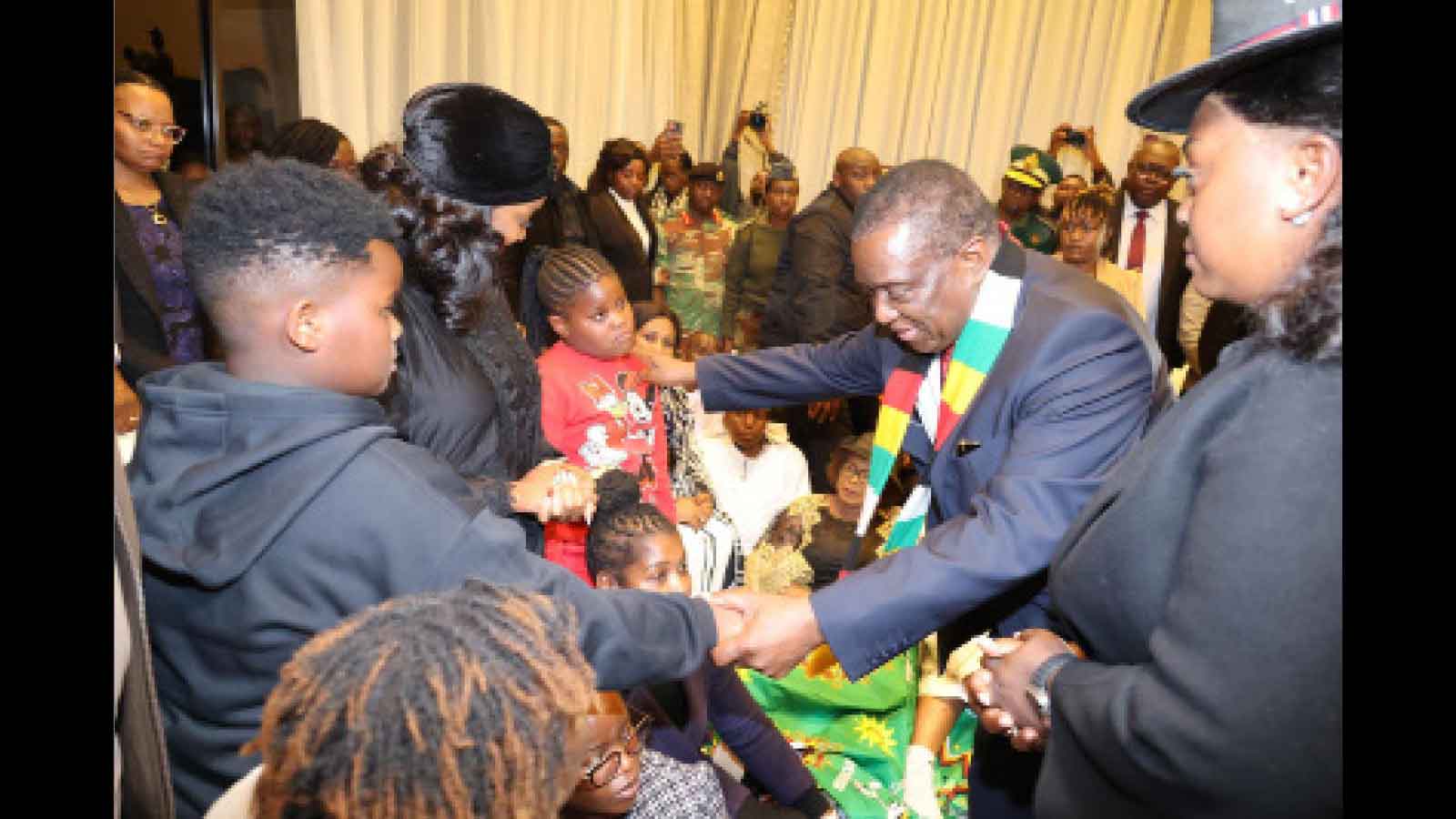
President honours Chivayo . . . accords businessman provincial hero status
Wallace Ruzvidzo-Herald Reporter PRESIDENT MNANGAGWA last night visited the Chivayo family home in Gletwyn, Harare, to pay his condolences following the death of businessman and philanthropist Mr Wicknell Chivayo, his…