Moffat Mungazi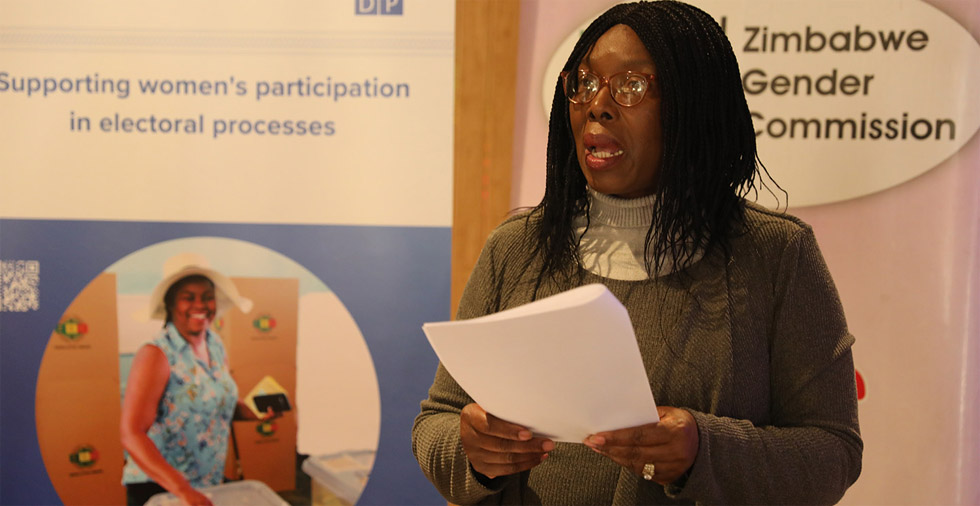
Lloyd Makonya
Correspondent
IN a landmark move aimed at tackling the prevalent issue of sexual harassment in Zimbabwe’s higher and tertiary institutions, Zimbabwe Gender Commission (ZGC) has initiated a formal investigation into allegations of misconduct in institutions of learning.
Sexual harassment has long been a silent crisis in academia, with many victims suffering in silence due to fear of retaliation, stigma, or lack of institutional support.
The Commission’s intervention represents a crucial step towards dismantling the culture of impunity that has allowed such abuses to persist.
The announcement was made in General Notice 134 of 2025 by the chairperson of the Commission, Mrs Margaret Mukahanana-Sangarwe, who called upon victims and witnesses to come forward with evidence.
“It is hereby notified that, in terms of Section 5 of the Zimbabwe Gender Commission Act (Chapter 10:31), the Zimbabwe Gender Commission intends to investigate complaints of sexual harassment in institutions of higher learning in Zimbabwe,” reads the official statement by Mrs Mukahanana-Sangarwe.
The Commission has invited submissions from affected individuals, with oral hearings set to commence thereafter.
The Zimbabwe Gender Commission is an independent body established under the Zimbabwe Gender Commission Act (Chapter 10:31) with the primary mandate of promoting gender equality and investigating cases of gender-based discrimination and violence.
Among its key responsibilities, the Commission investigates complaints of systemic gender imbalances, advises Government on gender-related policies, and ensures that perpetrators of gender-based violence, including sexual harassment, are held accountable.
The latest investigation marks a critical step in addressing sexual harassment, which has long plagued higher and tertiary institutions in Zimbabwe.
The Commission’s intervention provides a formal mechanism for victims to report cases and seek justice.
The ZGC’s investigation aligns with findings from the Parliament of Zimbabwe’s Joint Portfolio Committee on Higher and Tertiary Education, Innovation, Science and Technology Development; and Women Affairs, Community and Small to Medium Enterprises Development in their February 2022 report.
In a comprehensive report tabled in Parliament in May 2022, the committee highlighted the alarming prevalence of sexual harassment in Zimbabwe’s higher and tertiary education institutions.
The report of findings from 15 institutions of higher and tertiary institutions detailed widespread allegations of female students being coerced into offering sexual favours in exchange for academic grades, a practice colloquially known as “thigh for a mark.”
A major concern identified in the report was the absence of institutionalised policies on sexual harassment in most institutions of higher learning. Many universities and colleges lacked clear mechanisms for students and staff to report harassment, creating an environment where perpetrators acted with impunity.
The inquiry also established that victims often remained silent due to fears of academic victimisation, stigmatisation, and lack of institutional support. Furthermore, the report underscored how the hierarchical structures within institutions of higher learning allowed lecturers and other staff members to exploit students, particularly female students, who had little recourse to seek justice.
Beyond the confines of lecture halls and university campuses, students continue to face sexual harassment when they go on industrial attachments and work-related learning programs.
These internships, meant to provide practical experience and career development opportunities, often expose students especially young women to exploitative work environments where power dynamics are skewed against them.
Many are placed in a precarious situation, where refusing unwanted advances from supervisors or senior colleagues could result in poor evaluations, delayed graduation, or even the loss of an internship opportunity altogether.
With no clear institutional oversight or reporting structures during these internships, victims are often left to navigate these abuses in silence, fearing that speaking out could ruin their professional prospects.
The Zimbabwe Gender Commission’s intervention in future must also extend to addressing these off-campus vulnerabilities, ensuring that students on attachment are protected through enforceable policies, strict workplace monitoring, and accessible reporting mechanisms.
The Joint Portfolio Committee recommended the establishment of clear sexual harassment policies in all institutions of higher learning, mandatory training for staff and students on gender-based violence, and the introduction of independent reporting mechanisms.
These recommendations form the basis for the Zimbabwe Gender Commission’s latest intervention.
ZGC’s call for written complaints, witness testimonies, and supporting documents is a significant step in ensuring accountability and justice for victims.
In order to improve efficiency and effectiveness in addressing gender-related matters, ZGC has devolved and decentralised its functions to provinces.
In Mutare, a fully-fledged office has been opened, led by a regional coordination manager, Mr Confidence Mungayi, supported by public education officers, research and programmes officers, legal officers, and investigation officers to handle complaints in Manicaland.
This decentralisation ensures that victims can access the necessary support and justice closer to them.
The launch of this investigation signals a turning point in Zimbabwe’s efforts to curb sexual harassment in institutions of learning.
It sends a strong message that sexual exploitation and abuse will no longer be tolerated, and that survivors now have a platform to seek justice.
Zimbabwe Gender Commission’s proactive stance, combined with the recommendations from Parliament, could pave the way for a safer and more equitable learning environment for all students.
The success of this initiative, however, will depend on the willingness of victims and witnesses to come forward and the commitment of institutions to implement concrete reforms.
As Zimbabwe awaits the findings of this investigation, the hope is that this historic moment will lead to systemic changes that safeguard students and ensure that institutions of higher learning are places of education, not exploitation.
Those who wish to make submissions can visit the Commission offices or send written complaints to [email protected] by August 31, 2025.



 Online Reporter