Online Reporter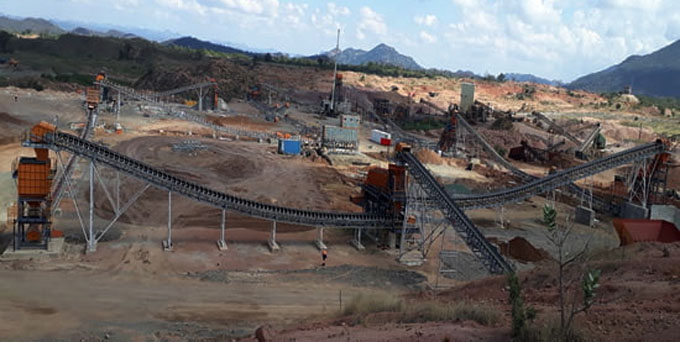
Lovemore Kadzura
Post Reporter
MANICALAND remains a magnet for international and local investors seeking to establish high-value businesses in the province after attracting US$193 million projected investments in 2024.
Data at hand shows that Zimbabwe Investment and Development Agency (ZIDA), issued 27 licences to investors to either set up or expand operations in Manicaland; bearing testimony to the country’s favourable investment climate.
Although the US$193m investment is a significant decline from the US$1,5 billion projected investments achieved in 2023 from 21 licences, it underscores the province’s enduring appeal to investors.
The leading sources of investment are China, India, Mauritius, South Africa, Pakistan, and local investors.
Key sectors attracting major investments include mining, real estate, construction, manufacturing, and agriculture.
Nationally, a total investment of US$8,63 billion is envisaged.
Harare tops the list as the leading investment destination in terms of licences issued.
“The year was characterised by positive progress in the investment facilitation processes at the agency. A total of 709 new investment licences were issued – a 15 percent increase from the previous year – reflecting continued investor confidence in the country’s economic potential. However, the total projected investment value declined by 10 percent to US$8,63 billion, indicating a shift towards smaller-scale or more risk conscious capital commitments, amid prevailing global shifts in economic policies.
“Manicaland saw a modest increase in the number of licences, but substantial drop in investment value from US$1,5 billion to US$193,58 million, indicating few large-scale projects compared to the prior year.
“Harare remained the leading province by volume, increasing its licences from 312 to 350. However, its projected investment value dropped significantly by 56 percent from US$1,99 billion to US$878 million, possibly reflecting a shift towards more medium-sized or service-based projects,” revealed ZIDA in a
statement.
“The positive economic progression witnessed last year also saw thousands of formal jobs being created, absorbing skilled, semi-skilled and unskilled workforce, reducing the unemployment rates,” added ZIDA.
This comes at a time Manicaland’s Gross Domestic Product (GDP) has grown to US$3 157 847 billion from US$1,46 billion in 2018, reflecting diversification of the provincial economy as various sectors are now contributing, unlike in the past when it was driven primarily by just five major sectors.
With Manicaland’s contribution to the national GDP at US$3,2 billion, the province is ranked fifth behind Harare (US$9,8 billion), Bulawayo (US$5b), Midlands (US$3,5b), and Mashonaland West (US$3,5b).
Director for Economic Development in the Office of the Permanent Secretary for Manicaland Provincial Affairs and Devolution, Mr Munyaradzi Rubaya recently said the province recorded a significant 6,6 percent GDP growth rate in 2023.
He said the provincial economy’s strong performance was driven by key sectors – including accommodation, food, and services – which grew by 20,6 percent, information and communication (16,4 percent), education (10,6 percent), agriculture (10 percent), and transport and storage (10,4 percent).
Mr Rubaya said the provincial economy is diversifying, with approximately 12 major drivers, up from just five in 2022; leveraging on an array of natural resources, including minerals, timber, tea estates, tourism facilities, and adequate water for agriculture.
However, Mr Rubaya said the province is not fully exploiting its resources, citing the example of phosphate produced in Buhera, which is processed in Harare. Similarly, diamonds produced in Chiadzwa are cut and polished in Harare, contributing to the capital city’s GDP growth at Manicaland’s expense.
The province’s proximity to the Port of Beira also makes it an ideal investment destination for transport, logistics, and distribution.
Manicaland’s energy sector is on the cusp of a transformative growth spurt, thanks to a landmark US$600 million investment by South Africa-based Ilinge Energy Automation.
This investment will fund a 400-megawatt power plant on a 750-hectare farm in Chimanimani, leveraging expertise from similar mega-projects in neighbouring countries and Europe.
Another investor, SV Hydro, has also tabled a bid to set up mini-hydro power stations, totaling 37 megawatts along several rivers, including Gairezi, Nyamombe, Pungwe, Odzani, and Osborne, further diversifying the province’s energy mix.
Currently, Manicaland produces about 46 megawatts from Independent Power Producers, falling short of its daily energy demand of 120 megawatts.
However, with these new projects on the horizon, the province’s goal of achieving self-sufficiency in energy generation and exports is within reach.
Confederation of Zimbabwe Industries Manicaland president, Mr Benard Makoni said the province is poised for significant economic growth, with vast investment opportunities across various sectors including timber, processing, agriculture, tourism, manufacturing, mining and agro-industry.
He also said investors are gradually returning to revive dormant companies and investing substantially in self-sustaining power solutions.
Mr Makoni also emphasised the need for Government to reassess the tenure issue for timber plantations, citing the requirement for long-term security to justify substantial investments.
By addressing this critical issue, Government can unlock Manicaland’s full potential, attracting more investors and driving economic growth.
Mr Makoni said the critical issue of land ownership in the timber industry, where estates lack tenure on the land they occupy, must be addressed as the uncertainty has deterred investors, who require guaranteed business continuity.
Despite this challenge, some timber sector companies, such as Wattle Company, Border Timbers, and Manica Board and Doors, have invested in new infrastructure, including sawmills and solar power.
Mr Makoni said agriculture must thrive to sustain agro-based companies, which rely on locally sourced raw materials.
“If we look at Manicaland, it has a comparative advantage in agriculture and the timber sector, both of which have potential for growth. Companies have undergone shrinkage over the past 20 years, but now there is potential for growth because everyone is turning around the corner. The biggest problem in the timber industry is ownership of land. All the estates do not have tenure on the land they occupy. Investors are not keen to come and invest because there is no certainty of business continuity.
“Companies like Tanganda and Cairns faced competition mainly from imports and operational costs, on top of a shortage of raw materials. These companies are dependent on agriculture, and there is a need for the country to produce enough cereals and buy raw materials from within, rather than importing. We must preserve foreign
currency by producing enough raw materials to be absorbed by manufacturers. Agriculture must boom so that agro-based companies are sustained through raw materials acquired at a lower cost.
“The car assembly sector has been down for a long time, and there is a need to revive it so that they become competitive and start producing again. There is a lot of investment that needs to come to Manicaland, and investors need assurance that they will be there for the long haul,” said Mr Makoni.
ZIDA also revealed sector-specific trends and shifts in workforce composition.
Manufacturing and mining emerged as leaders in employment, with manufacturing reaching a peak of 1 445 local and 54 foreign employees in the fourth quarter. Mining also saw significant growth, surging to 1 676 local and 117 foreign employees, driven by increased production and demand for technical expertise.
The construction sector experienced a notable rise in the second half of the year, with 663 local and 169 foreign hires in the fourth quarter, likely attributed to major infrastructure projects.
In contrast, agriculture and energy sectors showed signs of short-term or seasonal employment, with activity limited to the first quarter while tourism experienced fluctuations, recovering in the fourth quarter after a significant mid-year decline.
The financial sector recorded a notable spike in the fourth quarter, with 84 local hires, likely tied to year-end activities while health and transport sectors made modest contributions, with health peaking in the third quarter and transport declining by the fourth quarter.
Ends