Online Reporter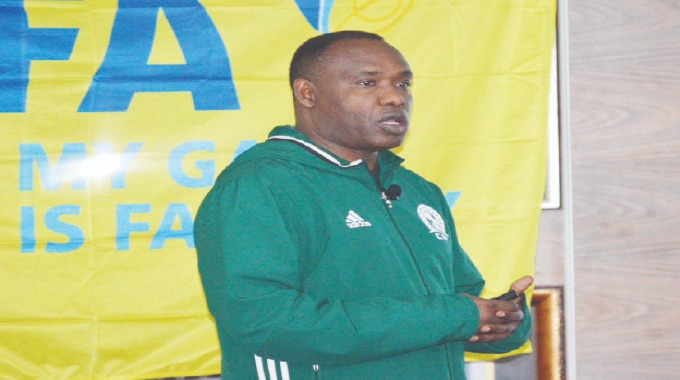
Eddie Chikamhi, Zimpapers Sports Hub
STUNG by years of poor results on the international stage, Zifa are going back to basics with a sweeping plan to relaunch junior football across the country next year.
New Head of Technical, Dominique Niyonzima, unveiled the long-term programme yesterday, saying it will anchor the association’s revival by strengthening youth structures and widening the talent pool.
“Early January we are going to launch youth competition in all 10 provinces in four age categories, Under-13, Under-15, Under-17 and Under-20, both for boys and girls, because we can’t talk about this ecosystem if we don’t have youth competitions in our country,” he said.
Zifa have long neglected junior development, choosing instead to focus on senior men and women’s teams.
The cost has been heavy. Fifa’s 2022 technical report bluntly stated that “Zifa has been operating without any strategy or plan for football development.”
The just ended Cosafa Under-17 Championship in Harare exposed the problem again when the Young Warriors failed to win a match.

Niyonzima’s mandate covers the full technical chain, from coach education and youth football to women’s development and player scouting.
He plans to integrate diaspora talent by inviting age-matched teams to play national tournament winners, then picking the best players from both.
“After the provincial competitions that we are launching next year, they will end up in a national tournament where we are going to scout the best players in each and every category,” he explained.
“After that selection, we are going to call upon the diaspora in the same age category to play the local teams and then after playing the local players, we are going to take from both teams the best that can fit our national teams for the games that are coming.”
Key measures already underway include the reintroduction of Caf coaching courses after seven years, the submission of a technical long term plan, adoption of a women’s football strategy, and the creation of youth leagues countrywide.
“Today, if we count the population in Zimbabwe, it’s 16 million. I hear that there are around 18 000 schools. If we count the number of coaches, we don’t have 1 000 coaches in the whole Zimbabwe,” said Niyonzima.
“So we are planning starting next year to train between 350 to 500 coaches on introductory courses everywhere in the country. We are going to appoint four regional technical directors in the four regions so that they can support the office in Harare.
“Our aim is that in two to three years’ time, we have each province with its own technical director. So, it will be an easy way to link up with the head office.”
Zifa vice-president Loveness Mukura said Niyonzima’s vast continental experience, including roles as Fifa Regional Consultant and Caf deputy Technical Director, makes him the right man to lead the revival.
“Niyonzima joins us at a time when Zifa has placed technical development at the heart of its vision.
“Football development is not an event but a long term process that requires vision, perseverance and collective effort,” said Mukura.
“We believe Niyonzima will bring with him the expertise, the passion and the leadership needed to drive this agenda forward.
“As an association we are committed to building a stronger foundation for youth football, women’s football, coach education and talent development.
“Our aim is to create clear pathways for every talented young boy or girl to grow, to learn and to dream so that Zimbabwe can reclaim its glory once again.”