

 admin
admin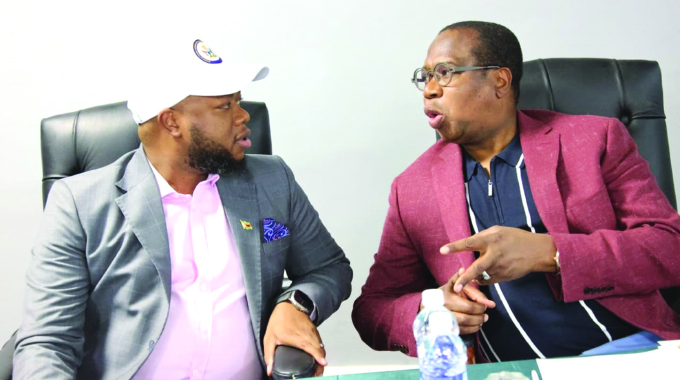
Ray Bande in MUTARE
THE recent adjustment of the Zimbabwe Gold/United States dollar rate among a raft of other measures taken by the Reserve Bank of Zimbabwe (RBZ) has achieved the intended goals, including stabilisation of prices on the market, Finance, Economic Development and Investment Promotion Minister, Professor Mthuli Ncube, has said.
In his keynote address during the official opening of the Ministry of Finance, Economic Development and Investment Promotion Strategic review and planning workshop in Mutare yesterday, Prof Ncube said the country’s central bank devalued the ZiG currency as a way of dealing with the widening gap between the official bank exchange rate and the parallel market rate.
He said the move, among other measures, helped stabilise prices on the market as well as cushion players in the retail industry.
“In order to address high inflation, exchange rate and currency volatility, experienced during the first quarter of 2024, Government through the Reserve Bank of Zimbabwe introduced a new structured currency in April 2024, the Zimbabwe Gold (ZiG) replacing the Z$, which resulted in significant price and exchange stability.
“Last week the central bank devalued the local currency and the reason was to close the widening gap that had begun to emerge between the official exchange rate and the parallel market rate, creating challenges for the retail sector.
“Only yesterday, I had a robust conversation with suppliers and retailers but one thing that was clear is that the measures taken created stability especially on pricing even though there are some outstanding issues that we need to look at,” he said.
Contrary to widespread speculation by some pseudo economists that Government has no confidence in its own currency, Prof Ncube revealed that the Government of Zimbabwe is collecting 50 percent of its revenue in the ZiG currency.
“To support the ZIG, Treasury’s directive for companies to pay at least half of their second quarter taxes in local currency has bolstered the new currency.
“As I speak we are receiving 50 percent of our domestic revenues in the local currency.
“This will go a long way in helping promote the use of the local currency and our own show of confidence in our currency,” he said.
Prof Ncube also demystified the achievement of an upper middle income economy by 2030, saying Zimbabwe is already a middle income economy and it is only aiming at evolving from the lower to the upper income economy.
“For the avoidance of doubt, Zimbabwe is already a middle income economy and it is only aiming at evolving from the lower to the upper income economy.
“We are only a lower middle income economy and we are only gravitating towards the upper middle class economy. We are looking forward to it. The Second Republic ushered in an unprecedented era of growth for the country. We are on a long journey to rebuild the country and recover lost ground by implementing polices that uplift the living conditions of our citizens. Attracting both domestic and foreign investment is a mission that Government has taken seriously, hence the mantra ‘Zimbabwe is open for businesses,” he said.
The one-week long Ministry of Finance, Economic Development and Investment Promotion Strategic review and planning workshop is expected to see the ministry coming up with measures to boost the growth rate of the economy.


 Online Reporter