Online Reporter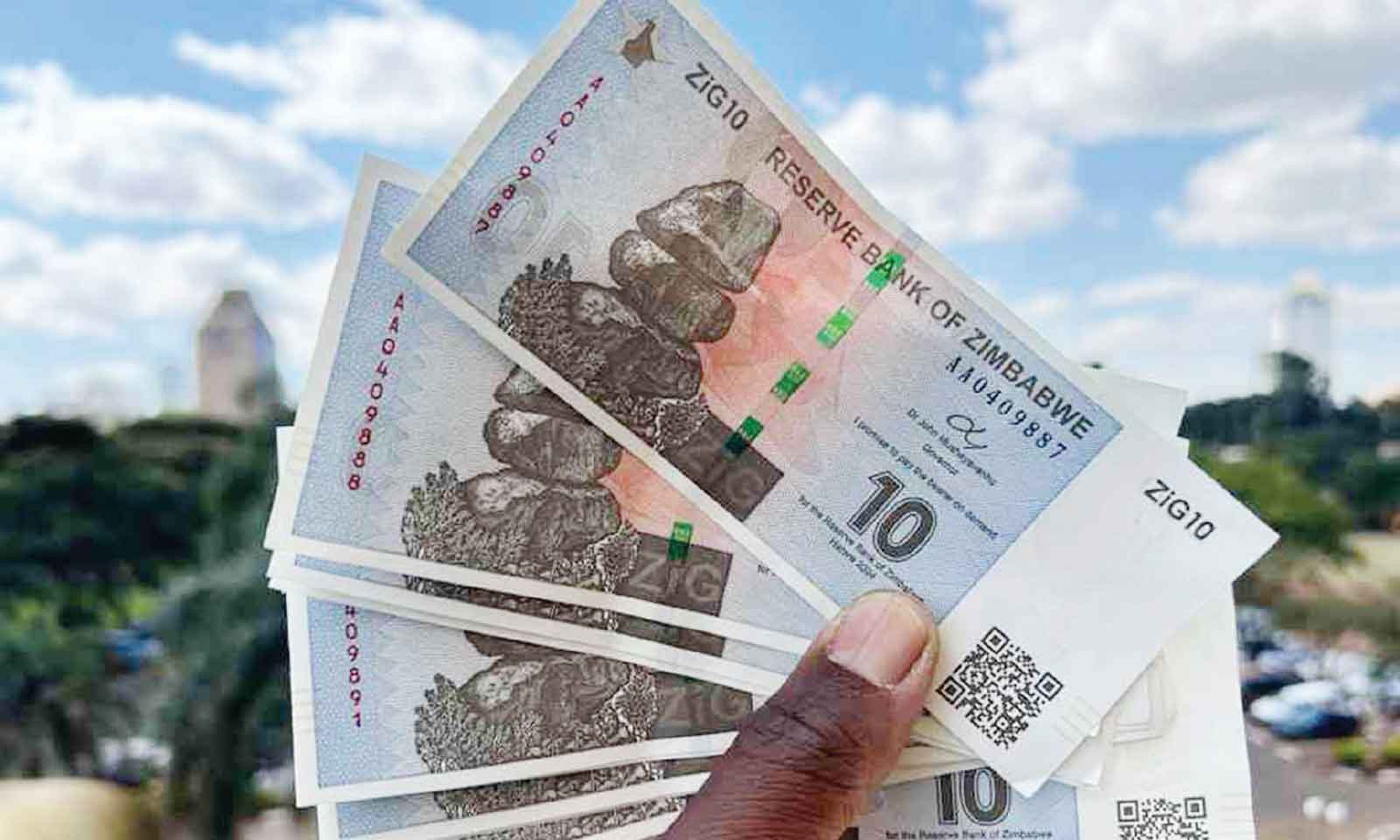
Dr John Mushayavanhu
THE Reserve Bank of Zimbabwe (RBZ) is confident to highlight that the monetary and financial conditions have been favourable to support robust economic activity and the prevailing price, currency and exchange rate stability in the economy.
These developments are anchored on the strong implementation of ongoing reforms aimed at restoring and sustaining central bank policy credibility under the back-to-basics initiatives introduced by the Reserve Bank since the beginning of my assumption of office in April 2024.
Notable achievements in 2025
- Maintaining a low and stable month-on-month ZiG inflation averaging 0,4 percent from February to November 2025, with annual inflation declining sharply from 82,7 percent in September to 32,7 percent in October and 19 percent in November 2025.
ZiG year-on-year inflation is now expected to end the year at between 15-17 percent.
- Creating and supporting an efficient foreign exchange market now characterised by a stable market-driven exchange rate, which has oscillated between ZiG26-27 per US dollar for much of the year 2025, alongside a narrowing parallel market premium, which has since stabilised below 20 percent from prior levels of over 40 percent.
- Amassing significant foreign currency reserves from US$276 million in April 2024 to current levels of over US$1,1 billion in gold and other foreign reserves as of December 15, 2025. The foreign currency reserves have been consistently kept at levels more than sufficient to cover both the ZiG reserve money and ZiG deposits in the banking system multiple times and equivalent to 1,2 months of import cover.
- Deployment of a ZiG600 million Targeted Finance Facility (TFF) to ensure smooth credit flow to the productive sectors.
- Supporting and superintending a vibrant and resilient banking sector characterised by safe, sound and well-capitalised institutions. Banking sector earnings have shifted sustainably from volatile revaluation gains to core intermediation activities, fostering a predictable environment that rebuilds public confidence.
- Maintaining a safe and efficient National Payment System with a consistent system uptime of at least 98 percent.
- Facilitating and supporting the seamless settlement of external payment obligations, including critical imports of raw materials and capital equipment under the willing-buyer, willing-seller (WBWS) foreign exchange trading arrangements.
Commendably, the prevailing monetary and financial conditions have significantly boosted confidence in ZiG on its functions as a store of value and medium of exchange.
The velocity of ZiG circulation, which is the rate at which it changes hands, has significantly normalised as economic agents are now keeping ZiG deposits in the banking sector for relatively longer periods without the fear of losing value, thus curtailing the practice of unwarranted rapid conversions of ZiG to foreign currency.
Prices of key basic commodities like bread have remained relatively stable, also reflecting the strengthening ZiG exchange rates quoted by retail outlets under a liberalised pricing system following the repeal of Statutory Instrument 118A of 2022.
Reflecting these positive developments, the proportion of ZiG usage in the national payment system has significantly increased to a peak of 43 percent and averaged between 35-40 percent for the greater part of 2025.
The prevailing monetary and financial conditions have, thus, created the much-needed trust, credibility, certainty and predictability in the economy, critical for effective business planning and decision-making.
More importantly, the stability witnessed in 2025 has alleviated the yesteryear challenges of accounting in a hyperinflationary environment, thereby engendering a fair value to financial accounting and bolstering ZiG’s critical function as a unit of account.
How inflation was moderated in 2025
The significant moderation of inflation in 2025, far exceeding the Reserve Bank’s initial end-of-year target of 30 percent, to 19 percent by November 2025, stems from a coordinated policy mix aimed at restoring policy credibility and public confidence in the ZiG.
This “walk the talk” commitment broke the inflation cycle, fostering trust in the prudent monetary framework, supported by no recourse by Government to borrow from the Reserve Bank.
Forex exchange market in 2025
In 2025, Zimbabwe’s foreign exchange market reached a turning point, evolving into a more stable, transparent and efficient system under the WBWS framework.
In essence, the floating exchange rate management system being pursued by the Reserve Bank under the WBWS foreign exchange trading arrangement has served the country very well in terms of supporting price discovery and ensuring the availability of foreign currency to meet bona fide external payments.
The further liberalisation and enhancement of the foreign exchange market system through the removal of interbank trading limits allowed banks to set spot rates freely, with the Reserve Bank intervening only to smooth volatility.
Commendably, the foreign exchange system was able to meet all bona fide foreign currency needs for settling external transactions, thus significantly curtailing parallel market activities as economic agents with genuine foreign currency needs have no incentive or reason to participate in the parallel market for foreign exchange.
As a result, the foreign exchange has witnessed bid-offer rates exhibiting a normal random walk pattern, signalling a well-functioning market with enhanced price discovery and participation.
The parallel market premium significantly narrowed from levels of above 40 percent and stabilised below 20 percent, reducing arbitrage and aligning official rates with fundamentals for a healthier business environment.
Notably, the current foreign exchange rate management system has minimised the degree of exchange rate misalignment and the extent of over- or undervaluation of the exchange rate.
This has been reflected by the Real Effective Exchange Rate (REER), which has largely remained closer to its equilibrium for the greater part of the year.
The strong foreign currency receipts ensured all bona fide needs for imports, raw materials, capital equipment, dividend repatriation and incomes were fully met. These advancements reflect greater market interplay and efficiency, positioning the forex market to support sustained economic growth of 6,6 percent expected in 2025 and around 5 percent in the medium term.
The exchange rate has remained largely stable and predictable since the market-driven self-correction in September 2024 and has oscillated between ZiG26-27 per US dollar for much of the year.
This stability, anchored by tight monetary policy and strong reserve backing, has boosted investor confidence and curtailed distortions.
The foreign exchange market has been supported by strong foreign currency inflows, which reached US$14,7 billion in the 11 months to November 2025, a 24,2 percent increase over the same period in 2024.
Strong external sector developments have improved the current account outlook, with the surplus projected to exceed US$1,3 billion in 2025, up from about US$500 million in 2024, largely underpinned by robust diaspora remittances estimated at US$2,8 billion in 2025, compared to US$2,5 billion in 2024.
A strong current account balance signals strong real exchange rate dynamics and is ordinarily associated with a strengthening or appreciating exchange rate.
Backing the ZiG with gold
The Reserve Bank has placed strong emphasis and is committed to ensuring that ZiG is always and at all times backed by adequate foreign currency reserves, mainly in the form of gold.
The full backing of ZiG with foreign currency reserves remains a central pillar of the monetary framework, directly underpinning ZiG’s credibility and value.
Since April 2024, the RBZ has aggressively pursued a foreign currency reserve accumulation strategy through mandatory mining royalties, outright gold purchases, utilising part of export surrender receipts and leveraging historic foreign currency receipts boosted by gold price rallies, alongside rebounding platinum group metal (PGM) prices. Reflecting these developments, foreign currency reserves, comprising gold, other precious minerals and foreign deposits and cash, grew from US$276 million in April 2024 to US$1,1 billion as of December15, 2025, achieving about 1,2 months of import cover.
These foreign currency reserve holdings consistently provide over five times coverage for the ZiG component of reserve money and fully back the entire stock of ZiG deposits in the banking system.
For 2026, the Reserve Bank will continue and entrench the current trend of foreign currency reserves accumulation with the aim of eventually attaining the desired optimal reserves of three to six months import cover, consistent with the desired international benchmarks and the regional indicative macroeconomic convergence target under SADC.
The Reserve Bank strongly believes that maintaining the current trend of foreign currency reserves build-up would enable it to meet the desired target in the near to medium term, for the smooth transition to a mono-currency.
This will be achieved via sustained export surrender enforcement, strategic precious mineral purchases and our robust external sector.
A growing reserve chest will further entrench ZiG stability and external shock resilience.
New ZiG notes in 2026
The Reserve Bank is fully prepared to roll out new and improved ZiG banknotes in the first quarter of 2026, as outlined in the National Development Strategy 2 (NDS2).
The bank further reiterates that the new ZiG notes are not a new currency but an enhanced family of high-quality, durable notes, responding to public calls for better quality to improve transactional convenience, trust and confidence while optimising the denominational mix.
The Reserve Bank’s readiness is advanced, with the new ZiG notes ready for delivery through financial institutions and other authorised channels.
The roll-out will be gradual and systematic, strictly aligned with economic developments and genuine cash demand for transactions and guided by the following principles:
- Non-inflationary injections: New ZiG notes will not result in increases in money supply as banks will exchange the ZiG cash with their electronic bank balances (RTGS) held at the Reserve Bank, a simple conversion implying no increases in money supply.
- Phased management: Introduction matches transactional needs, monitored closely to avoid excess liquidity.
- Public confidence safeguards: A comprehensive awareness campaign will educate on note features, durability, and the process’s stability-preserving nature.
This prudent approach builds on 2025 gains, ensuring seamless convenience without undermining ZiG stability.
SMEs & informal economy
As part of implementation of both NDS1 and NDS2, financial inclusion remains a key strategic focus area for the RBZ.
The apex bank is coordinating implementation of the National Financial Inclusion Strategy.
During the year, the Reserve Bank partnered with other financial sector players and conducted financial literacy awareness programmes targeting both urban and rural communities. The campaigns revealed low utilisation of the available formal sources of finance by the targeted marginalised segments, posing challenges for effective monetary policy transmission.
As guided by the NDS2 (2026 to 2030), the RBZ together with other stakeholders will intensify financial literacy awareness campaigns in rural areas to enhance wider usage of the available financial products and services. To enhance wider access to financial products and services, the bank encourages the formalisation and adoption of digital payment platforms, including point-of-sale machines by micro, small to medium enterprises (MSMEs) …
Long-term ZiG stability
The Reserve Bank, under NDS2, will continue to support the wider access and usage of the local currency through targeted measures aimed at ensuring its long-term stability and sustainability.
The transition from the current multi-currency environment to the full and exclusive use of the local currency for domestic transactions is not an event but will be sign-posted by the achievement of specific Conditions Precedent (CPs).
Important to note is that the transition will be market-driven and contingent upon achieving and sustaining the CPs …
Already, the Reserve Bank has made significant progress towards realising the achievement of most of the CPs, including the build-up of foreign reserves backing ZiG to more than one month import cover, the stability and resilience of the financial sector and the national payment system, as well as stabilising prices and the exchange rate.
Going forward, the Reserve Bank remains anchored on maintaining stability and sustainability of the CPs to guarantee a smooth transition to mono-currency.
The Reserve Bank further re-emphasise that the transition to mono-currency relates to the exclusive use of the local currency, ZiG,mfor domestic transactions, while preserving foreign currency for settling external transactions and imports.
As in other jurisdictions and as was the practice during the time when Zimbabwe had its own currency, economic agents will still be permitted to operate foreign currency accounts and only convert foreign currency to ZiG for settling domestic transactions.
The Reserve Bank also reiterates that foreign currency loans and contracts will remain payable in the agreed currency and business continuity will be guaranteed during the transition process.
Dividends and other cross-border payments will be paid and remitted in the approved currency, and contracts will continue to be settled in the currency of the contract.
Overall, the envisaged mono-currency framework provides assurance that foreign currency-denominated accounts, assets and liabilities will not be forcibly converted, and that legitimate external payments and obligations will continue to be met under transparent arrangements.
2026 outlook
The outlook for 2026 is positive, building on the year 2025’s solid macroeconomic stability, underpinned by low and stable inflation, sustained exchange rate stability and attainment of the envisaged 5 percent real GDP growth under NDS2.
Inflation will continue to moderate, and the Reserve Bank seeks to achieve single-digit annual inflation by the first quarter 2026 and achieve and maintain the SADC macroeconomic convergence criteria thresholds of 5-7 percent by 2029, in line with the transitional plan to mono-currency.
This will be achieved through the interplay of prudent monetary policy, fiscal discipline and exchange rate stability.
The Reserve Bank sees exchange rate stability persisting in 2026 and beyond, underpinned by improvements in the foreign exchange management systems, and supported by strong domestic and external sector fundamentals such as robust foreign currency inflows, healthy balance of payments, growing foreign reserves and prudent money supply management.
These monetary policy measures will underpin the envisaged real economic growth of 5 percent in 2026, on the back of strong and resilient performance in agriculture, mining and tourism, among other critical sectors.
The focus of the Reserve Bank will continue to be calibrated to achieve price and exchange rate stability without prejudice against economic growth.
In essence, a delicate balance between maintaining price stability and growth will be pursued, with price stability remaining the primary objective of monetary policy.
Dr Mushayavanhu was responding to questions from our reporter Debra Matabvu.