

 admin
admin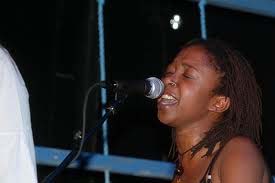
all at some point captivated us. As the cover-girl of a new magazine on the market, Jewel she shared with us some insights into who she really is off the stage.
This interview was reproduced from Jewel magazine July 2011.
Who is Chiwoniso Maraire?
Chiwoniso Maraire is a performing artiste and mother.
Three words that best describe you . . .
Spiritual, passionate, committed.
As a little girl I had a beautiful golden dog named Tina, for Tina Turner.
I was a huge fan, still am. Those legs! That voice! Her power to overcome such great adversity.
The legacy I want to leave is one of young women realising that they can do whatever they put their minds to. There are no limits.
I want my children to be happy and to achieve their dreams.
If I could do it all again I would have gotten a driver’s licence at 18 when my father told me to.
Describe Chiwoniso the mom?
Those close to me will tell you that my daughters are the centre of my universe. They come first, before anything else, including my work.
How would you describe your parenting skills?
Parenting, very often, is a matter of trial and error. If you are completely open as a parent you come to understand pretty quickly that you have as much to learn from your children as they do from you. In as much as I am a mother and therefore a disciplinarian and protector, I am also a human being with the responsibility over the well-being of two other human beings. This reality humbles me.
Because I am raising two daughters I am particularly diligent in reminding them that their gender is of no consequence when it comes to whom they shall grow to become. I teach them that the power lies in the mind, therefore education is very important, as is compassion, humility and strength. I tell them often how special it is to be the girl child.
Tell us about your relationship with your parents?
I was very close to my parents. My father was present for more years than my mother because she became ill with kidney failure when I was quite young, which was very sad. It’s difficult when you have to come to terms with the truth that one of your parents is going to leave you before you are prepared.
In my case it wound up being both; my father passed on two years after my mother. In reflection I see now that my parents were two of the strongest African people ever to have blessed my life and that of people around them. When we were living in America they portrayed a love and pride of being Zimbabwean that was passed on to my siblings and I, a pride which I carry to this day.
Favourite childhood memory?
I can easily say one of my favourite childhood memories is me waiting up for my parents to come home from a performance they had done, then they would play me a song before I went to bed. My father would play mbira, both he and my mother would sing. Very special.
Where did you go to school?
I went to different schools. My primary began with a short stint in Seattle, Washington, then my family moved to Zimbabwe. I was at Courteney Selous in Mandara, then Lewisam School in Chisipite. After that we moved back to the States and I was at Hamilton Middle School in Seattle. From there I did another short stint in Portland, Oregon, then moved back to Seattle where I received a scholarship at the Northwest School of Arts, Humanities and Sciences.
We moved back to Zimbabwe and I attended Mutare Girls’ High School for forms three and four. After that I took A-Level evening classes at the University of Zimbabwe (where my father was teaching) and day classes at ZDECO in English, Sociology and History. midway through my A-Level the Ethnomusicology programme was started at the Zimbabwe College of Music so I transferred there.
You were born in the US yet you are very loudly and proudly Zimbabwean? (despite having gone back to live in the US for a while, you always come “home”) what bonds you to Zimbabwe (why is this home for you)?
My bond with Zimbabwe I credit to my parents. Whilst living in the States my parents used to perform wonderful shows with my father’s mbira and marimba groups. Often my parents would take my siblings and I along with them because most of their performances were in a family-based environment.
Our parents spoke to us mostly in Shona at home, and were careful to surround us with as many of their Zimbabwean friends and family living in America at the time as possible.
They constantly reminded us that we were the “true” African Americans, in that we were American born of Zimbabwean lineage. We were always aware that we were Zimbabwean children born and living in America.
The other thing is that, as a mbira artiste, my soul is tied to Zimbabwe deeply. I have lived in America for much of my life, yes, and a part of me is very much American, and I am extremely appreciative of this. But when my soul needs recharging, it’s to Zimbabwe I come. This is home. I am also part South African and am fiercely proud of my Xhosa roots, too!
Who is or was your role model?
I have different ones for different reasons. My parents, Bob Marley, Ellen Maraire Chitenderu (my aunt).
What or who inspired you to start singing ?
My parents.
What do you feel people focus too much on about your personal life?
Definitely my personal life has come under the spotlight more times than I find comfortable. My personal relationships come to mind. It’s extremely disconcerting when you are trying to navigate your way through sensitive issues with your partner at the time and then find yourself reading about it in the newspaper, even more so when the facts are not correct. It’s intrusive and inconsiderate.
Another thing is that I’ve always enjoyed an active social life when away from the stage and I find it frustrating when this is over scrutinised. I don’t agree with the thought that being a performing artiste in the frontline means you cannot be yourself, especially when you are a young artiste.
My first stage experience was with Minanzi 3, my father’s marimba band, when I was about 12.
What has made the mbira your instrument of choice?
It’s not so much that I chose mbira, more that it chose me. I play other instruments also, but mbira had a special pull from a young age. I think it is one of the most beautiful sounds.
Your fans! What is the craziest experience you have ever had involving a fan?
Hahaha! I’ve had quite a few! One of the best is having people asking me to sign autographs on their chests or their arms because they don’t have any paper then hear them say “I’m not going to wash this for a week!” hilarious. I’ll be thinking . . . ” mmm . . . it might have faded by then . . .” lol! The worst is when someone becomes a stalker. Stalkers believe that they have more right to you than anyone else, in their mind they create a fantasy where they have become either your best friend, or a prospective lover. It can be quite tricky to handle.
How do you handle fame?
I am very close to my family and old friends. They keep me grounded, and are quick to correct me if they think it’s needed. They are also my most loving and protective shield. When I have a moment (thank goodness they haven’t been many) where a journalist has taken an unnecessary dig at me or someone has done something spiteful or unkind, they are the first to pick up the phone and tell me to be strong, that it shall pass. I wouldn’t be able to handle the fame without the family.
Also there are the fans, the beautiful ones, who keep a smile on my face. The ones who come to the show and stand right in front and shout “mwana’ngu iyeye! Hadye chimwe chinhu!” Hahaha. Above all, though, I pray. I accept that it is a huge responsibility to bring awareness and joy to people, and this humbles me. Every day I give my praise to God and my ancestors, and ask for guidance and wisdom. Every day.
What are your future goals?
I will always make music because it is such an inherent part of me. I love music. I am also deep into social work and I see that unfolding more. I want to work more in the communities cleaning streets, discovering more about the books the children are reading in school, availability of medication, especially ARVs.
What is the biggest challenge you’ve faced as an artist in Zimbabwe and how have you overcome it?
I think the biggest challenge is that Zimbabwe is a very small country, and therefore to make a living off of music alone can sometimes be very hard. I overcome this by tenacity and hard work. It helps greatly that there are many overseas performances. Having said that, the Zimbabwean people are the most loyal, so it becomes worth it always at the end of the day.
How can one book you?
Through Tsungi Zvobgo, CEO of New Sofala Entertainment.
Your Favourite Song?
“Redemption Song” by Bob Marley
Favourite album?
Everything by Salif Keita.
Hottest song right now?
“Sufferer Child” by Uzinzo (South Africa)
What are you currently working on?
I’m working on a recording for Antonio Forcione’s new CD in Mono Mukundu’s studio. I’m also in rehearsals for a Zimbabwean version of the Vagina Monologues to be performed at 7 Arts on June 17th.
At the end of the month I am travelling to South America for a Poetry festival in Mendellin.
Career highlights?
There have been many special moments. My most recent was performing with Moke, the rock band from Holland.
We did a beautiful performance for Hifa then went on to perform in Holland for a crowd over 150 000 people. Hokoyo Zimbabwe!
Besides singing what other talents do you have?
I’m a fantastic cook.
Your advice to upcoming artists?
Diligence, diligence, diligence . . .
How do you think as Zimbabweans we can build a strong brand that is proudly and loudly Zimbabwean? We have seen SA and Nigeria promote themselves and reach international levels how do you think we can do this?
There is the misconception that art is easy. It is not. You have to work as hard in this as in any other line of work. You have to pay attention to detail, spend sleepless nights getting it right, whether it be in a music studio, a design studio, an artistic/painting studio, a TV/film studio. There are no shortcuts. We have to remember that we are unique, also. There is only one country in the world that is Zimbabwe. Also we must not be unwilling to challenge the competition!
How do you think the artistes and creatives of Zimbabwe can contribute to the building of the economy?
Zimbabwe’s economy right now is in a process of change, which creates a huge challenge for the artistes and creatives. In reality, I think we need to have closer relations with the Ministry of Education, Sport, Arts and Culture, the National Arts Council, the Zimbabwe Musicians Union and such, and find a way to balance what artistes make and how it can be brought back into Zimbabwe’s economy.
How can the private and public sector be more supportive towards the artists and creatives in Zimbabwe?
By understanding that artistes cannot be expected to perform for free . . .
What drives you?
God, people, life.
Parting words of wisdom?
Keep praying! – Jewel Magazine.


 leeroy
 Online Reporter