Online Reporter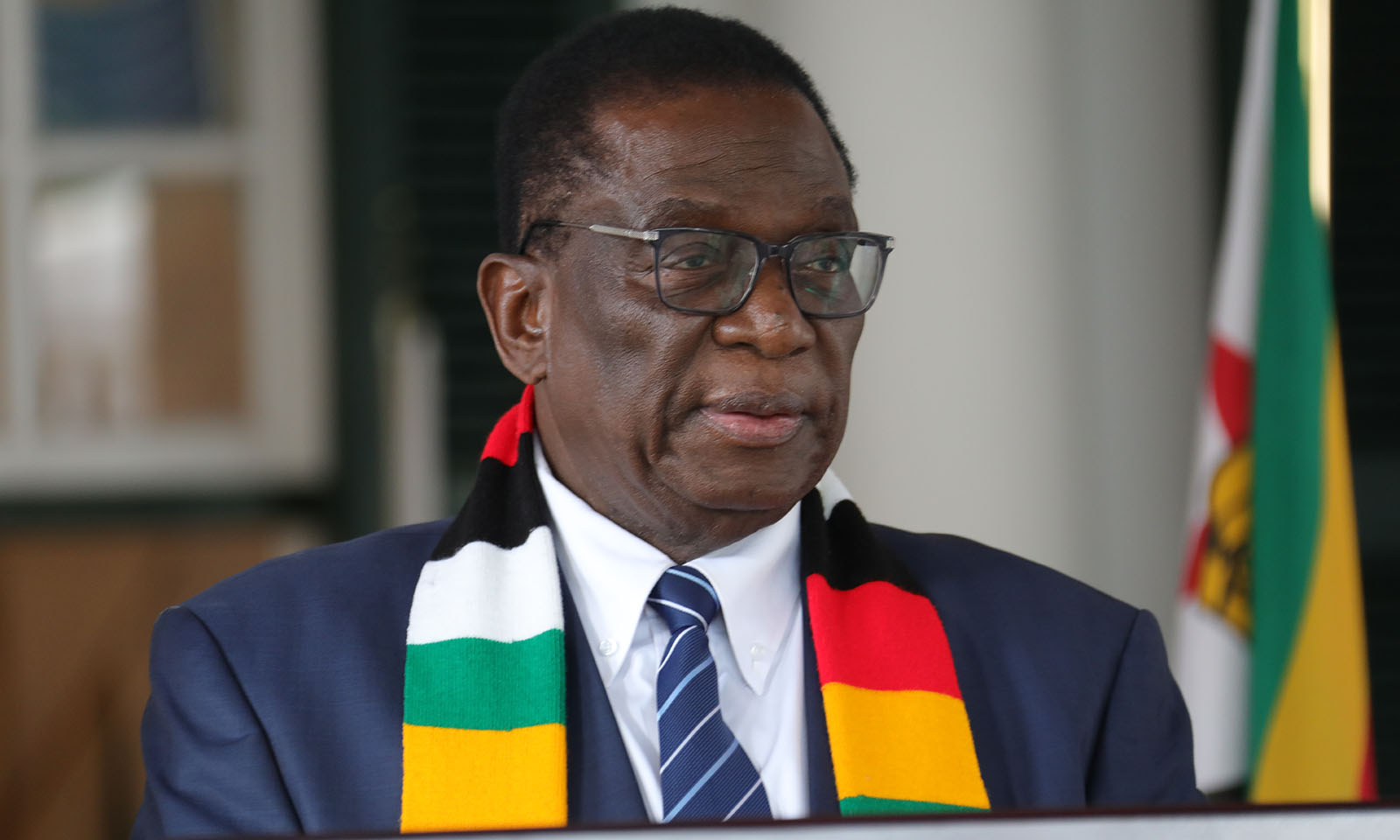
Ranga Mataire
Group Political Editor
History has often shown that when visionary leaders forge personal bonds, their nations prosper.
The story of Singapore’s founding father, Lee Kuan Yew, and China’s reformist leader, Deng Xiaoping, is a prime example of how enduring friendships between Heads of State can catalyse transformative development.
Their alliance not only deepened bilateral ties, but also spurred strategic cooperation that contributed to Singapore’s meteoric rise as a global economic hub and China’s modernisation journey.
The differences in size and population between the two nations are stark; Singapore is a city-state with 0,4 percent the population of China and a landmass about half the size of Shanghai’s Pudong district.
Yet, China saw in Lee Kuan Yew a source of wisdom and leadership worth emulating.
His relationships spanned generations of Chinese leaders – Mao Zedong, Deng Xiaoping, Jiang Zemin, Hu Jintao and Xi Jinping – anchoring a mutually beneficial partnership grounded in trust, pragmatism, and shared developmental aspirations.
President Xi would later describe Lee as “an old friend of the Chinese people” and a founding architect of China-Singapore relations.
Today, the relationship between President Mnangagwa and President Aleksandr Lukashenko of Belarus is continuing this tradition of leader-driven diplomacy.
Just like the historic ties between Singapore and China, the relationship between Zimbabwe and Belarus is not built on sentiment alone, but on a pragmatic understanding that strong relations at the top can unlock meaningful cooperation across strategic sectors.
President Mnangagwa’s foreign policy stance of being “a friend to all and an enemy to none” has opened doors for re-engagement with the world. Among the most significant of these friendships is Zimbabwe’s deepening alliance with Belarus.
From political solidarity to transformative projects in agriculture, mining, health, and manufacturing, the partnership between President Mnangagwa and President Lukashenko has evolved into a model of modern diplomacy.
Their collaboration not only honours a legacy of leader-to-leader partnerships that shape nations, but also charts a bold new path for South-South cooperation in the 21st century.
Why is Zimbabwe forging ties with Belarus, a country with a small population of 9,2 million?
Despite its modest size, Belarus punches well above its weight on the global stage. The country has mastered the art of leveraging its core industrial strengths to carve out a competitive edge internationally – a lesson Zimbabwe is keen to draw from as it charts its own path to economic transformation.
Belarus is a global force in the manufacturing of dump trucks and agricultural machinery, with companies like BELAZ (Belarusian Automobile Plant) at the forefront. BELAZ, in particular, is renowned for producing some of the world’s largest mining trucks and commands an impressive 30 percent share of the global market for extra-heavy-duty mining vehicles.
Alongside this, Belarus maintains a strong footprint in the production of advanced agricultural equipment.
As Zimbabwe pursues its vision of becoming an upper-middle-income economy, the mechanisation of key sectors – agriculture (7 percent of GDP), mining (12 percent), and manufacturing (21,49 percent) – has become a strategic imperative.
In this regard, Belarus emerges not just as a political ally, but as a critical enabler of Zimbabwe’s industrialisation agenda, offering the tools, technology, and partnership needed to accelerate progress across these priority sectors.
Presidents Mnangagwa and Lukashenko have both affirmed the mutual trust and understanding between them.
The Belarusian leader recently said his country “highly appreciates the friendship with Zimbabwe” and that the two countries are “united by common approaches to the formation of a just world order based on the sovereign equality of all states, multilateralism, respect for the UN Charter and international law.”
In a true comradeship gesture, President Mnangagwa also affirmed “the warm hospitality” extended to his delegation during a recent visit, saying Belarus has become “truly a home away from home.”
“You are an example of leadership. Thank you for the role you play in the fruitful discussions and cooperation that contribute to our relationship and friendship. Thank you very much, dear brother!”, President Mnangagwa said as he addressed his Belarusian counterpart.
The blossoming of relations between the two countries has come a long way.
Following the establishment of bilateral relations between the two countries on April 16, 1992 and the subsequent accreditation of Ambassador Alexander D. Sidoruk to Zimbabwe in 2018, Zimbabwe and Belarus have mutually cooperated on a number of issues internationally.
Political cooperation between Zimbabwe and Belarus has been proactive, aligning on various international issues. To strengthen this partnership, President Mnangagwa visited Belarus in January 2015 and again as Head of State in January 2019.
Belarusian President Lukashenko reciprocated with a State visit to Zimbabwe from January 30 to February 1, 2023. The visit marked a transition from political cooperation to tangible economic collaboration, resulting in agreements in areas such as industry, trade, agriculture, energy, transport, and mining.
During his visit, President Lukashenko announced an agreement to supply Zimbabwe with Belarusian tractors through the Belarus Farm Mechanisation Facility, demonstrating their commitment to mutual prosperity.
Before this visit, Political Consultations between the Ministries of Foreign Affairs took place in October 2022, leading to an Agreement establishing a Joint Permanent Commission on Cooperation.
The Joint Permanent Commission has been critical in promoting concrete business exchanges, as shown by the holding of the Second Belarusian-Zimbabwe Business Forum held in Harare in January 2023, which was attended by more than 30 companies from Belarus and more than 200 Zimbabwean participants.
The business forum attracted 11 Belarusian companies to exhibit at a country exposition – “Made in Belarus” during the Zimbabwe International Trade Fair (ZITF), which took place on April 25-29, 2023 in Bulawayo.
Building on the bilateral relations, the two countries have set up a commission at the level of Heads of State. This means the commission will become a high-level strategic mechanism for coordinating the joint commission and committees.
Zimbabwe and Belarus have significant potential to enhance their bilateral trade. Zimbabwe’s mineral resources and fruit production align well with Belarus’s demands. Their relationship is built on mutual trust, avoiding the dependence preferred by the dying Western hegemony.
Recent agreements signed by President Mnangagwa during his State visit to Minsk highlight this growth potential, including:
- VISA exemption for diplomatic and service passports
- Roadmap for Strategic Cooperation 2026-2030
- Cooperation on natural disasters and technological hazards
- MOU on Small to Medium Enterprises development
- Partnership in information and press
- Revamping Parirenyatwa Group of Hospitals and strengthening health sector ties
- Cooperation on waste management and treatment
The strong friendship between President Mnangagwa and President Lukashenko is rooted in mutual respect and shared ambition. As it deepens, it promises lasting benefits for both nations and their people.