admin
admin
George Maponga in Masvingo
The Zimbabwe Chamber of SMEs has expressed willingness to partner local authorities to develop workspace infrastructure for micro, small and medium enterprises as part of efforts to add impetus to plans by the Government to have formalised five million SMEs by 2030.
Lack of work space has been cited as one of the major challenges stifling the growth of the SMEs sector in Zimbabwe with absence of operating space a major hindrance to the quest for formalisation as the country angles for an upper middle income economy by 2030.
The Government, through the Ministry of Women Affairs, Community, Small and Medium Enterprise Development recently announced that SMEs contributed US$8,6 billion to Zimbabwe’s gross domestic product while employing and self-employing more than 4,8 million people on a full time basis thereby making the sector a key hinge for national economic growth.
The Zimbabwe Chamber of SMEs, through its financial advisors, Alinial Chartered Accountants Private Limited, plans to closely work with local authorities and stem the problem of lack of proper operating spaces for SMEs in all corners of Zimbabwe.
Alinial Chartered Accountants business development manager Mr Last Matema yesterday said they had already started engaging local authorities to partner in the development of infrastructure for SMEs in major urban centres.
The recent opening of a US$1 million SME centre in Chiredzi that was already housing 200 traders, would be replicated in other parts of the country as the drive to formalise more SMEs gathered momentum.
“We have started engaging local authorities as Alinial Chartered Accountants working under the Zimbabwe Chamber of SMEs, to make sure that there is space for SMEs to operate from in all corners of Zimbabwe which dovetails with President Mnangagwa’s Vision of leaving no one and no place behind.
“We are happy that there is already a model project in Chiredzi where the Zimbabwe Chamber of SMEs worked with the council to build an SME centre that is now accommodating over 200 traders. This is the direction we are pursuing because it dovetails with the Second Republic’s Vision 2030,” said Mr Matema.
“The issue of formalisation of SMEs is very important when it comes to achievement of Vision 2030 goals and we want the issue of some members (SMEs) being involved in running battles with national and municipal police officers, to be a thing of the past. We want to formalise and we are happy with preliminary signs that are coming from our engagements with local authorities.”
He expressed confidence that the target to formalise five million SMEs by 2030 was achievable adding that the recent launch of the electronic membership registration platform by the Zimbabwe Chamber of SMEs was a game changer.
“We are exploring a number of options to solve the problem of lack of operating space by SMEs around the country and one of them is the build, own, operate and transfer model.
“It is our hope that we will be able to bring a permanent solution to challenges faced by SMEs so that they contribute more to aggregate national economic growth and help Zimbabwe quickly achieve Vision 2030 targets,” said Mr Matema.
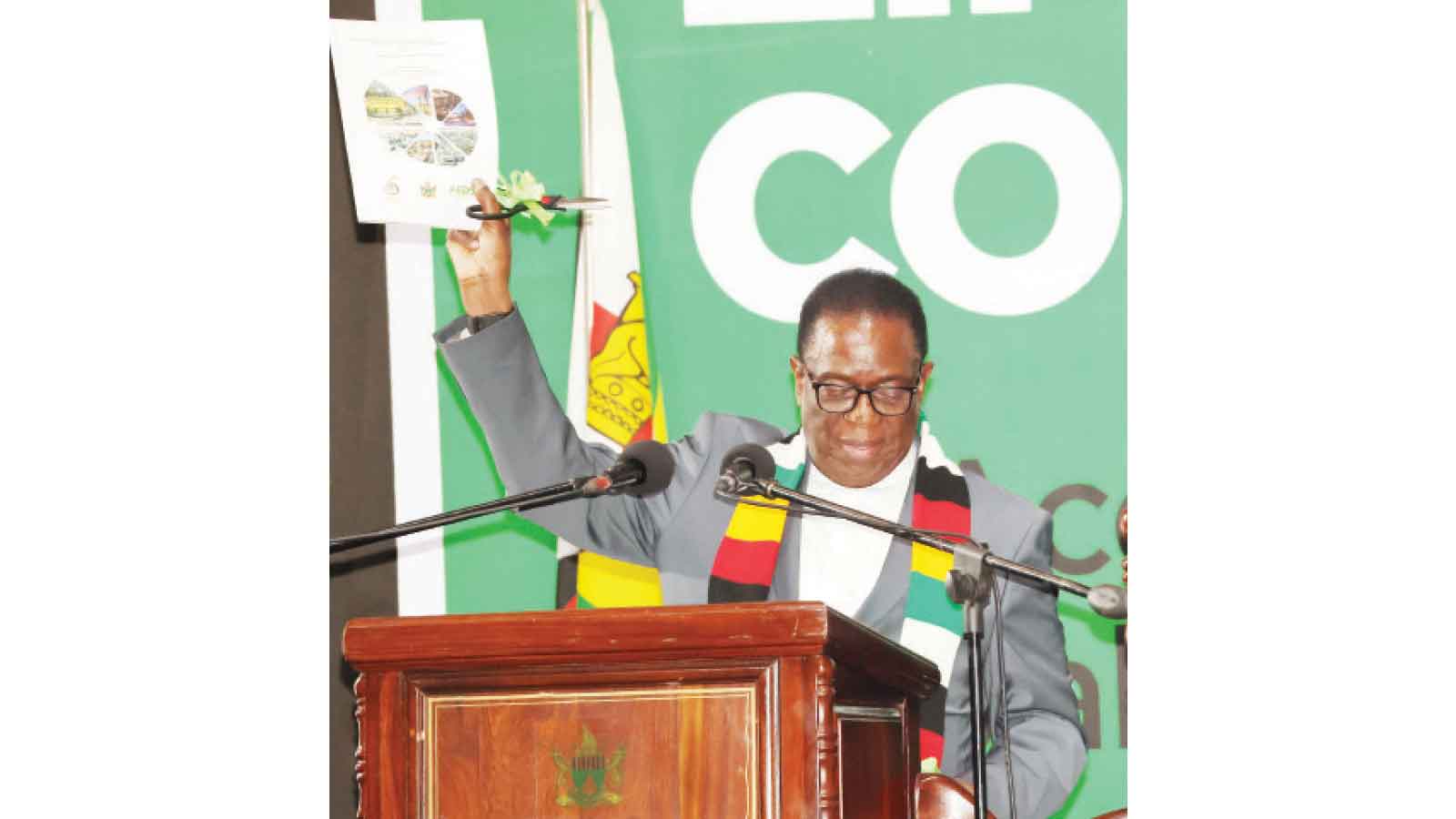
Early this month, the Zimbabwe Chamber of SMEs in partnership with Alinial Chartered Accountants, held an inaugural three-day strategic planning conference which, among other things, sought to come up with recommendations to expedite the formalisation programme in line with the National SMEs Policy.
The conference, which was attended by building contractors, insurance companies and Government representatives also sought to stem nagging challenges afflicting the SMEs sector, chief among them lack of access to cheap and affordable loans for working capital and lack of work spaces.



 Online Reporter