Online Reporter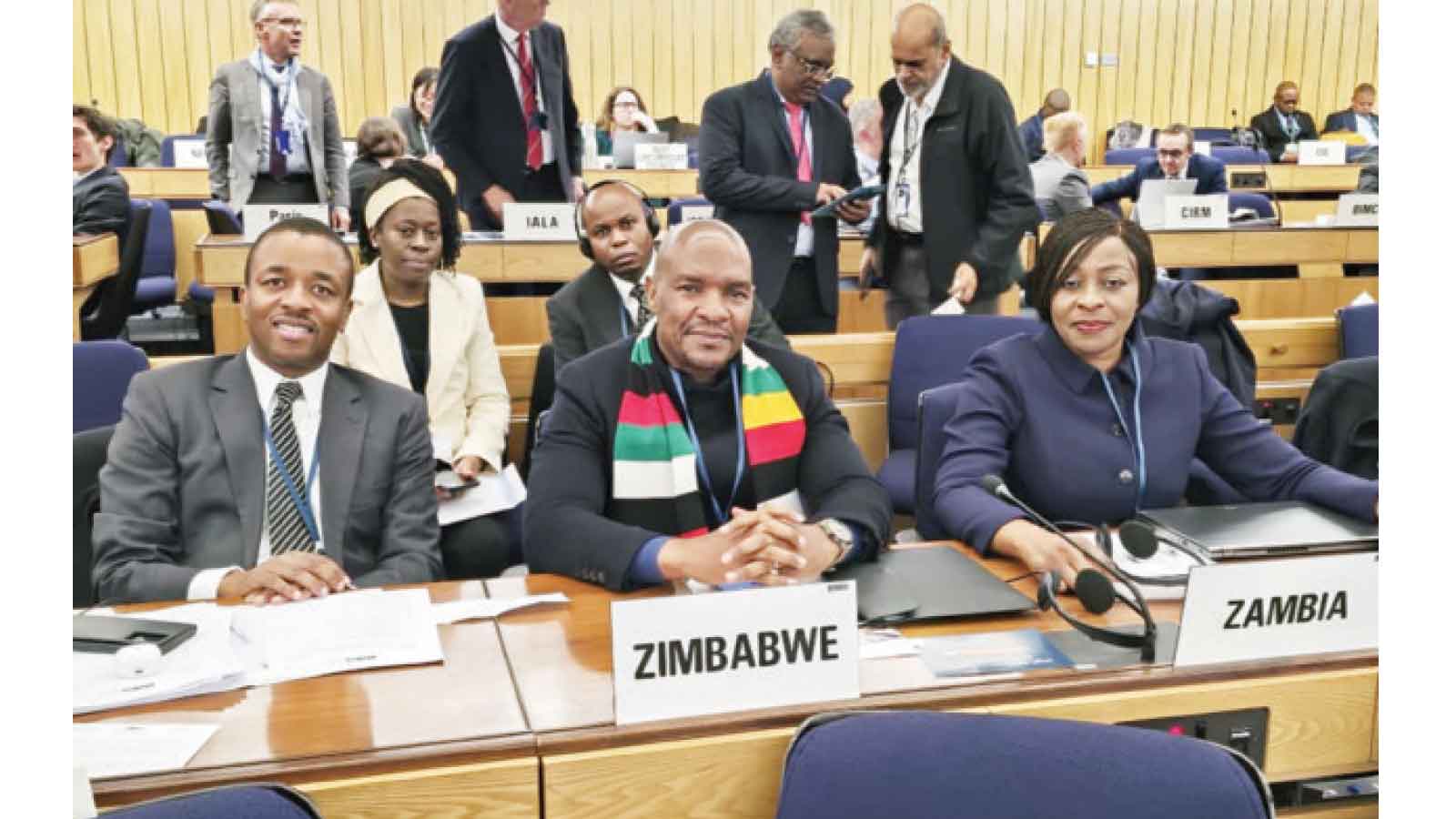
Freeman Razemba-Senior Reporter
ZIMBABWE has committed itself to safe, secure and global shipping environment aimed at advancing its maritime interests, strengthening institutional capacity, and supporting international efforts to improve safety, security, and environmental protection across global shipping sector.
Zimbabwe is currently participating at the 34th Session of the International Maritime Organisation Assembly being held in the United Kingdom.
The assembly is a key platform where Member States reaffirm their collective commitment to a safe, secure, clean, and efficient global maritime.
Although Zimbabwe is a land linked state, its reliance on regional maritime gateways for trade, particularly through Mozambique and South Africa, makes participation in IMO processes strategically important.
In his address, Transport and Infrastructural Development Minister Felix Mhona, who is leading the Zimbabwean delegation, said Maritime Safety and security continue to be key priorities for the IMO, and Zimbabwe is keen to support regional efforts that improve the dependability and consistency of maritime transport.
“For Zimbabwe, to secure maritime corridors guarantee continuous access to seaports and safeguard the integrity of supply chains for imports and exports. The Assembly will review the progress of implementing the IMO’s safety standards and security measures, including threats related to piracy, illicit trafficking, and cyber risks targeting port operations. “Zimbabwe can promote measures that foster enhanced regional cooperation, information exchange, and the adoption of standardised security practices across Southern African ports,” he said.
Minister Mhona also said the ongoing implementation of the IMO’s 2023 greenhouse gas (GHG) reduction strategy will also feature prominently at the event.
“Zimbabwe’s interest lies not only in supporting global decarbonisation but also in ensuring that the transition does not impose disproportionate costs on developing countries or disrupt regional ports that Zimbabwe relies on. Discussions will include progress on mid-term measures such as a global fuel standard and a GHG pricing mechanism. Zimbabwe may emphasise the need for fairness, capacity-building, and access to climate finance to help developing regions adapt their port and logistics infrastructure to new environmental standards,” he said.
On Capacity Building and Technical Cooperation, the Minister said the IMO’s Integrated Technical Cooperation Programme (ITCP) continues to provide vital support to developing States.
He said Zimbabwe can utilise the Assembly to request customised technical assistance on strengthening maritime logistics oversight, improving port-state coordination with neighbouring coastal States, and establishing frameworks aligned with the IMO instruments it is party to. Increased training opportunities, digitalisation of maritime regulatory systems, and support for cross-border corridor management are areas where Zimbabwe can benefit from closer cooperation.
The global maritime indaba is running from 24 November to 3 December 2025.
The IMO is the United Nations’ specialised agency responsible for maritime safety, security, and the prevention of marine pollution. It achieves this by creating a global regulatory framework for the shipping industry through international conventions and standards.
Its key objectives include ensuring safe and efficient maritime transport, protecting the marine environment from pollution, and providing a forum for international cooperation on shipping and maritime issues.
The Assembly is the highest governing body of IMO, consisting of 176 member states that meet every two years. Its primary functions include approving the IMO’s budget and work program, setting its financial arrangements, and electing the 40-member Council. The Assembly also adopts resolutions and endorses the admission of new observers.
Yesterday, during the meeting of Heads of Delegation, France took over the chair of the Assembly from Saudi Arabia, with Morrocco and Maldives elected as first and vice presidents respectively.
Minister Mhona said Zimbabwe expresses its deep appreciation for the IMO’s steadfast leadership in advancing safe, secure, environmentally sound, and sustainable global shipping.
“Zimbabwe remains a fully committed contracting State of the International Maritime Organisation (IMO). In line with the IMO’s 2025 focus of “our ocean, our obligation, our opportunity, Zimbabwe has mainstreamed shipping and maritime in its transport and transport infrastructure plans, thus situating Zimbabwe within the framework of the bigger family of global maritime administration,” he said.
The Minister said at the national level, they superintend and regulate several declared water bodies, which are crucial for local, regional, and international users in terms of waterborne tourism, inland waterways transport, shipping, fishing, and energy development, among other uses.
“These activities are governed under our Inland Waters Shipping Act, and we are in the process of enacting a comprehensive Merchant Shipping law to expand our alignment with IMO conventions and standards, and to fully participate in the affairs of international waters.
“In the main, Zimbabwe relies on the efficient performance of regional ports of Beira, Maputo, Durban, and Dar es Salaam along the Indian Ocean coastline, and Walvis Bay, along the Atlantic Ocean coastline, in advancing regional and international trade. The support we receive from neighbouring member States of IMO is immense. That is why we respond positively to the thrilling opportunities of deeper collaboration availed by IMO, including capacity building of our human capital base,” he said.
Minister Mhona said at the sub-regional and regional levels, they are working on a robust programme to discard the land-locked status and adopt the land-linked status.
“In the spirit of creating effective regional maritime ties, corridors and networks, Zimbabwe has become an integral actor in the recently established Maritime Organisation for the Eastern, Southern, and Northern Africa (MOESNA). The main objective of MOESNA is to transform the region into a one-stop centre of excellence for regional maritime and logistics matters. As MOESNA takes shape, we look forward to continued technical and financial support by the IMO, to build strong and harmonised maritime systems,” the Minister said.
He added: “As opportunities for broader and enhanced cooperation within the IMO framework dovetail with the vision of our leader, His Excellency, the President of the Republic of Zimbabwe, Cde Dr. E.D Mnangagwa. The vision reflects the collective aspirations and determination of the people of Zimbabwe, to achieve a Prosperous and Empowered Upper-Middle Income Society by 2030. In that vein, “Zimbabwe is open for Business’ and is ready to engage and re-engage, including through opportunities and collaborations within the IMO framework.
“As we deliberate in the next few days, I wish to reiterate that: we should encourage expanded cooperation, particularly in technology transfer, capacity building, and affordable access to maritime; we should support the development of innovative financing frameworks for regional and global maritime projects; and we should reduce maritime transport disparities, promote uniform standards, enhance seafarer welfare, address marine pollution, and ensure that developing countries have the support required to fully implement IMO instruments.”
The global shipping industry continues to face challenges related to seafarer welfare, labour conditions, and workforce shortages.
For Zimbabwe, which has an increasing number of nationals working in maritime professions worldwide, issues like recognised qualifications, fair working conditions, and mental health support are crucial.
Zimbabwe may support IMO efforts to review the Standards of Training, Certification and Watchkeeping (STCW) instruments, strengthen enforcement against exploitative recruitment practices, and promote more States to implement welfare support systems for seafarers calling at their ports.
The Assembly will review progress in implementing IMO conventions, amendments, and the ongoing institutional reform agenda. Zimbabwe can support measures to enhance transparency, improve the governance of IMO bodies, and make the regulatory process more inclusive for developing countries. Zimbabwe may also emphasise the importance of harmonised regional frameworks in SADC to ensure compliance with global maritime standards.