Golden Sibanda
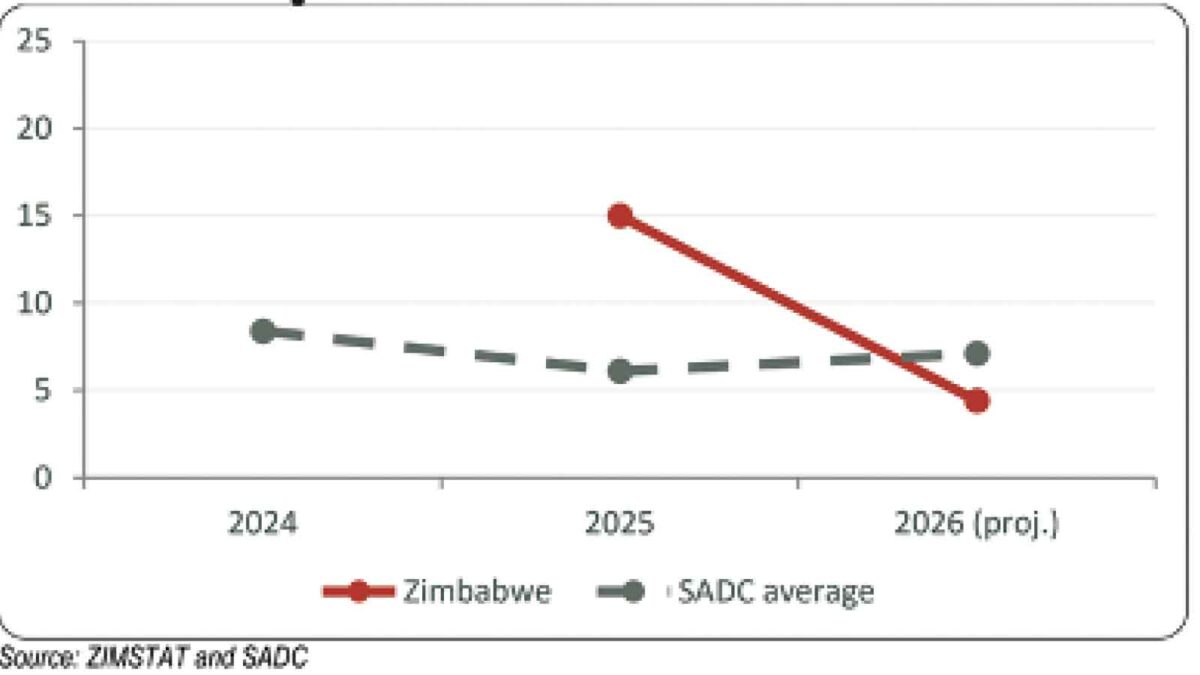
DOMESTIC inflation in local currency is now below the average for SADC peers, demonstrating the positive impact of authorities’ prudent fiscal and monetary policies, which have sustained currency, price and exchange rate stability over the past two years.
Presenting the 2027 National Budget Statement at the New Parliament Building in Mt Hampden yesterday, Finance Minister Mthuli Ncube said disciplined monetary and fiscal execution had firmly anchored inflation and exchange rate expectations, despite pressures arising from geopolitical tensions.
“This underscores the robustness of macroeconomic stability and the effectiveness of the current policy framework in anchoring inflation expectations.
“Low and stable inflation is critical in promoting savings and investment, as well as preservation of purchasing power and wealth,” he said.
The ZiG annual inflation remained low and stable, averaging 4 percent in the first 10 months of 2026.
While Zimbabwe’s domestic currency inflation remains well below 4,5 percent, annual inflation in SADC countries has averaged 5,3 percent thus far this year.
SADC generally guides member states to maintain their annual inflation rate within the 3 percent to 7 percent target band to ensure regional macroeconomic stability.
In October, Zimbabwe’s annual ZiG inflation was 4,3 percent, compared to 3,7 percent recorded in September 2026.
The Treasury chief said the recent increase in ZiG inflation was attributable to a rise in international oil prices, which surged to over US$100 per barrel in September 2026.
“As a result, domestic fuel prices rose from US$1,95 per litre for diesel and US$1,96 per litre for petrol to US$2,08 and US$2,06, respectively,” Minister Ncube said.
The annual inflation rate (both ZiG and US dollar) is projected to remain contained within single-digit levels in 2027, anchored by continued strong fiscal and monetary policy coordination.
Minister Ncube said low inflation was projected in 2027 notwithstanding potential price pressures from the expected El Niño-induced drought and elevated global energy prices.
He said the Reserve Bank of Zimbabwe’s Monetary Policy Committee will continue to review monetary policy to guarantee macroeconomic stability in 2027 and beyond.
“The prevailing macroeconomic stability is expected to be one of the major drivers of economic growth in 2027 and beyond,” he said.
Monthly ZiG inflation remained low and stable, averaging 0,4 percent between January and October 2026.
The monthly ZiG inflation was 0,2 percent in October 2026, from 0,5 percent recorded in August 2026. The decrease was largely attributable to declining prices in the vegetables, fruits and medical aid contributions categories.
Minister Ncube said for the remainder of 2026, ZiG inflation is expected to remain low and stable, firmly within single-digit levels. This will be supported by prudent monetary policy, exchange rate stability, disciplined liquidity management and sustained fiscal prudence.
Similarly, the month-on-month US dollar inflation has remained low, averaging 0,3 percent between January and September 2026.
“The annual US dollar inflation increased from 1 percent in January 2026 to 3,5 percent in September, averaging 2,3 percent over the nine months of the year. Despite the increase, the relatively low monthly inflation rates point to a broadly stable US dollar domestic price environment,” Minister Ncube said.
After battling high inflation for decades, including the failed reintroduction of a domestic currency in 2019 that triggered a new wave of inflation, authorities introduced the gold-backed ZiG in April 2024 to anchor monetary discipline.
The transition has driven annual local-currency inflation down to single-digit levels.
The exchange rate has also remained stable, Minister Ncube said, trading within the range of ZiG 25 to ZiG27 per US dollar since September 2024, consistent with declining inflation.
The parallel market premium has steadily declined to below 20 percent, reflecting growing market confidence and reduced speculative pressures.
“Prudent fiscal and monetary policies, supported by improved foreign exchange inflows and growing foreign reserves, have anchored the interbank foreign exchange market, which averaged about ZiG 26,17 per US dollar over the first ten months of 2026,” Minister Ncube said.