Online Reporter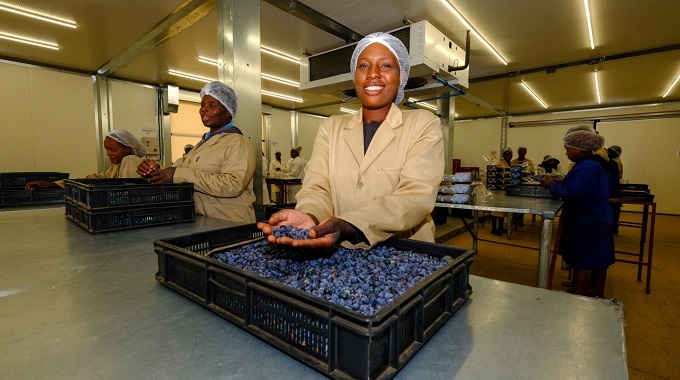
Edgar Vhera
Specialist Writer – Agribusiness
Zimbabwe’s horticulture industry earned US$38 million from berry exports last year, with Hong Kong and China making up 23 percent of the total earnings, while India offered the highest prices.
A blueberry export protocol signed during President Mnangagwa’s China visit last year has expanded Zimbabwe’s horticulture trade, adding to existing deals for citrus and avocado shipments. According to the national trade development and promotion body, ZimTrade, the US$37,3 million earnings from berry exports represented a 20 percent decline from US$50 million in 2024.
Zimbabwe’s horticulture sector comprises flowers, vegetables, berries, citrus, nuts, avocadoes, deciduous and other fruit, cuttings and plants, spices, herbs, tea and coffee.
ZimTrade disclosed that the berries sub-sector has been experiencing a compound annual growth rate of 29 percent between 2021 and 2025.
The growth is being driven by rising global demand for healthy fruits and increased commercial farming and investment.
The berries classification consists of cranberry, mulberry, blueberry, strawberry, gooseberry and raspberry, with most of the growth coming from blueberry.
Blueberry, a globally acclaimed superfood, has been Zimbabwe’s fastest-growing export crop since 2018 and is well-known for precision farming in frost-free zones.
Trade Map statistics revealed that Zimbabwe earned US$8, 8 million from Hong Kong, China, US$6 million each from Germany and the Netherlands and US$3 million apiece from Singapore and South Africa. The top five countries account for 70 percent of the country’s total berry export earnings.