admin
admin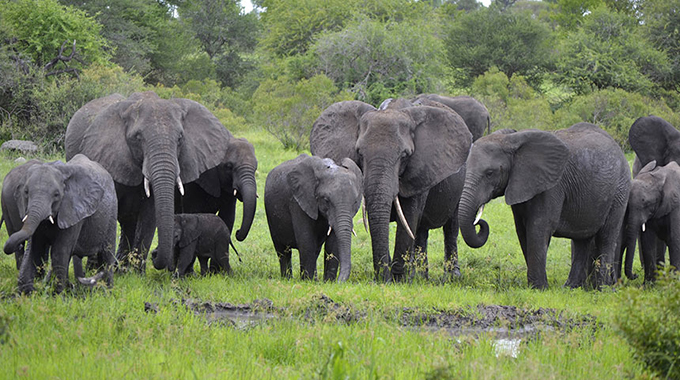
Phineas Chauke
NATURAL resource endowment is a major factor underlying economic flourishment for countries globally. Timber, gold, diamonds, uranium, oil and wildlife are some of the natural resources that are harnessed to optimise the growth of economies and eradicate poverty among citizens in countries where they are found in abundance.
Managed access and ethical exploitation of such resources have also guaranteed sustenance of such heritage for posterity since they are non-renewable. The world’s second largest elephant population is on Zimbabwean soil while Saudi Arabia boasts of 20 percent of the world’s oil reserve (by far the largest) and Australia has leads on Uranium with 46 percent of the global reserves.
The economies of the Saudi Arabia and Australia are immensely supported by the mentioned natural resources that they have but the story is not the same with the Zimbabwean economy and those of its neighbours who also have huge populations of elephants such as Zambia and South Africa, with Botswana having broken the yoke quite recently.
The Zimbabwean elephant is categorised in appendix ii of the Convention on International Trade in Endangered Species (CITES). In CITES terms, this category includes species that are not necessarily threatened with extinction but in which trade must be controlled in order to avoid utilisation incompatible with their survival.
Other Zimbabwean animal species in the same category include lion, roan, wild dog and python. The last three species are Specially Protected Animals under schedule 6 of the Parks and Wildlife Act chapter 20:14 and are thus protected by Zimbabwean law and this is due to their very small populations.
The lion is not specially protected according to Zimbabwean law but given the continuous decrease in its populations over the past years according to ALERT statistics, the CITES regulation of its trade is easily understandable from the view point of Zimbabweans.
To an ordinary Zimbabwean it boggles the mind why the country is not allowed to trade internationally in elephants or their products with a population around 84 000 against a total carrying capacity of 55 000 according to figures released by the Zimbabwe Parks and Wildlife Management Authority (ZimParks). In fact it may come across as cruelty.
While tourists throng areas where elephants are found in Zimbabwe and revenue is realised from such non-consumptive tourism pursuits, much more could be realised if the trophy hunting was opened up on the elephant. There is a famous statement within the conservation circles to the effect that an animal is worth more alive than dead.
This is very true and appropriate when applied to the generality of wildlife but with the Zimbabwean elephant there are more factors to be taken into consideration. The ecological impact of the population is adverse and severely taxing for the rest of wildlife due to their destructive tendencies to the habitat. The elephant is very possessive of water sources where water is scarce and with its massive size, the rest of the animals cannot outcompete it.
Leaving elephant populations uncontrolled therefore may reflect concern for the elephant and no concern for the rest of the animals who share the veld with it. Human settlements close to Parks have their share of agony and grief emanating from uncontrolled elephant populations. Croplands are destroyed and people sometimes killed.
Are the interests of human welfare, whether as the steward of the earth or just as a fellow animal species, being valued too in the whole conservation set up, or shall we say it is the case of uncapped zeal becoming a dangerous obsession. While the overall aim of CITES is to ensure sustainability, the question that rises is whether the over-pursuit of such an otherwise noble ideal is not culminating in unsustainability.
For instance, if the elephant population continues to bulge unchecked and the habitat varnishes, will even a few elephants survive? If you want to close a water tap from running and you are over-excited about it, you may overtwist the handle, breaking the stopping mechanism and you will have water gushing out again. World populations of elephants are very low globally and a few countries, Zimbabwe included, have unsustainable concentrations of the species, what would be the best way forward? This question needs serious deliberation at the highest level of global society with participants treating one another as equals and also empathising with especially those living with the elephants.
The ecological, economic and social implications of the adopted resolutions should be given serious consideration. Trophy hunting, sexily referred to as consumptive safari, is accused by those against it of severely depleting the wildlife resource and opening a loophole for animal poaching but on the flipside it has been defended by its proponents as a means, not only for controlling populations but also as an effective way to raise funds for the conservation and protection of wildlife.
Wild animals are global citizens, they (especially elephants) do not respect human imposed frontiers. They may enter, exit and re-enter a country in a couple of moments. The elephant herds that are a spectacle in the borderline areas such as Zambezi National Park, Matetsi Safari Area and Hwange National Park are shared with neighbouring countries. Now, with Botswana having lifted the ban on elephant hunting, this may see Botswana harvesting some of the fine jumbos that are supposed to be ours. Another possible eventuality is that the Zimbabwean populations will begin to swell even more given the tendency of animals to flee from areas where they are persecuted to areas where they are not. Now, whether that would be a good thing or not I dare not say . . . just imagining.
Chatting to a Zambian friend at just about the same time the UN-AU Wildlife Summit was taking place, I sought to pick his mind on the subject and he told me that, the world views Africa as the land of animals, and that humans are simply interfering. Whether that is true or not, I do not know, but if indeed someone somewhere is harbouring such a thought, it is a dangerous one that should never be entertained at all. After-all Africa is the cradle of mankind.
ν Phineas Chauke is a Tourism Consultant, Marketer and Tour-Guide contactable on email [email protected] or mobile number +263776058523


 Online Reporter