Online Reporter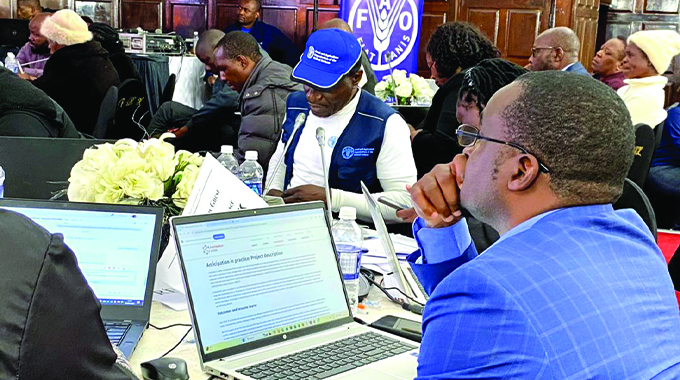
Theseus Shambare in BULAWAYO
Disaster management stakeholders in Zimbabwe are meeting today for a crucial “Lessons Learned” event to assess the impact of an anticipatory action project funded by the European Commission’s Humanitarian Aid department (ECHO).
Jointly hosted by the Food and Agriculture Organisation (FAO), the International Federation of Red Cross and Red Crescent Societies (IFRC) and the World Food Programme (WFP), the two-day event marks the conclusion of a significant initiative aimed at bolstering the nation’s resilience to climate-induced shocks.
For the past two years, the ECHO AA Project has actively contributed to enhanced coordination and multi-sectoral, multi-stakeholder collaboration in early warning and anticipatory action initiatives.
Its primary goal was to protect the livelihoods, food and nutrition security of vulnerable households by anticipating the occurrence and impacts of shocks through harmonised triggers, jointly agreed actions and coordinated implementation frameworks.
This involved strengthening hazard forecasting, early warning and early action activities, thereby strengthening institutional, systems and community resilience to hydrometeorological hazards.
The Bulawayo gathering is designed to share documented ECHO Project experiences and lessons learned from implementing Early Warning and Anticipatory initiatives to enhance resilience to food crisis and climate change.
Participants will evaluate the project’s strategic documents, including the AA Roadmap and AA Framework and examine the process of institutionalisation of AA, such as the establishment of AA sub-committees and their link with multi-hazard contingency planning.
A significant component of the event will be the showcasing of the flood SIMEX (simulation exercise) and its associated knowledge products, including videos and evaluations.
Crucially, the agenda incorporates community voices (from Matabeleland South and Chibuwe, the Chibuwe flood SIMEX) and testimonials from farmers.
This direct feedback from beneficiaries follows a preceding field mission to Matobo and Beitbridge Districts, aimed at appreciating evidence of results achieved at the community and beneficiary level.
Approximately 50 stakeholders are expected to attend the hybrid event, representing a wide array of participants from government ministries, departments, farmers, the private sector, the donor community, NGOs and UN agencies.