

 admin
admin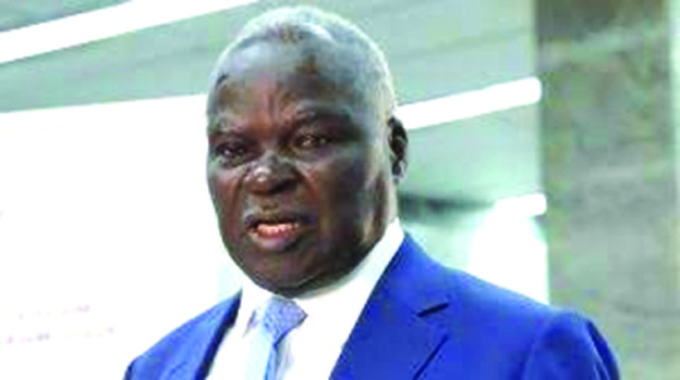
Webester Mukwati in ATHENS, Greece.
ZIMBABWE this week highlighted how inequalities stemming from historical colonial imbalances where a few white settlers controlled the economic means of production had negatively impacted on its people and how efforts to take corrective measures resulted in economic sanctions against the country.
Minister of Public Service, Labour and Social Welfare July Moyo on Thursday attended the International Labour Organisation (ILO) conference in Athens, Greece, whose topic was the role of social dialogue in combating inequalities in the world of work.
He outlined measures the Government was taking to solve the inequalities in spite of the economic sanctions imposed on the country by the West.
ILO is one of the several United Nations agencies, specialising in labour related matters.
In his presentation before a high level roundtable discussion during the conference, Minister Moyo said: “The African Development Bank (ADB) in January projected that the Gini coefficients, which is the disparity between the rich and the poor, shows that seven out of 10 worst countries are in sub-Saharan Africa.”
In the context of Zimbabwe, the inequalities resulted from historical colonial imbalances with the Government now grappling to solve the inequalities which were mainly in the control and ownership of resources such as land, capital and other means of production.
In Zimbabwe, the issue of land became a major source of inequality where 4 000 farmers of European descent owned the better half of the land at the expense of over 90 percent of the population, a situation that had since been addressed.
Minister Moyo said the process of addressing the inequalities resulted in economic sanctions being imposed by those who believed the corrective measures should not have been taken.
“Our Government has taken measures in fighting these sanctions as they are an impediment to the elimination of inequalities at the places of work,” he said.
“Of course we had to look at the women, youths and those with disabilities and as tripartite social partners, we endeavoured to make sure that in all the 18 sectors of our economy, we examine to see which areas have inequalities whether in mining or foreign direct investment.”
Government could not achieve this alone without social partners, labour and employers.
“This is why we strongly believe that even in our budget this year, the focus is on two fronts, that is to capacitate social partners, so that we can work collaboratively to elliminate inequalities, and engagement and re-engagement with those who have been supporting us as well as those who have denied supporting us.
“Our companies do not have direct loans from international finance institutions due to impeding sanctions and that exacerbates the inequality that exists at the place of work.”
Inequalities in Zimbabwe were caused by unequal distribution of land, but the Government of Zimbabwe embarked on land redistribution, which saw counter revolutionaries imposing economic sanctions in a bid to suffocate the country’s economy.
This saw a significant rise in poverty, decline in education, shrinking in health care and subsequently an economic decline.
“In a bid to combat the prevalence of inequalities at workplace, our Government has embarked on a robust exercise of monitoring and inspecting, particularly in mining and manufacturing where we conduct constant checks on inequalities based on colour, race, religion and other invaluable factors in a bid to institute corrective measures and we have made it a continuous process,” said Minister Moyo.
In his remarks to delegates drawn from 40 countries and institutions around the world, President of the Greek Economic and Social Council Mr Loanis Paidas made a call to member countries to embrace social dialogue in the world of Work.
In a virtual presentation, ILO Director General Mr Gilbert Houngbo, said: “Inequalities at the workplace are not new. However, it has been at the heart of ILO to fight against such in the world of work including universal social protection mechanisms.”
Mr John Jacobs, the AICESIS president said: “The collaboration in this conference is deeply rooted in the continous engagement towards our collective effort to fostering social dialogue and calls for continuous engagement and cooperation amongst member countries and all other entities world over.”



 Online Reporter