Online Reporter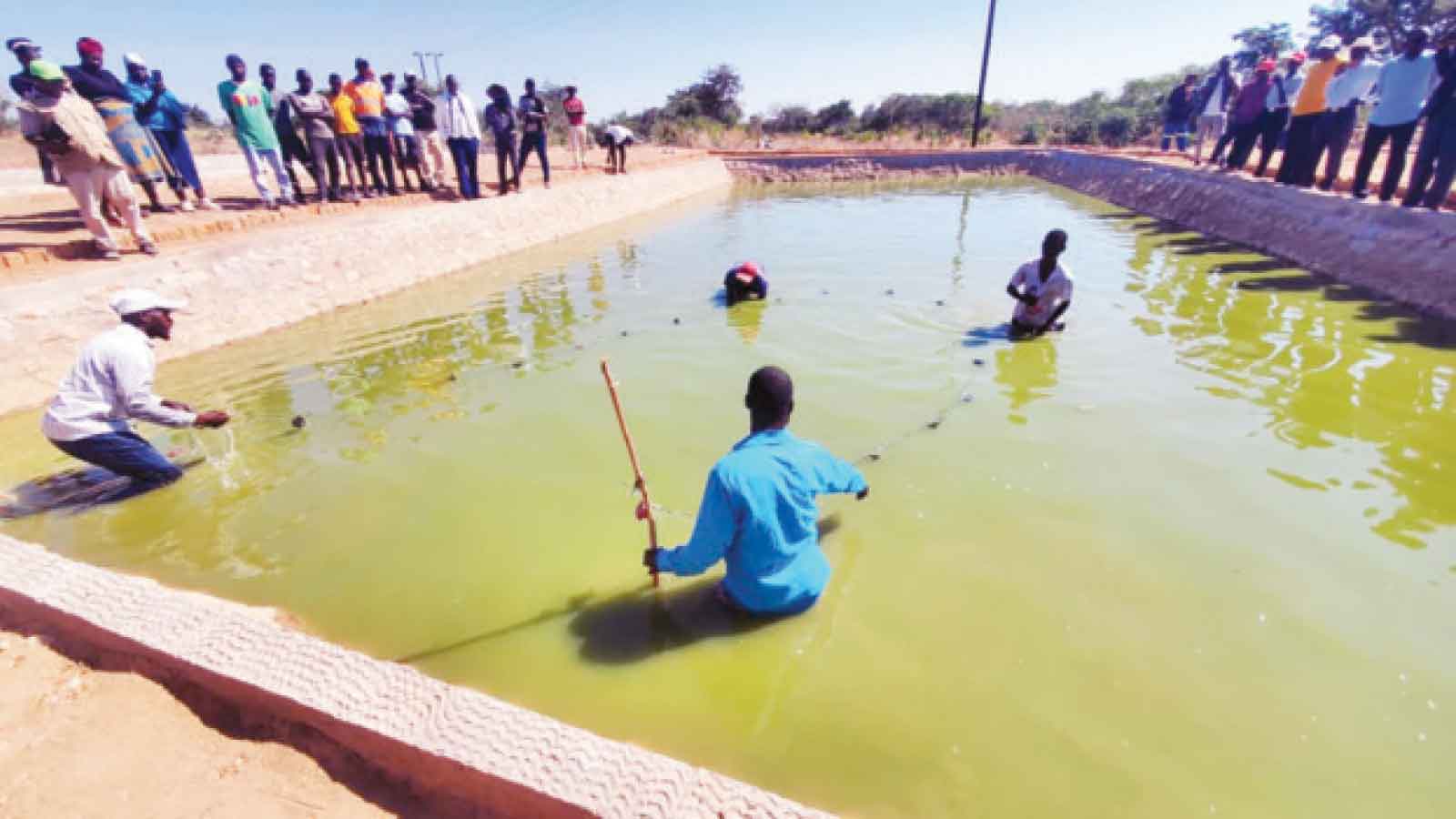
Theseus Shambare-Features Writer
THE sun has barely risen over Shinga Ward 4 in Mudzi, Mashonaland East Province, yet already the heat drapes itself over the cracked earth like a suffocating blanket.
Children trudge past thorny shrubs balancing bright plastic containers of water on their heads, while animal-drawn carts creek along dusty paths. Even in the middle of the rainy season, the landscape tells a story of scarcity; riverbeds choked with sand, grass struggling to grow and livestock huddled under acacia trees to escape the relentless glare.
“The rains are late, or sometimes they do not come at all,” says Martha Kapfunde, shading her eyes.
“Some days, carrying water feels like carrying fire on your back.”
Shinga lies in agro-ecological Region Four, a semi-arid zone where annual rainfall averages between 450 and 600 millimetres. Over the past four decades, rainfall variability has increased by roughly 15 percent, while temperatures have risen by about 1,3°C, shrinking planting windows and undermining traditional crops.
Small grains such as millet and sorghum once anchored livelihoods here. But climate volatility has forced many households into food insecurity.
Yet amid the dust and despair, transformation is quietly taking root.
Shinga, loosely translated as “braving”, is living up to its name.
Where some see an unforgiving climate, others see thermal advantage. The extreme heat that frustrates conventional crop farming has proven ideal for tilapia aquaculture.
Innocent Kazanhi stands beside his ponds, scattering feed as fish ripple the water’s surface.
“Before the fish ponds, we barely had enough to eat,” he says. “Now, I earn over US$2 000 a month from fish sales. I only spend about US$500 on feed.”
A few kilometres away, John Kapfunde and his wife Martha have integrated fish farming with horticulture, poultry and renewable energy.
Each pond carries 2 000 fingerlings, harvested at 400–500 grammes per fish. Solar-powered pumps regulate water levels, ensuring year-round production.
“The fish ponds are life-changing,” John says. “Before, we worried about the rains. Now, we plan our year around the ponds.”
The transformation extends beyond fish.
A solar-powered borehole feeds both ponds and a drip-irrigated vegetable garden thriving with tomatoes, green beans and spinach. Bee hives hum nearby, producing honey that supplements household income. A biogas digester converts organic waste into cooking fuel, while solar panels power pumps and lighting.
“Everything is connected,” Kapfunde explains. “The water feeds the fish, the fish feed my family and sell at the market, the waste powers the stove and the garden grows because the water never stops.”
Water, energy and food form an interlocking system. Each innovation strengthens the other, reducing vulnerability to drought while lowering operating costs.
Resilience in Shinga is not confined to individual homesteads.
More than 40 families in Shinga and neighbouring Chimukoko have formed the Pathfinders Club. By pooling proceeds from small-grain sales, they have financed solar-powered boreholes and shared water infrastructure.
Each borehole supports gardens, livestock and poultry production, cushioning households against erratic rainfall.
The model demonstrates how collective investment in climate-smart infrastructure can multiply impact, spread risk and strengthen community ownership.
Similar shifts are unfolding in Matabeleland North’s Hwange District.
Under the Presidential Community Fisheries Scheme, Michael Padiwa and his wife Constance from Dick Village drilled a 60-metre-deep borehole and established five ponds measuring 20 by 10 metres each. Free fingerlings provided under the scheme accelerated production.
“We managed our first harvest with an average weight of about 400 grammes per fish,” Mrs Padiwa says.
With tilapia selling between US$2,50 and US$4 per kilogramme, aquaculture is generating significant returns per cycle, particularly in Zimbabwe’s hotter regions where water temperatures remain favourable.
Government officials describe these interventions as deliberate climate-adaptation strategies.
Deputy Minister of Lands, Agriculture, Fisheries, Water and Rural Development Davis Marapira says borehole drilling and fish farming are structured responses to water scarcity.
“These heat units are not a curse, but a blessing. They are key in intensive tilapia production,” he says.
Research on Nile tilapia (Oreochromis niloticus) supports this view. Studies by scientists such as Nehemia and Azaza show that cumulative heat units maintaining water temperatures between 26°C and 30°C significantly enhance growth and feed-conversion efficiency.
Azaza (2008) found that tilapia juveniles reared at 26°C and 30°C achieved higher final weights and improved daily weight gain compared to those grown at cooler or excessively hot temperatures.
In Zimbabwe’s semi-arid regions, naturally high temperatures reduce the need for artificial heating, lowering production costs and boosting competitiveness.
Economic impact is already visible.
Farmers recently received a refrigerated truck equipped with a cold room, while an ice-making machine is expected through the Profishblue Programme, a US$10,1 million initiative supported by SADC and the African Development Bank to strengthen regional aquaculture.
Improved cold-chain infrastructure reduces post-harvest losses and enables tilapia from Mudzi and Hwange to reach urban and regional markets.
Regional institutions such as the SADC Plant Genetic Resources Centre in Zambia are also supporting seed fairs and biodiversity preservation, reinforcing climate resilience through indigenous knowledge systems.
Climate-smart farming in Shinga extends beyond income generation.
Indigenous seed banks, organic fertiliser practices, renewable energy systems and biogas digesters reduce carbon footprints while preserving biodiversity. Integrated farming enhances soil fertility and water-use efficiency.
Socially, the shift is reshaping aspirations.
“I used to dream of Harare,” says 22-year-old Tawanda Mupasiri. “Now, I earn more here from fish and crops than I would in the city, and I am building something I can pass on.”
The return of youths to agriculture signals a reversal of rural-urban migration patterns, driven not by desperation but by opportunity.
Development agencies are watching closely.
Shinga is emerging as a model for Southern Africa’s climate-smart agriculture agenda — proof that semi-arid regions can achieve food security, economic growth and environmental sustainability simultaneously.
Dr Alexander Kefi of the Profishblue Programme calls it a blueprint for the region.
“Communities that invest in climate-smart agriculture can feed themselves and contribute to regional markets,” he says.
As the sun sets over Shinga, tilapia ponds shimmer in golden light. Children splash near the water, goats graze under thorn trees and families tend flourishing gardens.
Where drought once dictated life’s rhythm, innovation now leads it.
In this semi-arid corner of Zimbabwe, resilience is tangible, measured in fingerlings, solar panels and drip lines; heard in the hum of bee hives; seen in farmers who no longer wait for relief but create solutions.
Climate change has altered their landscape. But through ingenuity, cooperation and science-backed adaptation, they are not merely enduring the heat.
They are turning it into a harvest.