dyton mupawaenda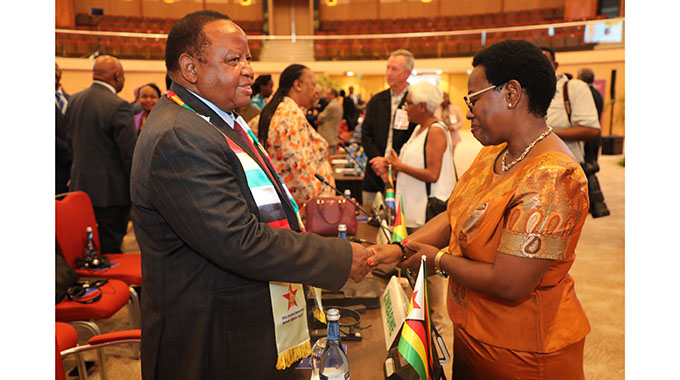
Africa Moyo-Deputy News Editor
A number of African countries, including Zimbabwe, have made huge strides in implementing and domesticating Agenda 2063 using domestic resources, despite challenges such as Covid-19, the Russia/Ukraine conflict and climate change, Foreign Affairs and International Trade Minister, Ambassador Frederick Shava, has said.
He said this is a statement after the Retreat of African Union ministers of Foreign Affairs and ministers of Finance on evaluation of Agenda 2063 and accelerating the implementation of the Second Ten-Year Implementation Plan.
The Retreat, which ran under the theme, “Accelerating the Implementation of Agenda 2063”, started on Sunday in Kigali, Rwanda, and ended yesterday.
Agenda 2063 is Africa’s blueprint and master plan for transforming Africa into the global powerhouse of the future.
Ambassador Shava said delegates noted “the significant strides” made towards achieving some of the goals in Agenda 2063, but said it was agreed that lack of coordination, alignment of National Development Plans, funding, domestication, partnerships, advocacy and publicity challenges affected the implementation of First Ten-Year Implementation Plan and must be avoided in the Second Ten-Year Implementation Plan.
“(The retreat also) noted the need to create a more conducive environment for the better implementation of the second Ten Year Implementation Plan,” he said.
It also called upon the African Union Development Agency (AUDA-NEPAD) to prepare regular progress reports on progress and performance of Agenda 2063 implementation. The African Union Commission and AUDA/NEPAD was also directed by the Retreat to implement structured technical support for the adaptation of the Second Ten-Year Implementation Plan at all levels including raising awareness. All member states were also encouraged to speak with one voice on the reform of the global financial system, to be fit for purpose unlike the prevailing situation where some continents, especially Africa, are excluded.
In June this year, chief economist at the African Export-Import Bank, Dr Hippolyte Fofack, added his voice on the need for the global financial architecture to be changed, saying what emerged from the 1944 Bretton Woods Conference was designed by wealthy countries and they have been served well.
Ambassador Shava also said the first panel discussion considered findings of the joint report by the African Union Commission and the AUDA-NEPAD on the implementation of projects under the first decade of the Agenda 2063.
“Highlights of the report were that member states had made a lot of progress in implementing and domesticating Agenda 2063 using domestic resources,” he said, but bemoaned the challenges that affected many countries such as Covid-19.
In that regard, Ambassador Shava recommended that the second decade of Agenda 2063 incorporates resilience measures to cushion the continent’s development gains from internal and external shocks.
The second panel reflected on the funding challenges faced during the first 10-year implementation plan, and to redress the situation, Ambassador Shava suggested, among others, that Africa should re-direct its attention towards mobilising resources through various means including increasing tax collection through expanding the tax base and improving public financial management.
“I participated as a panellist in the third thematic panel discussion on Leveraging on the Implementation Arrangements of the Development Plans in the Implementation of Agenda 2063 Second Ten-Year Implementation Plan: Domestication, Ownership, Popularisation and Communication.
“There was general consensus that the success of the second 10-year implementation plan will only be achieved through leveraging on the National Development Plans.
“I informed the Retreat that Zimbabwe was implementing Agenda 2063 through the National Development Strategy (NDS) 1 (2021-2025) and NDS 2 (2026-2030). I highlighted further that despite the illegal economic sanctions imposed on our country, which were stifling access to international finance, Zimbabwe had made commendable progress in mobilising funds for the National Development Strategy, which is on track to be implemented,” said Ambassador Shava.
He added that domestication of Agenda 2063 was deep rooted from the village level in Zimbabwe as the country had established a business for each of the 35 000 villages in the country.
The businesses are led by the Agricultural Rural Development Agency (ARDA), the agency promoting rural development through value addition in agriculture. The products from the rural businesses, said Ambassador Shava, are to be marketed by ZimTrade, the country’s national export promoting agency.
“At the end of each financial year, the villagers are given proceeds from their businesses. I alluded that 430 schools have been identified to also work with ARDA to produce food and horticultural products to assist them in raising revenue and promoting rural development.
“The schools are also assisted by ZimTrade to market their produce. I highlighted that all the projects are disseminated in the relevant native languages per region and this has led to maximum comprehension of the development thrust of the country,” he said.
As a result of deliberate interventions by the Second Republic led by President Mnangagwa, Zimbabwe has been recording food security for the past three years in maize, wheat and other grains.
Ambassador Shava said he also informed the Retreat that Zimbabwe had adopted the Heritage-based Education 5.0, which has promoted the establishment of industrial hubs at various universities.
The initiative, he said, is creating innovation and laying a foundation for industries by local young entrepreneurs who have already registered around 500 patents.
“If we realise that they can excel, they are taken to industrial parks where they can increase their production. During Covid-19, we depended on products from our universities for personal protective equipment.
“I (also) highlighted that Zimbabwe was in the process of promoting public private partnerships. Government is continuing to create a conducive environment for the private sector to be an active participant in the economy.
“The Zimbabwe Investment and Development Agency, as a one-stop-shop, is facilitating investments into the country and is also promoting partnerships with the local private sector. Similarly, our Government was encouraging the private sector to expand their operations into other countries and forge partnerships with foreign companies, to help grow our exports,” said Ambassador Shava.
Discussions on panel four focused on Agenda 2063 flagship projects, where the Retreat noted that considerable progress had been recorded in the implementation of the Africa Continental Free Trade Area (AfCFTA) and the Single African Air Transport Market (SAATM).
More progress is still required in the projects that have the highest potential to drive Agenda 2063 such as silencing the guns, the Great Inga Dam, the establishment of the African Financial Institutions and the African Passport and Free Movement of People.
Ambassador Shava reiterated Zimbabwe’s commitment to implementing the Agenda 2063 flagship projects to achieve the “Africa We Want”.
Discussions on panel five focused on the coordination, alignment and capacity building of Agenda 2063 at national, regional and continental levels. It was noted that member States placed more weight on national development strategies and the United Nations Sustainable Development Goals than to the continental agenda.
Ambassador Shava said that was partly explained by the absence of financial support to member States, coupled with limited support received from AU institutions for the implementation of Agenda 2063.
“I expressed concern with the low level of alignment of Agenda 2063 with National Development Plans and the limited level of domestication of the continental development blueprint at country level.
“I further reiterated that member States should give priority to our African programmes,” said Ambassador Shava.



 Online Reporter