Online Reporter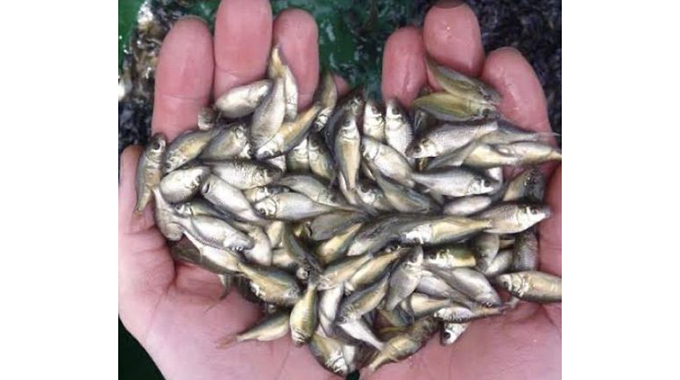
Theseus Mauruki Shambare
Agriculture Correspondent
The AQUACULTURE sector has produced nearly 25 million fingerlings during the 2025/2026 season, reflecting growing momentum in fish farming as the Government scales up efforts to strengthen food security, nutrition and rural livelihoods.
Latest figures from the Livestock and Fisheries Production Department (LFPD) show that the country had produced a cumulative 24 870 960 fingerlings by the week ending June 5, 2026, driven by contributions from both public and private hatcheries.
The milestone comes as the Government intensifies efforts to expand fish farming across the country through farmer training, fishpond stocking programmes and strategic investments aimed at transforming aquaculture into a key pillar of agricultural development.
Speaking on the sidelines of a fish farming training programme held at Mr Emmanuel Charehwa’s homestead in Muchero Village, Ward 5, Mudzi District on Thursday, Livestock and Fisheries Production Department director Mr Milton Makumbe said the sector was increasingly becoming an important contributor to food and nutrition security.
“As Government, we are encouraged by the progress being recorded in the aquaculture sector.
To date, Zimbabwe has produced close to 25 million fingerlings during the 2025/2026 season, which reflects growing investment in fish farming and increasing participation by communities, private hatcheries and development partners,” he said.
Mr Makumbe said aquaculture was moving beyond being a supplementary agricultural activity to becoming a mainstream enterprise capable of generating income and improving access to affordable sources of protein.
“Aquaculture has become an important pillar of our food and nutrition security strategy.
‘‘Through increased fish production, we are improving access to affordable sources of protein while creating income-generating opportunities for rural households,” he said.
The sector’s growth has been supported by nationwide fish stocking programmes, with the Government having stocked 352 fishponds and 26 dams across the country during the current season.
Mr Makumbe said the programme was helping transform rural water bodies into productive assets capable of driving local economic development.
“What we are witnessing is the transformation of rural water bodies into productive economic assets that are supporting livelihoods, employment creation and household nutrition,” he said.
Fish farming has also emerged as an important climate adaptation strategy, particularly in drought-prone districts such as Mudzi.
“Districts such as Mudzi are demonstrating that fish farming can thrive even in areas traditionally regarded as vulnerable to climate shocks.
‘‘As communities invest in water harvesting infrastructure and small dams, aquaculture is emerging as a viable climate adaptation and livelihood diversification strategy.”
The training programme in Mudzi also saw the Government pledge additional support to community groups through the establishment of six new fish ponds in Ward 5.
Two ponds will be established for each of the two local schools represented at the event, while women’s and men’s groups will each receive two ponds.
Ward 4 Agricultural Business Advisory Officer Mr Mark Tsabora said fish farming was steadily gaining ground in Mudzi.
“In Mudzi District, a total of 32 000 fingerlings have been stocked, resulting in harvests of approximately 3,6 tonnes since the beginning of the year, showing that farming is becoming an important contributor to food security and household incomes.
“Farmer participation has continued to increase.
‘‘Last year we had 43 fish farmers actively involved in production, but that number has now risen to 71.
‘‘This growth reflects increasing confidence in aquaculture as a viable enterprise, he said.
Host farmer Mr Emmanuel Charehwa said the training programme had equipped farmers with practical skills to improve productivity.
“We are grateful to the Government for the support it continues to provide to fish farmers.
‘‘The training we received today has strengthened our knowledge and confidence to expand production and manage our ponds more efficiently,” he said.
Mr Charehwa said the pledge by the Department of Livestock and Fisheries Production to establish ponds for schools, women’s groups and men’s groups was a welcome development.
“It means more people in our communities will have an opportunity to participate in fish farming and benefit from the sector.”