admin
admin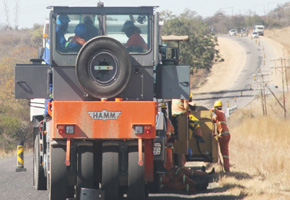
Addressing delegates to the Zimbabwe National Chamber of Commerce here, the director of the bank’s Southern Africa Regional Resource Centre, Dr Ebrima Faal, said at least $1,4 billion was required annually to maintain the country’s basic infrastructure.
He said while before the economic challenges Zimbabwe had some of the best infrastructure on the continent, the quality of its infrastructure had slipped and now fell among the poorest.
Dr Faal said although the economy had grown since 2009 with improved macro-economic stability, the growth was coming from a situation where the economy had shrunk by 50 percent and that growth could not be sustained with the current state of infrastructure.
He said investment needed to be made in various sectors including power which needed $0.3 billion, roads (43.6 billion), the railway network ($1.6 billion), water and sanitation ($2 billion) and water resources ($2 billion).
Dr Faal said massive investment in infrastructure would have benefits for the economy including a minimum annual growth rate of seven percent while the Gross Domestic Product would double from $4,75 to $9,5 billion by 2020.
He said the roads in fair to good condition would increase from the current 59 percent to 80 percent and the National Railways of Zimbabwe would be able to increase freight from 2,7 million tonnes to its design capacity of 18 million tonnes.
He said the bulk of funding for infrastructure rehabilitation would come from the Government but the private sector was expected to play a part.
“Full implementation of the action plan will require substantial invest-ment by the private sector,” he said.
However, Dr Faal conceded that the private sector might face challenges in mobilising resources needed to revamp the country’s infrastructure, saying the regulatory environment needed to be revised for the private sector to play a role in private public partnerships.
He said massive investment in infrastructure had benefited Asian economies as most of the spending on infrastructure was based on domestic expenditure and not exports.
Meanwhile, ZNCC president Mr Orswell Binha has said the chamber was worried about political uncertainty as a result of the Global Political Agreement and the inclusive Government which he described as dysfunctional.
In his opening remarks at the congress, he said the uncertainty was contributing to the continued liquidity challenges facing businesses as foreign investors were staying away.
He said the chamber was doing its part to engage authorities to push the interests of its members.
Mr Binha, who was re-elected for another term, however, expressed concern at the activities of some business people whom he said were shunning corporate governance and business ethics to pursue selfish ends.
“Some have tended to relegate accountability and ethics in pursuit of short-term gains. We need to realise that we owe it to Zimbabwe not to ourselves,” he said.
Mr Binha said there was also no unity in the business sector.
“We have remained silent and divided on issues that affect us. We are pursuing individualism. We are too fragmented,” he said.


 Online Reporter