admin
admin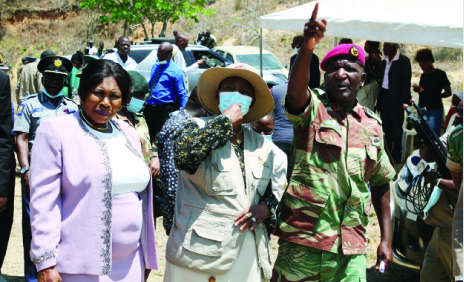
Tanyaradzwa Mujati
Post Reporter
A TOTAL of 15 million square metres of land have been cleared of anti-personnel landmines from Burma Valley to Sheba Forest in the Eastern Highlands, thereby making it productive after 42 years of being locked from all forms of development.
The demining exercise was spearheaded by Government and a development partner, Norwegian People’s Aid (NPA) following the signing of a Memorandum of Understanding between the two parties in 2012.
The MOU mandated NPA to raise funding from willing donors to demine anti-personnel landmines in Burma Valley, Leacon Hill, Sheba, Rusitu and Muzite minefields in Manicaland. A total of 28 318 anti-personnel landmines were also destroyed during the demining exercise.
On July 12, NPA completed the clearance of the Border Streams Minefield Three which included sectors one, two and three along the Zimbabwean border with Mozambique.
A total of 6,5 square-metres of cleared land in the area was handed over to the local community by Defence and War Veterans Affairs Minister Oppah Muchinguri-Kashiri last week on Friday.
The anti-personnel clearance exercise will benefit 88 346 people in Manicaland.
In Border Streams, school children who had to cross the minefield to attend school no longer have to worry about the landmines.
Families can now use the land for farming and grazing their livestock.
Speaking at the hand-over ceremony, Minister Muchinguri-Kashiri said the demined land is now being put to good use by farmers who have ventured into banana, macadamia and tobacco production.
“This positive development augurs well with our national aspirations of freeing all the mined land for productive usage.
“Completion of the Leacon Hill to Sheba Forest Minefield leaves Norwegian People’s Aid with the Rusitu to Muzite Mission minefield in Chipinge as their remaining area of responsibility. Completion of this particular minefield is projected to be completed by 2023.
“It is heartening to note that the progress being registered by our demining cooperating partners has significantly contributed to the current high international ranking of Zimbabwe Mine Action programme,” said Minister Muchinguri-Kashiri.
The history of the landmines in Zimbabwe can be traced back to the war of liberation. At the peak of the liberation struggle, from 1976 to 1979, the Rhodesian Army laid minefields along the country’s eastern and northern borders with the aim of creating barriers and inhibiting the inward and outward movement of liberation war combatants from their bases in Mozambique and Zambia.
An estimated three million anti-personnel mines were laid in six minefields, with a cumulative distance of approximately 850km.
While most of these minefields were clearly marked, human activities resulted in the vandalisation of the markings, leaving locals exposed to be dangers of being killed or maimed by the mines.
NPA programme manager, Ms Gemma Welsh said they are looking forward to clear all outstanding minefields in the country by December 2025.
“We need to address the remaining minefields in Manicaland and in doing so, NPA is currently conducting clearance operations in Chipinge District.
“With continued support, NPA plans to complete clearance in Chipinge District by the end of 2023, thereby marking another success in declaring Manicaland Province mine free.
“On completion of Manicaland Province, NPA will move to Mashonaland East to complete clearance of the anti-personnel landmines by December 31, 2025.
“Once that is done, Zimbabwe will be declared mine free,” she said.
Ms Welsh commended the dedication of the locals involved in the demining exercise.
“The commitment demonstrated every day by Zimbabweans involved in this project has been truly inspiring,” said Ms Welsh.


 Online Reporter