admin
admin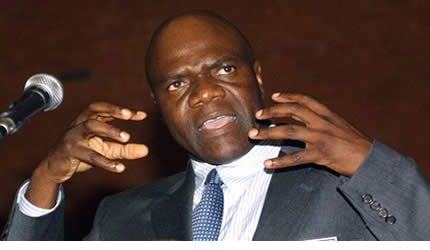
Reason Wafawarova On Thursday
Arthur Mutambara discovered the hard way that there is no room for intellectual excellence in the world of political mediocrity, and sadly this is where Zimbabwe’s opposition anchors its existence.
When the opposition MDC was launched in 1999, the party came on the political scene with indisputable vibrancy, and for the first time since Independence, political competition in the country was tellingly captivating, with the young and the old generally divided between the revolutionary ZANU-PF and the new opposition, then seen as a product of the labour movement, in alliance with students and civic society.
Demographically, the newly launched party controlled the majority of the country’s urban areas, while ZANU-PF had to rely on its strong rural backing to attain a hard-fought victory in 2000.
Out of the 120 parliamentary seats on offer then, ZANU-PF got 62, while MDC garnered 57.
That was a very impressive performance for the opposition, especially given the fact the party was only six-months old then.
A comparison of that impressive performance to what happened in the election held in the aftermath of the MDC’s involvement in governing the country between 2009 and 2013 shows a party that has drastically lost its steam and fortunes over the years.
Looking at what could have gone wrong, it can be arguably concluded that the vibrancy of the opposition was hardly a result of meritorious leadership, nor that of principle or definable ideology.
Rather the vibrancy had all to do with ZANU-PF’s shortcomings, especially the emerging signs of a troubled economy at the time, like the acute shortages of fuel and other basic commodities.
Opposition leaders were as simplistic as to be convinced that ZANU-PF could simply be shouted out of power on the basis of the economic crisis.
That Zimbabwe’s opposition has become anaemic is hardly debatable, just as it is now quite safe for any analyst to say Morgan Tsvangirai has proven to be more immanent than productive politically, vaingloriously portraying himself as the indispensable cog that holds both the history and the future of opposition politics in Zimbabwe.
The opposition leader rose to political prominence as a perceived brave victim of political intolerance, in the process attracting massive sympathy support from his Western backers, and also harvesting significantly from the sympathy vote on the domestic front.
His demise in 2013 came in the fashion of a notorious scandalist best known for an atrociously reckless sexual appetite that was clearly too blatant for a political aspirant aiming for the highest political office in the land.
By the time the country went to the polls in July 2013, Welshman Ncube’s MDC had essentially demised during the lifespan of the inclusive government, when Ncube and Mutambara embarrassingly wrestled for morning tea rights with President Robert Mugabe.
The characteristic meretricious grandstanding of the splinter party did not fool voters.
Predictably, the party dismally failed, and only managed two proportional representation seats, after failing to secure any seat through a direct vote.
Arthur Mutambara discovered the hard way that there is no room for intellectual excellence in the world of political mediocrity, and sadly this is where Zimbabwe’s opposition anchors its existence.
In 2010 Mutambara had a radio interview with a station in Tanzania, and he decried the mediocrity of Africa’s politics, emphasising how menacing the scourge was in Zimbabwe.
He highlighted the issue of the politics of personalities, best exemplified at the moment by how Morgan Tsvangirai takes himself for the indispensable “main actor” without whom the opposition cannot exist.
It is unfortunate for Zimbabwean politics that politicians like Tsvangirai are deified by some supporters, and in the opposition leader’s case, he is taken in some circles as the country’s god of democracy.
There is essentially a very worrying trend of the politics of personalities in Africa today, and increasingly leaders are being elevated to levels of indispensability.
The problem with deified leaders is that they often sustain their existence through patronage networks.
Patronage largely benefits the incompetent and the corrupt, who in order to insulate themselves to the wrath of scrutiny and accountability, will simply worship the leader and show blind loyalty.
There is something emerging in Zimbabwe today called “People First,” which in essence is a disguised slogan for “Votes First”.
It is hard to believe that people forcibly expelled from a party they now accuse of neglecting the people have a formula to make people their first priority in politics, unless of course these people had voluntarily left the party purely on the basis of the principle that they stand for “people first.” Clearly the “people first” catch phrase is a creation of ZANU-PF politics, not that of the ousted members.
It is a reaction to the ruthless loyalty machinery that ended the privileges of these ousted cadres, and from that viewpoint there is very little to do with people in that vacuous phrase.
Vote-oriented politicians who see in our people no more than numbers needed to defeat the next political opponent cannot abate the poignant sorrows of African people.
ZANU-PF has over the years perfected the art of breeding some punctilious pseudo-revolutionaries that are expert political survivors, but are hopeless when it comes to serving the nation.
Sometimes these political miscreants have survived media scrutiny, just as much as opposition mediocrity has sometimes been sanitised to levels of complex political manoeuvring by the kowtowing pro-opposition private media.
Why do we continue to live in a country where the error of the politician is sanitised and repackaged as glorious by polarised and politicised media that have clearly lost every sense of ethical journalism?
We heard the MDC formations wailing loud about “political reforms” during the days of the inclusive government, and now the same people are crusading across the country over the issue of “electoral reforms.”
If ZANU-PF said no while the opposition was a governing partner, what are the chances the party will say yes at a time it is governing with more than a two-thirds majority? Clearly the inclusive Government failed to achieve what the opposition had anticipated before joining the pact.
The arrangement did not live up to their expectation.
It was no purgatory path for an ultimate Tsvangirai-led government, as the hope was in opposition circles then.
Instead, the pact became the bane of opposition politics in Zimbabwe — the Armageddon for the careers of most MDC politicians. ZANU-PF’s 2013 electoral victory was quite predictable, as the Afrobarometer polls forecasted.
The victory was owed largely to the mediocrity of the opposition, and partly to the party’s pro-people populist policies, and also to strategic electioneering.
It must be noted that only ZANU-PF policies were implemented during the lifespan of the inclusive Government. Indigenisation was revived from the 2007 archives and popularised by Saviour Kasukuwere, who was deliberately allowed to be the most visible political player of the time.
The MDC formations continued to play the reactionary partner while ZANU-PF successfully posed as pro-people party, with Tendai Biti unthinkingly preaching austerity, even campaigning for the country to be accorded HIPC status.
The mining sector led by a ZANU-PF minister was making unavoidable noise on the political scene, attracting the middle class, the generality of small-scale miners, and the informal mining sector.
Entering the governing pact with ZANU-PF in 2009, the opposition contributed the awkward 100 day plan, a glaring imitation of Obama’s entry to the White House earlier that year.
Shortly after, Tendai Biti dragged the entire country’s executive administration to Victoria Falls for some stillbirth grand policy that went by the acronym STERP, whatever that stood for.
It was a great for nothing policy that the opposition dismally failed to pursue, and that ZANU-PF made sure was sidelined.
Then came the perpetually fruitless noises about media reforms, the fight over positions in commissions, something the opposition called “security sector reforms,” the Cabinet chairing war that Tsvangirai spectacularly lost to President Robert Mugabe, and the laughable creation of the parallel Council of Ministers, an imaginary institution that never managed to sit even once, as ZANU-PF ministers mockingly shunned it.
Put simply, ZANU-PF kept the MDC formations busy fighting for all sorts of things, while the revolutionary party was making huge strides popularising its economic empowerment policies.
Now we are faced with the quandary of how the electorate should keep supporting the ever-splitting opposition, with Elton Mangoma and his cronies recently mutating into another “democratic” something.
Meanwhile ZANU-PF continues to pull the rug from the feet of the opposition by creating a new focus for the electorate through the expelled bunch that stands accused of unholy linkages to the ousted and expelled former Vice President, Dr Joice Mujuru.
Not only is what remains of the opposition support base attracted to this ZANU-PF side creation, but also the MDC leadership itself is fronting the admiring lot, with Biti suddenly remembering the values of the liberation struggle, and even the worth of war veterans.
Hopefully, the veterans have forgotten how Biti used to vow that they would not get an increase to their allowances for as long as he was Finance Minister.
It is now hard to portray both the indigenisation and land reform policies as rapine, especially given that the country’s opposition has hardly offered any alternative policies.
The inclusive Government exposed the weaknesses of opposition leadership, not least its policy shortcomings, and also the breathtaking incompetence of some of the people who were tasked to run some ministries.
Political mediocrity goes hand-in-hand with political polarity in Zimbabwe; it goes with the polarised and politicised media, with selfish aspirations, shallowness in policy, unmeritorious candidature, propaganda, and the deplorable culture of materialism.
Zimbabwe we are one and together we will overcome. It is homeland or death!
REASON WAFAWAROVA is a political writer based in Sydney, Australia.


 Online Reporter