daniel chigunwe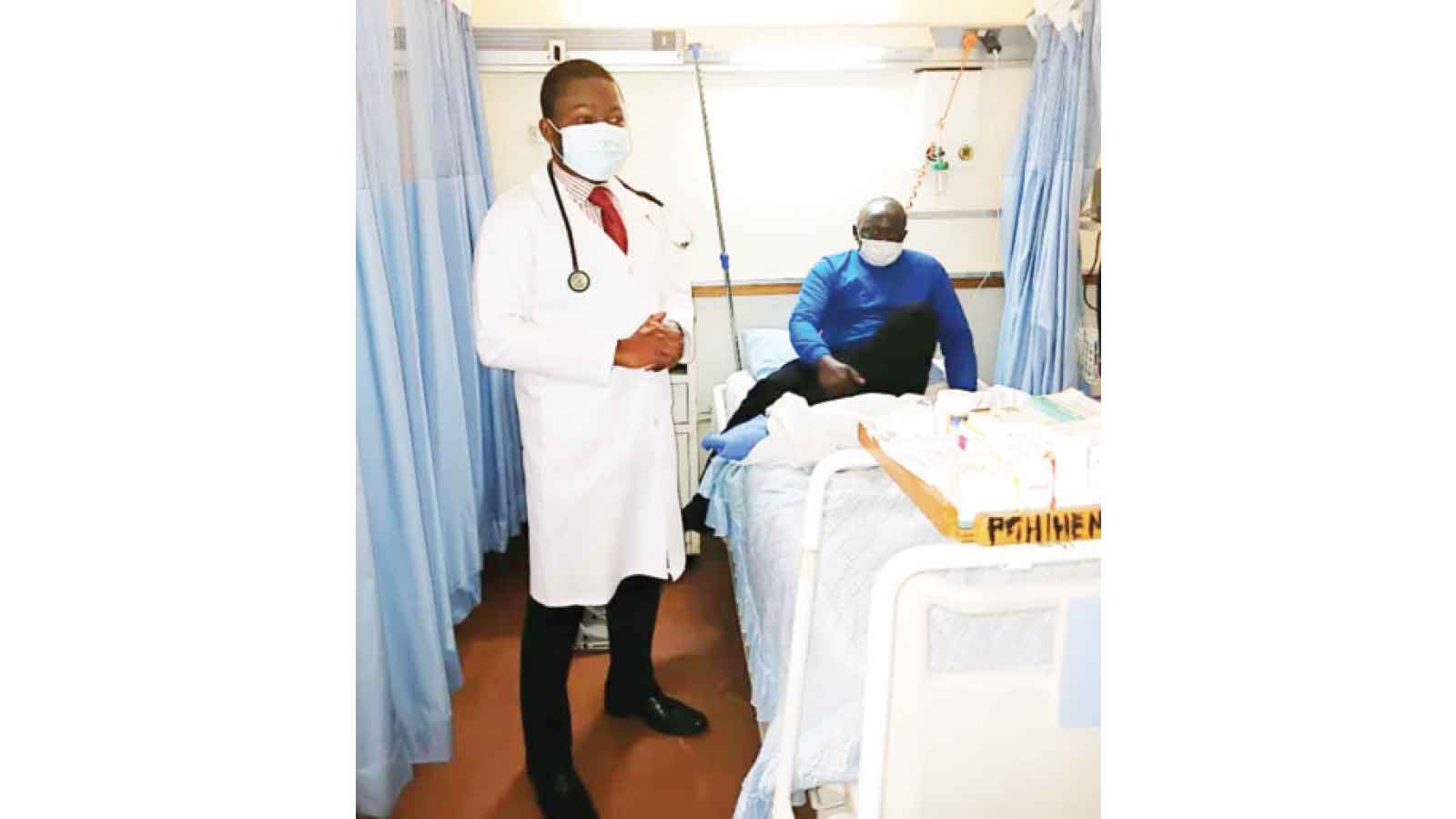
Trust Freddy
Herald Correspondent
ZIMBABWE has entered a new era in specialist healthcare after Parirenyatwa Group of Hospitals successfully performed the country’s first-ever bone marrow transplant.
The historic autologous stem cell transplant was performed on 55-year-old Clifford Munemo, a multiple myeloma patient from Marondera, by a team of local specialists led by Consultant Haematologist Dr Moses Chatambudza.
The breakthrough aligns with Government’s drive to provide affordable, high-end medical care locally while cutting the burden of medical tourism.
Patients seeking bone marrow transplants abroad face bills ranging from US$23 000 to US$40 000 in India, and up to US$70 000 in South Africa.
According to Mr Munemo, while he had not yet tallied the final statement, the local bill was a small fraction of overseas charges.
“It was nowhere near US$23 000, neither US$40 000. It was way cheaper,” Mr Munemo said, noting that PSMAS covered nearly the entire expense.
Dr Chatambudza said the unit was established to ease the suffering of families forced to seek care abroad.
“So this is the first-ever bone marrow transplant in Zimbabwe that we decided to embark on, because we have seen that our patients are suffering, and the financial burden of going to other countries is just not sustainable,” Dr Chatambudza said. “And of course, with Government support, we realised we need to do all of these things here in Zimbabwe.”
Mr Munemo’s medical journey began in October 2024 when severe back pain escalated rapidly as he drove from Marondera to West End Hospital.
“I only managed to drive to West End Hospital and immediately became paralysed. I could no longer walk and was put on the wheelchair,” Mr Munemo recalled.
Diagnostic tests confirmed multiple myeloma, a cancer of the plasma cells in the bone marrow.
He was promptly referred to Dr Chatambudza at Parirenyatwa for specialist management.
Through targeted systemic therapy, Mr Munemo recovered and was walking again by early 2025.
However, during routine follow-up in June 2026, medical evaluations revealed the cancer had become aggressive, leaving a stem cell transplant as his only definitive treatment option.
He was admitted to Parirenyatwa on August 5 to begin the process.
“I am feeling positive that I am now okay,” an emotional Mr Munemo said as he prepared for discharge. “I don’t know how to thank Dr Chatambudza and his team because even money is not enough.”
The successful execution of the complex procedure was made possible through high-tech diagnostic and blood-processing machinery donated by the National AIDS Council (NAC).
Last year, NAC handed over specialised equipment valued at nearly US$2 million to the Ministry of Health and Child Care to equip Parirenyatwa’s blood services and renal units.
The machinery includes the Cobas e402 analyzer, the ORTHO VISION Analyzer, and the state-of-the-art Spectra Optia Apheresis System, which is used to harvest stem cells directly from peripheral blood.
The renal unit is now being used for multiple purposes, including bone marrow transplant.
“The biggest challenge we faced was the funding component. But you know what? NAC came in and essentially changed the whole thing,” Dr Chatambudza said, adding that the equipment resolved the unit’s major missing link.
NAC Chief Executive Officer Dr Benard Madzima said funding specialist equipment forms part of the council’s broader mandate to integrate HIV care with non-communicable diseases and oncology services nationwide.
“This has led to the development of the first-ever bone marrow transplant, which the specialists at Parirenyatwa Hospital have been able to provide,” Dr Madzima said.
He added that NAC is also extending similar infrastructure support to central hospitals in the southern region, including Mpilo Central Hospital and United Bulawayo Hospitals (UBH).
Following extensive pre-transplant evaluations, stem cell mobilisation, and high-dose Melphalan chemotherapy to clear the diseased marrow, Mr Munemo’s stored stem cells were re-infused.
After 10 days of strict protective isolation, blood transfusions, and prophylactic care, tests confirmed that the transplanted stem cells had successfully engrafted and resumed healthy blood cell production.
Dr Chatambudza said the clinical team intends to conservatively perform about 30 transplants over the next 12 months as additional diagnostic tools — such as a CD34 enumerator flow cytometer — are fully integrated.
“Parirenyatwa being the biggest referral hospital in the country, we have to handle referrals from all over the country… Hopefully, by 2030, we will be doing above 100 transplants,” Dr Chatambudza said.
The specialised unit will treat haematological malignancies, including acute and chronic leukaemias, lymphomas, and multiple myeloma, alongside benign conditions such as aplastic anaemia and inherited bone marrow failure syndromes.


 Online Reporter