

 Online Reporter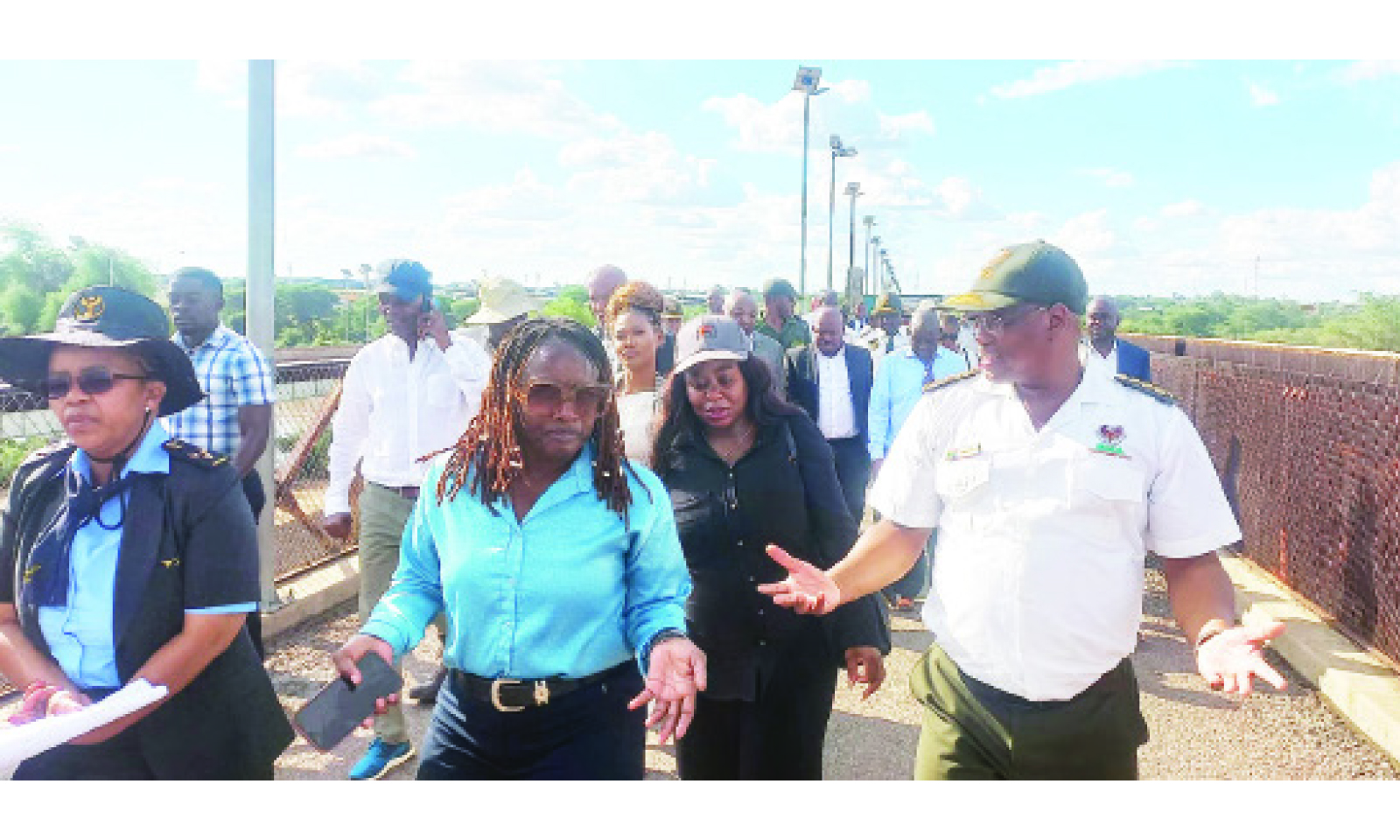
Thupeyo Muleya
Beitbridge Bureau
A JOINT team of technocrats from Zimbabwe and South Africa met at Beitbridge Border Post yesterday to discuss modalities and logistics around the construction of a third commercial bridge across Limpopo River to link the two countries.
This follows recent high-level discussions by President Mnangagwa and President Cyril Ramaphosa on their visit to the border where they discussed issues, among them the full implementation of the one-stop border post concept.
Already, Zimbabwe’s Cabinet has approved the construction of a third bridge across the Limpopo River to ease congestion and reduce waiting times at the border post.
The move will result in improved efficiencies for both people and cargo passing through the port of entry which also services Mozambique, the Democratic Republic of Congo, Angola, Tanzania, Malawi, Botswana, Zimbabwe and Zambia.
While the exact details on funding and timelines are not available, Cabinet’s approval paves the way for further planning and implementation.
Secretary for Transport and Infrastructure Development Engineer Joy Pedzisayi Makumbe led the Zimbabwe delegation, while the South Africans were led by the Border Authority Management’s commissioner Dr Michael Masiapato.
After a closed-door meeting in Musina, the joint team had the opportunity to tour the border and identify a possible site for the construction of the new bridge.
Although both Dr Masiapato and Eng Makumbe were not at liberty to discuss the details of their meeting, sources said great progress had been made towards the full implementation of the project.
“As you may be aware, Zimbabwe has already approved the project and what is only left is the conclusion of the bilateral agreements and technical issues by the two Governments,” said one of the officials.
“The proposal is that the new commercial bridge with four lanes will be built on the west of the New Limpopo Bridge to directly link the two countries’ components of the freight clearing sides.
“In addition, you will note that South Africa is set to upgrade its part of the Beitbridge border post and hence today’s onsite visit to check and customise the new bridge to fit into the border transformation plans”.
At the moment a maximum of 25 000 travellers, 1 200 commercial trucks, 200 buses and 2 000 light vehicles use the border post daily.
The completion of the USD300 million border modernisation on the Zimbabwean side has seen the Government setting plans in motion to make the port of entry a premier crossing point with quality service delivery.
In a recent interview, Transport and Infrastructure Development Minister, Felix Mhona said; “Initially when we were undertaking this project, we were supposed to have constructed the second bridge, but because of bilateral arrangements we decided to separate it from the current border work”.
He said although there were possibilities about traffic being diverted via Botswana to Kazungula Border Post where Zimbabwe, Botswana, Zambia and Botswana meet, with Zimbabwe now a shareholder of the new bridge there, the Government was offering efficiency as a premium to boost trade through Beitbridge Border Post.
The original Alfred Beit Bridge paid for by the Beit Trust was opened in 1929 replacing the old Leibigs Drift as the direct road link between Zimbabwe and South Africa.
Traffic gradually grew and in the mid-1970s the railway went over the same bridge when the new Rutenga-Beitbridge link was built.
By the mid-1990s the old bridge was hardly coping and in 1995 the second bridge, the New Limpopo Bridge, a pure road bridge, was opened.
This allowed the old Alfred Beit Bridge to be dedicated to rail and pedestrian traffic, with the growing flood of pedestrians grateful for the dramatic increase in safety.
South Africa’s Government also recently approved a proposal by the Ministry of Home Affairs to upgrade six of its major ports of entry including the Beitbridge Border Post.
The six earmarked ports of entry are: Beitbridge — Zimbabwe, Lebombo — Mozambique, Maseru Bridge — Lesotho, Ficksburg — Lesotho, Kopfontein — Botswana and Oshoek — Eswatini.



