Online Reporter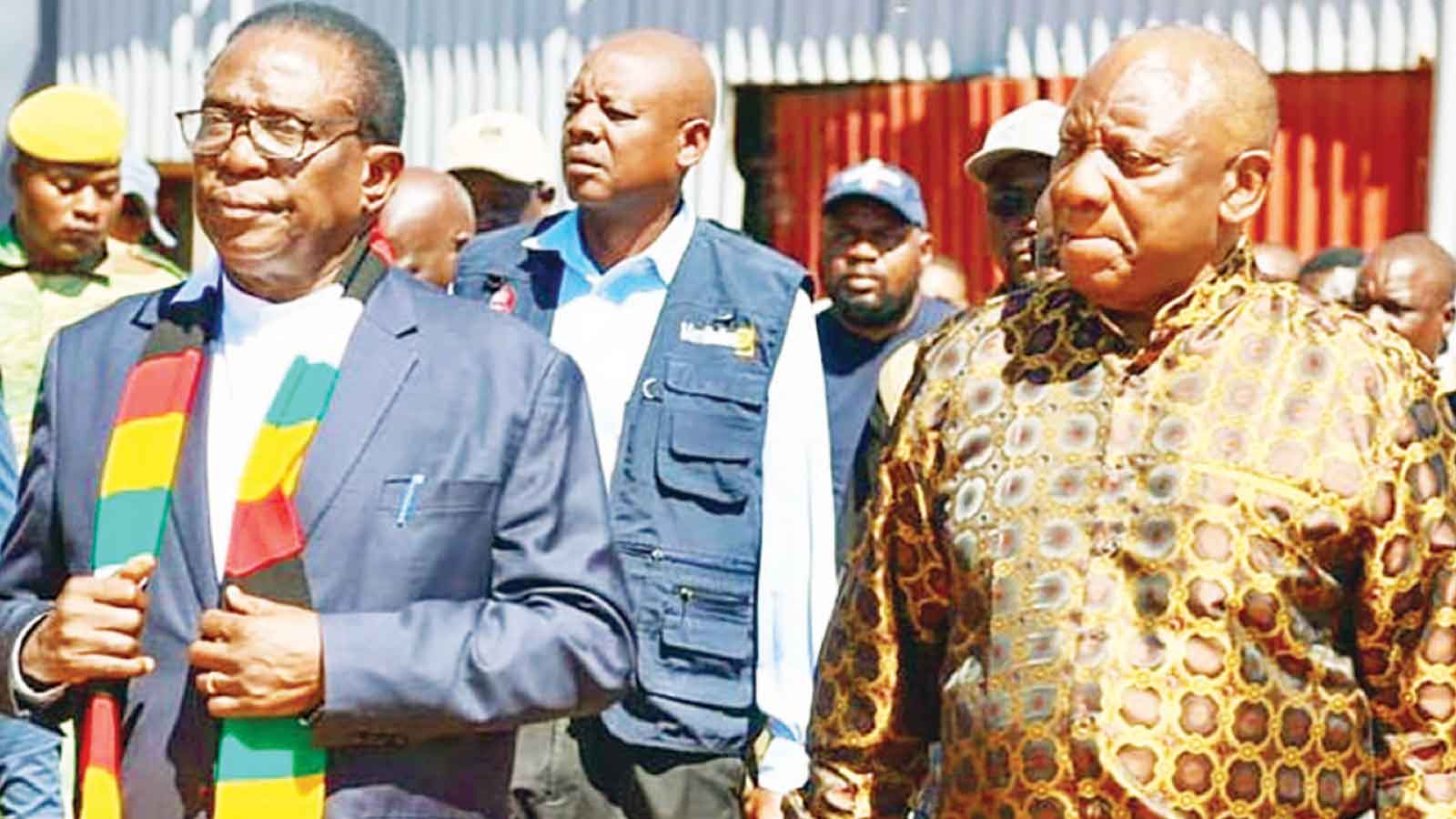
Richard Muponde
Zimpapers Politics Hub
SOUTH African President Cyril Ramaphosa arrived in Zimbabwe on Sunday for a private working visit, immediately setting the tone for a deeply personal and strategic engagement with his counterpart, President Mnangagwa.
Touching down at Robert Gabriel Mugabe International Airport shortly after 10am, President Ramaphosa was received by President Mnangagwa himself, before the two leaders proceeded to Kwekwe in the Midlands Province.
The centrepiece of the visit was a tour of President Mnangagwa’s Pricabe Farm, a high-production agricultural enterprise that has become a symbolic showcase of Zimbabwe’s land reform outcomes and agrarian ambitions. The visit, lasting approximately four hours blended diplomacy, agriculture, and ideological reaffirmation of a shared economic vision.
A brotherhood forged in liberation history
The relationship between Presidents Mnangagwa and Ramaphosa is rooted in the shared political history of Southern Africa’s liberation struggle, where both Zimbabwe and South Africa emerged from colonial and apartheid systems into independent states guided initially by liberation movements.
However, both leaders now represent what analysts increasingly describe as a “second-generation liberation leadership”, a shift away from political emancipation toward economic sovereignty. Their repeated private engagements, state visits and informal exchanges have led to descriptions of them as “Siamese twins” of regional diplomacy, closely aligned in both ideology and pragmatic governance.
Their bond was visibly reinforced during President Ramaphosa’s 2019 inauguration in Pretoria, where President Mnangagwa was among several African heads of state who attended. President Ramaphosa, in his address, thanked African leaders for their “sacrifices and tireless contributions to the liberation of our land,” underscoring a shared historical foundation that continues to influence present-day cooperation.
From political liberation to economic conquest
Both leaders have consistently framed their governance philosophies around a transition from liberation politics to economic transformation.
At his inauguration on November 24, 2017, President Mnangagwa declared that Zimbabwe had entered a “Second Republic,” famously stating, “Zimbabwe is open for business”. This marked a deliberate pivot from ideological struggle to investment-driven development, industrialisation and global re-engagement.
His administration’s Vision 2030 blueprint seeks to transform Zimbabwe into an upper-middle income economy through agriculture, mining, manufacturing and infrastructure expansion.
President Ramaphosa, on the other hand, has pursued a parallel agenda in South Africa through investment promotion, industrial revitalisation and structural reforms aimed at inclusive growth. His leadership style has emphasised rebuilding investor confidence while addressing historical inequalities, particularly land and economic ownership imbalances.
Together, the two leaders embody a regional ideological shift, from liberation legitimacy to developmental legitimacy.
Pricabe Farm: A living symbol of economic philosophy
The Pricabe Farm tour was more than ceremonial. It represented a practical demonstration of President Mnangagwa’s agricultural vision and land reform policy, which he has repeatedly described as “irreversible” while still open to productive restructuring and compensation frameworks for former commercial farmers.
President Ramaphosa, himself a commercial farmer, reportedly admired the farm’s livestock and production systems. He said during the tour: “I will come here more.”
That informal but symbolic statement has been widely seen as an endorsement of Zimbabwe’s agricultural model. It has also been interpreted as a gesture of personal warmth between the two leaders.
The farm has previously hosted several regional figures, including former Botswana President Mokgweetsi Masisi and former Mozambican President Filipe Nyusi, reinforcing its role as a diplomatic and economic showcase.
Converging economic philosophies: Vision 2030 and SA growth agenda
Zimbabwe’s Vision 2030 and South Africa’s economic recovery agenda under President Ramaphosa share several converging principles, industrialisation, agricultural modernisation, infrastructure development and empowerment of the black majority in economic ownership.
Both Governments are committed to correcting historical economic imbalances created during colonial and apartheid eras. In Zimbabwe, land redistribution remains central, while in South Africa, land reform and broad-based economic empowerment policies continue to shape national discourse.
At the continental level, both leaders align with the African Union’s Agenda 2063, which envisions an integrated, prosperous, and peaceful Africa driven by its own citizens. Their cooperation is increasingly framed within this continental blueprint, positioning Southern Africa as a potential economic powerhouse rather than a region defined solely by its liberation history.
The repeated private nature of engagements between President Mnangagwa and President Ramaphosa signals a high level of personal trust and diplomatic flexibility. Unlike formal state summits, these visits allow candid discussions on sensitive regional matters including trade flows, energy cooperation, security coordination and political stability within SADC.
From Frontline States to Economic Frontiers
Historically, Southern Africa’s liberation was coordinated through the Frontline States, which included leaders such as Kenneth Kaunda, Julius Nyerere, and Samora Machel. That era prioritised political independence and the dismantling of colonial regimes.
Today, Presidents Mnangagwa and Ramaphosa respectively, represent a different frontier, economic emancipation. While their predecessors fought for the vote, they now seek to fight for value creation, industrial competitiveness, and equitable global participation.
The symbolism of their relationship reflects this transition. Where once liberation leaders met in exile or war councils, today’s leaders meet on farms, in boardrooms, and at investment forums.
A shared vision of African economic sovereignty
Both leaders advocate for reducing dependency on external financial systems and strengthening intra-African trade under frameworks such as the African Continental Free Trade Area (AfCFTA). Their collaboration is increasingly seen as essential for regional economic integration.
President Mnangagwa’s emphasis on land utilisation and production, combined with Ramaphosa’s focus on industrial expansion and investment attraction, creates a complementary economic axis within Southern Africa.
A brotherhood of development, not just politics
The Pricabe Farm visit on Sunday, was more than a diplomatic stopover. It was a symbolic affirmation of a shared ideological evolution, from liberation struggle leaders to economic transformation architects.
In their evolving partnership, Presidents Mnangagwa and Ramaphosa represent a new chapter in Southern African leadership, one defined not only by history, but by the pursuit of economic emancipation, regional integration, and black majority empowerment.
Their relationship, often described metaphorically as inseparable, reflects a broader regional truth, that the future of Southern Africa may depend not on isolated national strategies, but on coordinated, trust-based leadership rooted in shared liberation heritage and renewed economic ambition.