Online Reporter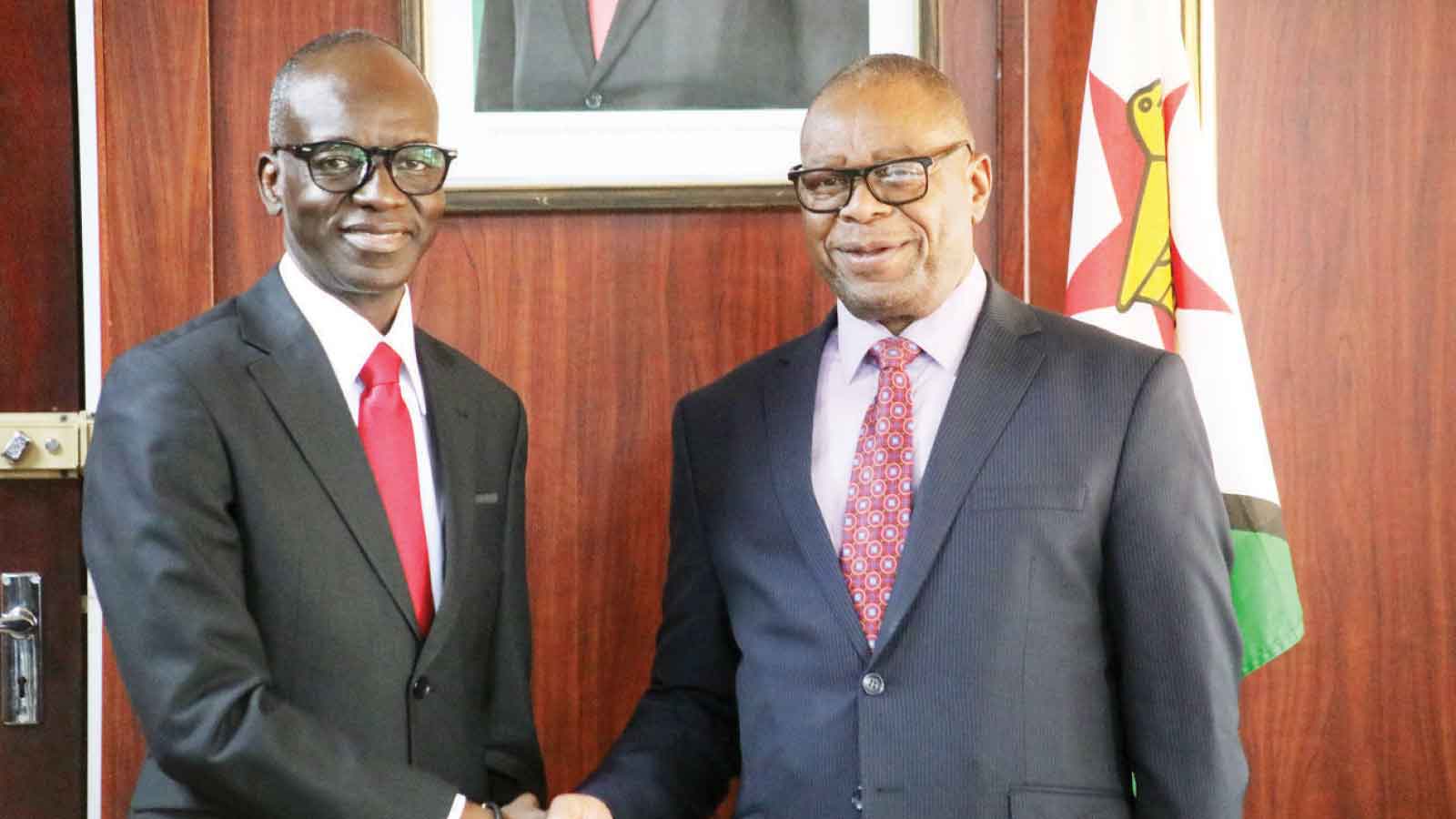
Rumbidzayi Zinyuke-Senior Health Reporter
ZIMBABWE has appealed to the World Health Organisation to strengthen support for expanding access to affordable cancer medicines and modern health technologies, as the country intensifies efforts to tackle the growing burden of non-communicable diseases.
Health and Child Care Minister Dr Douglas Mombeshora recently told WHO Africa regional director Dr Mohamed Yakub Janabi that improving access to lifesaving medicines, advanced diagnostic technologies and quality cancer treatment had become a national priority.
“We seek WHO’s continued support in addressing one of the most pressing health challenges of our time, the growing burden of non-communicable diseases, particularly cancer,” he said.
“We require stronger collaboration in expanding cancer screening programmes, improving early diagnosis, building treatment capacity, strengthening oncology services and enhancing access to affordable medicines and technologies.”
Dr Mombeshora said making quality cancer care more accessible was essential if Zimbabwe was to protect the health and productivity of its population and achieve the Sustainable Development Goals.
He noted that while Zimbabwe had recorded encouraging gains in life expectancy, maternal and child health and the control of HIV, tuberculosis and malaria, the increasing prevalence of NCDs, together with climate-related health challenges, the need for sustainable health financing now demanded greater investment and international collaboration.
“The fight against non-communicable diseases must become a central pillar of our health agenda if we are to protect the health and productivity of our population and achieve the Sustainable Development Goals,” he said.
Government remains committed to achieving universal health coverage and building a resilient, equitable and people-centred health system that leaves no one and no place behind.
Dr Mombeshora also acknowledged WHO’s longstanding support to Zimbabwe, highlighting its role during the Covid-19 pandemic and cholera outbreaks through technical guidance, disease surveillance, laboratory strengthening, vaccination support and emergency response coordination.
“Today’s complex health challenges require collective action and international solidarity. The World Health Organisation remains the foundation of the global health architecture.
“Its normative leadership, convening power and technical expertise are indispensable in promoting global health security, health equity and coordinated responses to emerging threats,” he said.
Dr Mombeshora added that WHO had also contributed significantly to strengthening Zimbabwe’s health systems through support for primary health care, workforce development, digital health initiatives, disease surveillance, health financing reforms and the establishment of the Public Health Institute of Zimbabwe.
Harare looks forward to deepening its partnership with WHO to ensure that innovative health technologies and affordable medicines become increasingly accessible to all citizens, particularly those living with cancer and other chronic diseases.
Zimbabwe has, in recent years, increased investment in cancer prevention, diagnosis and treatment as part of broader efforts to strengthen oncology services.
Using resources mobilised through the sugar tax, Government has committed about US$50 million towards modernising cancer care infrastructure.
The first two low-energy radiotherapy machines have already been delivered to Parirenyatwa Group of Hospitals and Mpilo Central Hospital.
Two state-of-the-art multi-energy linear accelerators and two computed tomography (CT) simulators are expected to complete the modernisation of the country’s radiotherapy services.
Government has also expanded cancer screening services through initiatives such as the Women Integrated Cancer Services programme, strengthened pathology and diagnostic capacity, and recently launched the second phase of the Hope for Lungs Project to improve early detection of lung cancer by integrating screening into tuberculosis services.
Health experts say increased collaboration with WHO and other development partners will be critical in improving access to essential oncology medicines, innovative treatment technologies and specialised expertise as Zimbabwe responds to the rising burden of cancer.