Online Reporter
Nqobile Bhebhe [email protected]
As Zimbabwe continues to push for innovation-driven industrialisation and greater participation in science and technology, young Zimbabweans in the diaspora are beginning to make significant strides in advanced fields such as robotics and artificial intelligence.
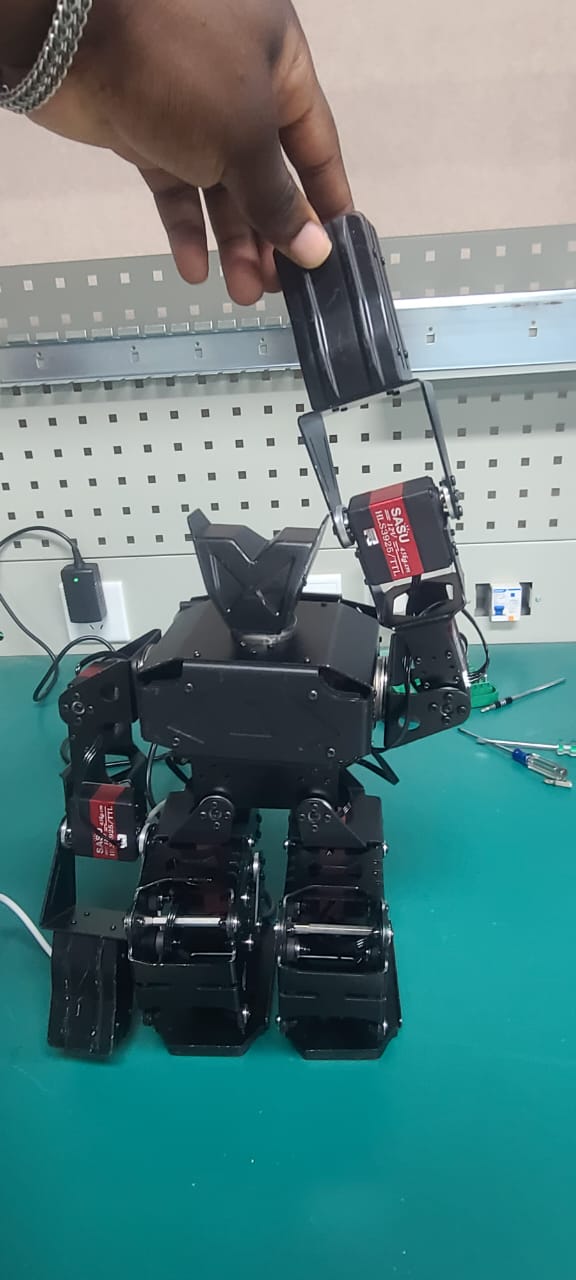
During a recent visit to Beijing, China, I spoke to 21-year-old Wonderful Gunhe, a Zimbabwean student based in the Asian economic giant who has successfully designed and built a humanoid robot capable of performing co-ordinated movements including walking and backflips.
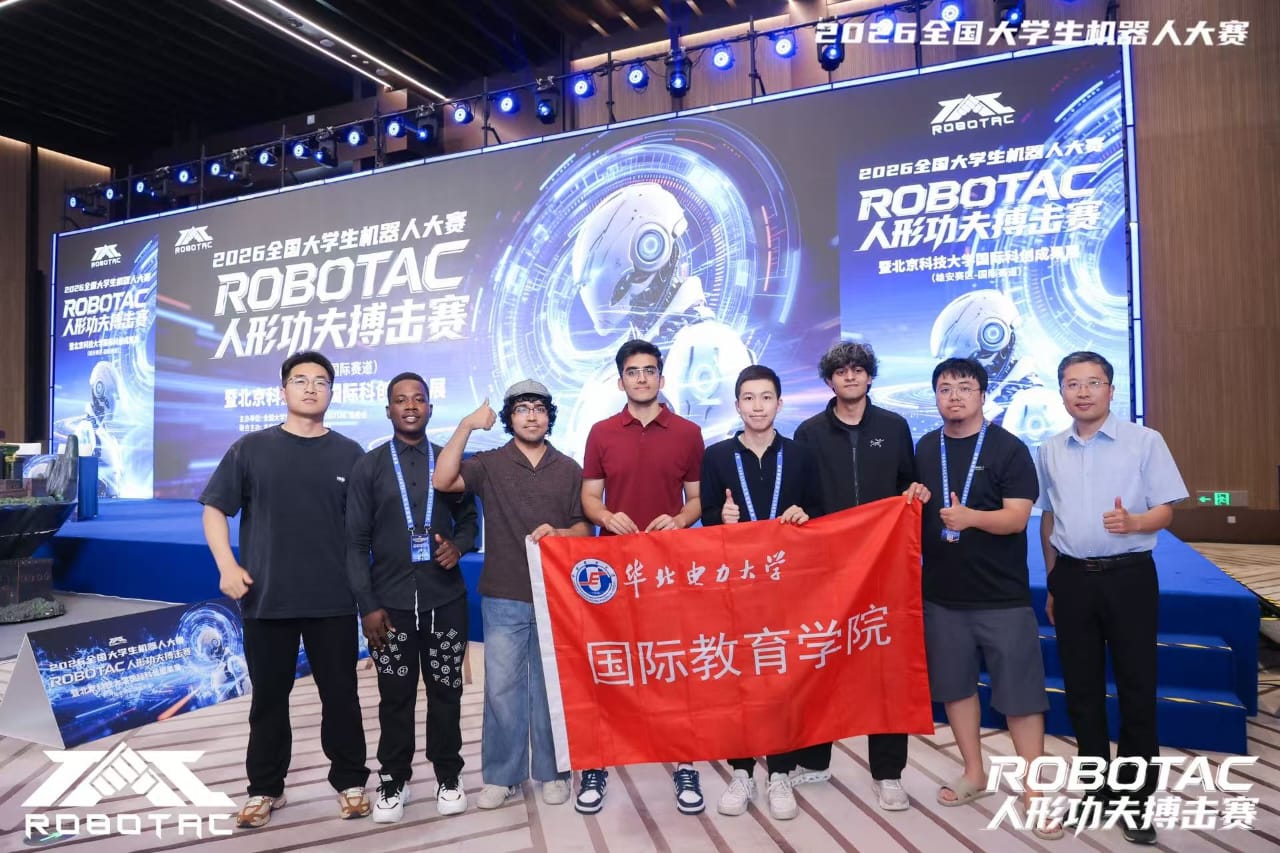
The North China Electric Power University Mechanical Engineering student said the project was inspired by the need to bridge gaps in practical STEM education and affordable automation technologies for Zimbabwean students and industries.
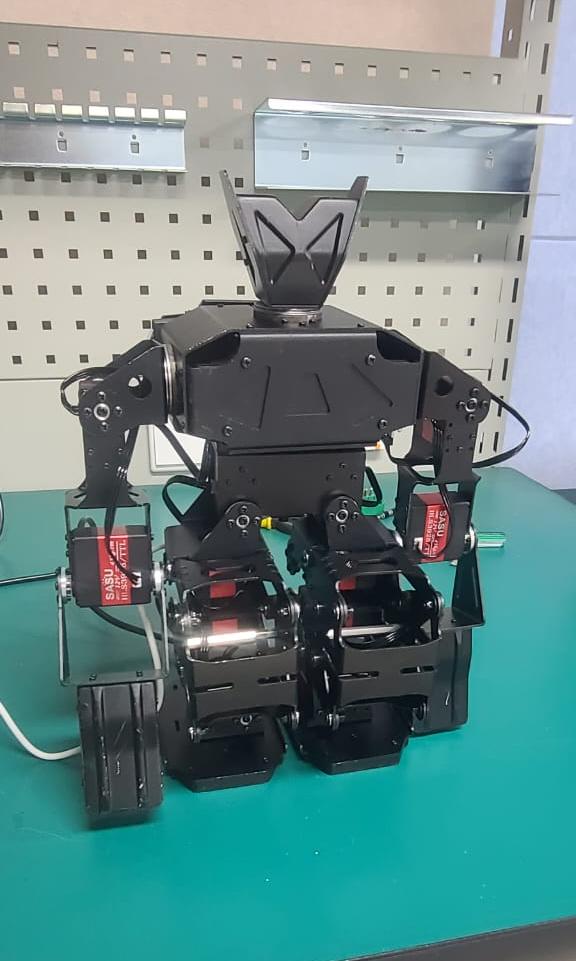
Gunhe also outlined how robotics could eventually be deployed across key sectors of the economy, including healthcare, agriculture and manufacturing.
Importantly, he shared lessons on persistence, teamwork and innovation, urging young Zimbabweans to pursue technology-driven solutions despite limited resources.
Below are excerpts from the interview.
Q. What specific gaps in Zimbabwe’s economy inspired you to develop the robot?
A. I realised that Zimbabwe still has some gaps in practical, hands-on STEM education and affordable automation tools, particularly for students and small industries.
In many schools, colleges and universities, robotics is taught largely in theory because learners have limited access to functioning models and equipment.
Our goal was to build a low-cost but fully functional robot to prove that Zimbabwean students can design, assemble and program advanced systems from scratch.
We also wanted to spark greater interest in automation, innovation and technical skills development that can support education, light industry and future industrialisation.
Q. Being based in China — a global leader in robotics and AI — what key skills or technologies have you been able to access that shaped your project’s success?
A. Being in China gave us access to affordable hardware components, maker spaces and first-hand exposure to how robotics is being applied in industry, education and everyday life.
We gained practical experience in servo control, microcontroller programming and mechanical design by working directly with available technologies and receiving guidance from experienced technicians.
The environment also allowed us to prototype quickly, test different designs and refine complex movements such as walking, arm co-ordination and backflips.
That exposure significantly accelerated our learning and development process.
Q. Can you walk us through the biggest technical hurdle you faced during development, and how you overcame it while balancing academic demands?
A. The biggest technical challenge was achieving stable balance and coordinated movement, especially for walking and backflips.
Managing weight distribution, servo torque and movement timing required repeated testing and adjustments.
We solved the problem by breaking the process into smaller stages starting with single-limb movement, then walking patterns, before eventually integrating full-body motion.
At every stage, we tested, debugged and refined the code until the robot performed consistently.
Balancing the project with academics was also demanding, so we mainly worked after classes and during weekends, carefully planning our schedules to ensure both the project and our studies progressed effectively.
Q. Beyond technical challenges, what non-engineering obstacles have tested your resolve as a young innovator from Zimbabwe?
A. Financially, we were fortunate because both the school and our partner company supported us with materials and equipment.
However, the biggest challenges were psychological and practical.
At first, there was uncertainty and fear because building a humanoid robot from scratch felt overwhelming.
We constantly questioned whether the robot would actually work. Another major challenge was assembling the physical structure.
Aligning motors, frames and wiring with precision required patience and constant trial and error. Even small misalignments could affect the robot’s balance or stop it from functioning properly, forcing us to repeatedly disassemble and rebuild sections. Those experiences strengthened our resilience, teamwork and problem-solving abilities, teaching us the importance of persistence even when progress seems slow.
Q. How do you envision this robot being deployed in Zimbabwe’s agriculture, healthcare or manufacturing sectors specifically?
A. At the moment, the robot is human-controlled, meaning its immediate use is mainly for training, demonstrations and educational purposes.
However, the long-term possibilities are significant.
In agriculture, modified versions could assist with simple precision tasks such as seed placement, monitoring or operations in controlled farming environments.
In healthcare, the mobility and arm-control systems could eventually contribute to rehabilitation technologies or assistive devices for patients.
In manufacturing, the control and co-ordination systems we developed can be adapted for small-scale automation processes such as sorting, packaging and light assembly work. Most importantly, the project’s immediate impact lies in skills development — training more young Zimbabweans in robotics, coding and automation so that the country can build and maintain its own technologies locally.
In future, once more sensors and autonomous capabilities are added, the technology could be expanded into light automation tasks in sectors such as agriculture, manufacturing and assistive technologies.
Q. What support from local universities or Government would help scale your robot from prototype to a real-world solution back home?
A. Three areas of support would make the biggest difference. Firstly, access to laboratories and prototyping spaces equipped with electronics and mechanical tools would allow students to innovate without facing high personal costs.
Secondly, mentorship programmes linking students with experienced engineers, programmers and industry experts would strengthen both the hardware and software development process.
Thirdly, small grants or material support for components and equipment would enable teams to experiment, improve designs and move faster from concept to practical application.
With that kind of ecosystem, projects like ours could evolve from academic prototypes into field-tested solutions with commercial and industrial value.
Q. What message do you have for other young Zimbabwean students who believe they lack resources?
A. Start with what you have. We built this robot from scratch without external programming assistance, relying on teamwork, determination and support from our school and partner company.
You do not need perfect resources to begin learning. There are many free online tutorials and learning platforms available today. Collaborate with friends, stay curious and focus on solving one problem at a time.
Innovation is driven more by persistence, creativity and consistency than by expensive equipment.
λ Continues on
www.chronicle.co.zw
Q. Who assisted you on the project and how supportive is your university?
A. The project was a collaboration involving the school, a partner company, my friends and myself. Our school played a key role by representing us and connecting us with a company that provided hardware support and technical guidance.
On the programming side, we handled the entire process ourselves, which was an important learning experience. The university has also been supportive by giving us recognition and opportunities to showcase the project, helping us gain exposure and access to more opportunities in the innovation space.