Online Reporter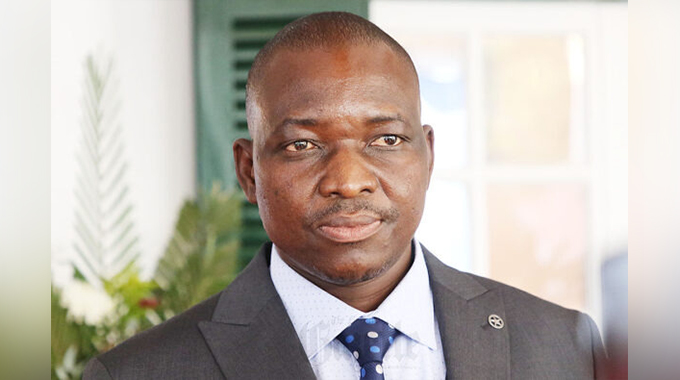
Rutendo Nyeve, Zimpapers Reporter
THE Government has surpassed its initial housing target by achieving over 70 percent of the revised one million housing units goal as of the second quarter of 2025 — a major leap from the original 220 000 units target set under the National Development Strategy 1 (NDS1).
Minister of National Housing and Social Amenities, Soda Zhemu, told Zimpapers that the Government has not only met but exceeded the initial target ahead of schedule, prompting Cabinet to raise the national target to one million units under the same NDS1 framework.
This framework tracks both serviced stands — which in urban areas include basic services like water, sewer and roads- and completed housing units defined as having at least one room on an approved plan on a serviced stand.
Minister Zhemu highlighted the geographical progress saying Bulawayo, Matabeleland North and Matabeleland South have moderate statistics.
“The findings indicate that Mashonaland East recorded the highest statistic, followed by Mashonaland, which also showed notable figures. Midlands, Masvingo and Manicaland, Matabeleland South, Bulawayo and Matabeleland North had moderate statistics.”
He also pointed out key rural district councils driving development.
“In Mashonaland East Province, Mutoko Rural District Council, Manyame Rural District Council and Goromonzi Rural District Council were the major contributors.”
The Zimbabwe National Human Settlements Policy (ZNHSP), promulgated in 2021, has fuelled this success by promoting pluralism in housing delivery and encouraging multiple players to participate.
“The policy emphasises on pluralism in housing delivery, where there is a multiplicity of players who are allowed to come on board to venture into housing delivery,” Minister Zhemu said.
He credited the private sector as the engine behind this growth.
“The Government creates the conducive working environment through policy and legislative frameworks as well as facilitating the land delivery value chain. The bulk of the housing units have been delivered by the private sector (banks and building societies, insurance and pension funds, private land developers and individuals, including those in the diaspora as well as some organised community-based organisations).”
He added that this whole-of-nation approach extends beyond urban centres.
“There has been renewed interest by Zimbabweans, both local and in the diaspora, to venture into mining and agricultural projects in communal and resettlement areas, which has, by extension, led to the construction of decent and modern homesteads that are a marvel to watch.”
With December 2025 looming as the deadline for the one-million-unit target, the Ministry is ramping up its efforts, focusing on innovative funding models.
“The new funding models that were reignited during the NDS1 period include the prescribed asset status. The Ministry has been facilitating the granting of prescribed asset status to a number of project proponents to raise housing finance at concessionary rates from the insurance and pension funds,” Minister Zhemu noted.
Rental housing is also gaining momentum as a sustainable funding model for developers.
On affordability and inclusivity, the Minister stressed several measures: “One of the cost drivers of a housing unit is the cost of land. Government disposes of land at intrinsic value to enhance affordability and access.”
He also outlined a quota system to ensure equitable access.
“Twenty percent is reserved for the veterans of the liberation struggle, ten percent for women, ten percent for persons with disabilities, ten percent for youths, ten percent for public servants and 40 percent for general public.”
Minister Zhemu acknowledged remaining challenges, particularly in bulk infrastructure like major water and sewage systems.
“Bulk services require huge capital outlay. It is the responsibility of Government to mobilise such resources through the Public Sector Investment Programme.”
To address funding constraints and a dysfunctional mortgage market, the Government pursues Public-Private Partnerships (PPPs) and explores alternatives within the multi-currency system. The Presidential Title Deeds Programme also plays a key role in leveraging finance in informal settlements.
As the Government accelerates toward its million-unit goal, the collaboration between a policy-driven Government, an agile private sector and determined citizens at home and abroad is transforming Zimbabwe’s housing landscape — building not just structures but sustainable, inclusive communities for the future.