malvernmugadzikwa
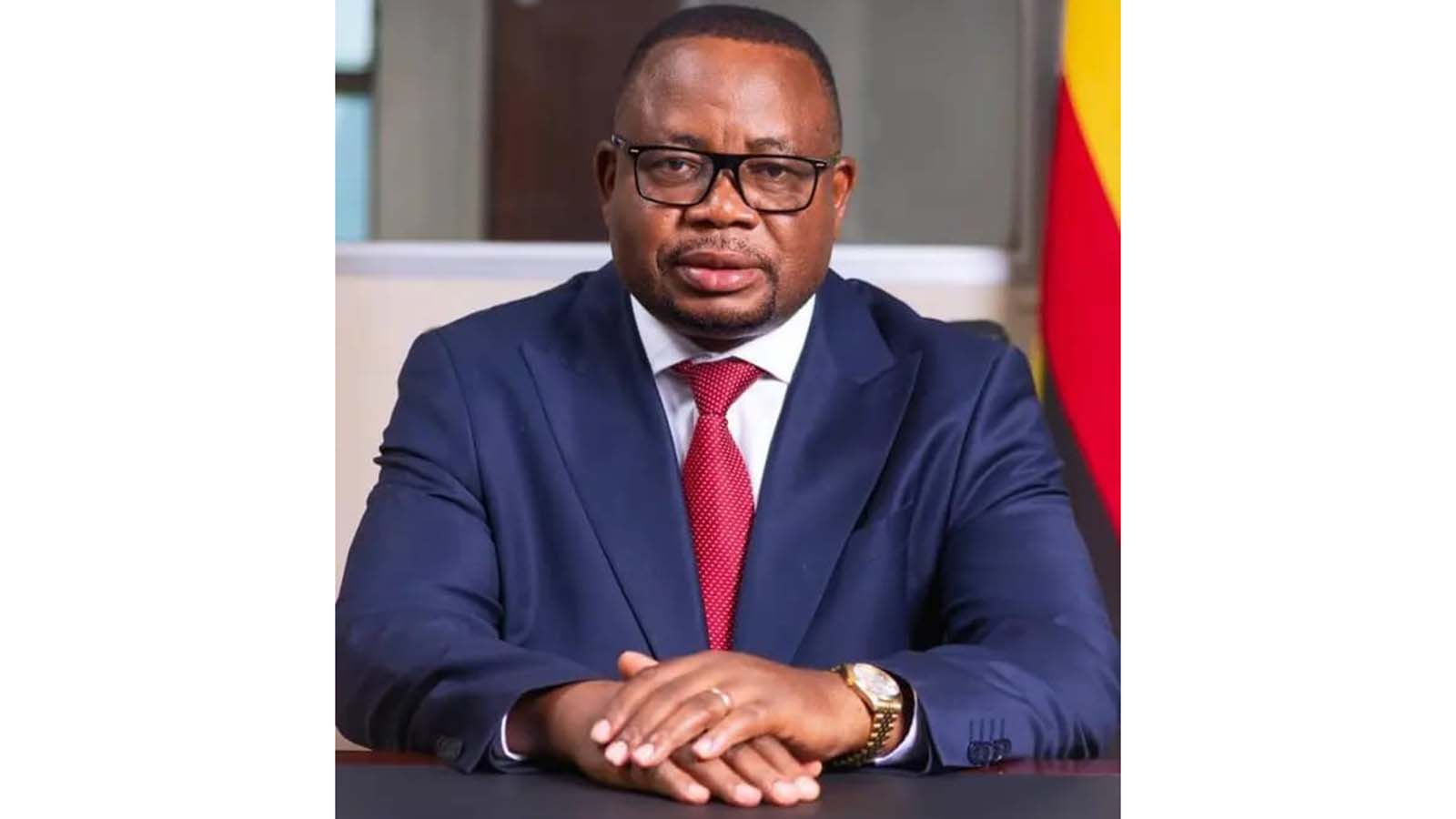
Minister Ziyambi Ziyambi
THE Government is currently working on amendments to the Constitution to improve the conduct of our elections.
In the lead-up to the last polls, several issues emerged that we believe hindered a smooth electoral process.
During discussions in the National Assembly on amending the Electoral Act, the opposition raised some of these issues. However, I explained that addressing them required constitutional changes, not merely amendments to the Electoral Act.
So, our policy and research department is now developing principles for these constitutional amendments to incorporate some of the recommendations we have received.
For instance, during the delimitation exercise, both parties agreed that the Zimbabwe Electoral Commission (ZEC) was under excessive pressure by handling both delimitation and elections. We believe these functions should be separate to allow ZEC to focus solely on managing elections without the additional burden of delimitation. We hope to finalise these amendments well ahead of the next elections.
Ideally, any changes should be in place at least a year in advance to ensure their applicability during the next polls. Broad consultations will be held, but we are committed to introducing a Constitutional Amendment Bill before the end of the 10th Parliament. Currently, I am awaiting further discussions with my policy and research team and the Law Development Commission to determine any additional amendments we may need.
Once we finalise the full set of amendments, we will begin the legislative process. Some of these proposals are already public, including the plan to remove the duty of undertaking the delimitation exercise from ZEC. We believe this change will streamline election management and address logistical challenges, such as integrating the voters’ roll with the Civil Registry (Department).
The proposal is to transfer the role of voter registration to the Registrar-General’s Office, which maintains records, from birth to death.
This would allow for an automated voter registration process based on the data available. The system we want is one where once one turns 18, the Civil Registry Department, using their records, will inform them that they are now eligible to vote.
The system should also say if you do not respond to their notification within two weeks or so, they will presume that your listed residential address is where you want to be registered as a voter. You will then be registered automatically using your given address.
So, we are planning on rolling out a system where we can actually have an automatic registration of voters.
Additionally, this system will facilitate automatic voters’ roll updates, such as the removal of deceased individuals upon issuance of a death certificate.
This approach is both efficient and has broad support, including from the opposition. So, it’s a much neater and progressive way of doing it. And it is something that is not in dispute. The comprehensive amendment Bill will include suggestions from all stakeholders, ensuring that it reflects diverse viewpoints.
The party (ZANU PF) may have specific issues they also want considered, and once we assess whether these require constitutional or statutory amendments, we will act accordingly.
I know the party may have other issues that they may want. Broadly speaking, the need for these amendments stems from feedback received in Parliament, from party conferences and various stakeholders.
As the Ministry of Justice with responsibility for law-making and policy research, we have engaged the Law Development Commission to help develop and refine these changes.
Following the elections, ZEC held a review meeting in Nyanga, where they presented their own recommendations.
We are currently analysing their input with the goal of presenting a Bill that reflects the aspirations of the people and strengthens our democratic processes.
Presidential term limits
The 21st ZANU PF National People’s Conference resolutions follow a structured implementation process. A key resolution from the conference was the call for the President to remain in office until 2030.
In ZANU PF, after resolutions are passed at the conference, we begin a formal process to ensure they are implemented. Resolutions that require Government action are forwarded to the Chief Secretary (to the President and Cabinet), who directs them to relevant ministers for implementation. Once this happens, we can review and provide our advisory input.
The advisory process does not occur within the conference itself; rather, the party consolidates the resolutions reflecting the people’s wishes, as expressed at the conference, and forwards them to the Chief Secretary. Upon receiving these resolutions, the Chief Secretary will engage ministers in charge of the respective portfolios.
For example, if there are resolutions relevant to the Ministry of Justice, they are directed to us for review and advisement. At that point, we assess each resolution to determine what can be implemented, noting any potential challenges. If certain resolutions require constitutional amendments, we can incorporate them into our ongoing legislative work to meet the people’s expressed wishes.
In cases where legal or practical challenges arise, we may refer the matter back to ZANU PF for further discussion, presenting our legal experts’ analysis on issues identified. This formal process, initiated at the party level, is designed to ensure resolutions align with the broader legal and governmental framework.
That process has already started at the party; we are alert to what the conference resolution says. Informally, we know the process has started, but we also await formal communication that comes through the party, then we look at them.
Sanctions
Zimbabwe will be participating at the International Conference on Sanctions, Business and Human Rights in Geneva, Switzerland, between November 21 and 22. The conference provides a global forum to discuss the impact of unilateral coercive measures on the human rights of those not intended to be targeted.
While the sanctions are often labelled “targeted”, their effects have rippled through Zimbabwe’s financial sector and impact everyday transactions, such as purchasing essential goods and medicines.
Every transaction from Zimbabwe is scrutinised simply because the country is under sanctions, resulting in shortages and suffering for the general population — not just the intended targets. As a result, critical infrastructure, medicines and education have suffered.
Where Zimbabwe might otherwise have developed schools or built essential infrastructure, the constraints imposed by sanctions have held back progress and worsened daily life for ordinary citizens.
This conference aims to foster a global conversation on whether it is appropriate to impose sanctions that indirectly harm the wider population in response to political disagreements or bilateral disputes.
Professor Alena Douhan, the United Nations (UN) Special Rapporteur on the impact of unilateral coercive measures on the enjoyment of human rights, will be the keynote speaker.
Her extensive research has highlighted that sanctions often deny fundamental rights to the general public, rather than affecting only the political elite.
The conference will bring together representatives from multiple countries to share experiences and advocate an approach to international relations that respects human rights. Prof Douhan argues for a shift in how business and international relations are conducted, suggesting that a human rights-based approach should replace punitive measures against states. Historically, sanctions have shown that they cannot be a vehicle to achieve regime change.
Examples like Cuba show that sanctions rarely shift political leadership. Instead, they violate basic rights outlined in the UN Charter and the Universal Declaration of Human Rights, including access to food, potable water and health. These sanctions are often intended to pressure citizens into calling for regime change, but nations tend to find ways to safeguard their sovereignty and endure these pressures.
The conference will, therefore, urge those in favour of sanctions to reconsider their approach. The goal is to emphasise that regardless of their branding — whether as ZDERA (Zimbabwe Democracy and Economic Recovery Act) or targeted sanctions — their effects are the same: a violation of fundamental human rights that impacts ordinary citizens.
Ziyambi Ziyambi is the Minister of Justice, Legal and Parliamentary Affairs. He was speaking to The Sunday Mail’s Debra Matabvu.


 Online Reporter