Online Reporter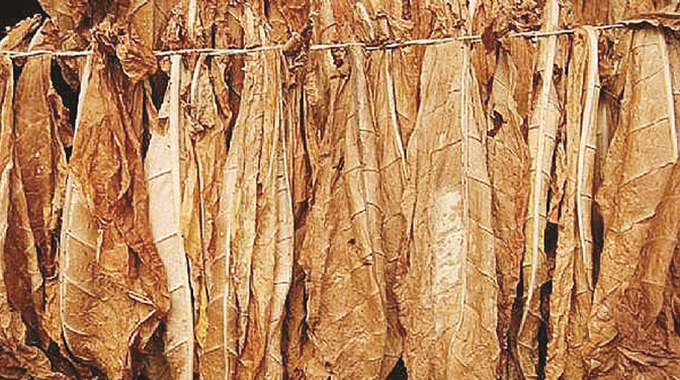
Theseus Shambare and Elita Chikwati
ZIMBABWE’S production of sun-cured and air cured tobacco is moving from pilot schemes to wider scale, with officials forecasting output of up to 2 million kg by 2027, anchored on a firmer pricing outlook.
This comes as prices are showing signs of stabilisation with market confidence strengthening across auction floors.
According to the Tobacco Industry and Marketing Board (TIMB), the expansion of naturally cured tobacco into Matabeleland and other dry regions marks a major shift in the country’s tobacco value chain, combining lower production costs, environmental sustainability and growing buyer interest.
In an interview after auctions of naturally-cured Virginia tobacco and burley tobacco at the Atlas Auction Floor at the ZITF grounds in Bulawayo on Wednesday, TIMB chief executive Mr Emmanuel Matsvaire said the model was designed to reduce dependence on firewood and coal while improving farmer profitability.
“This naturally cured tobacco is the most sustainably grown tobacco that we can have because we do not burn any trees, we do not burn any coal. So you would see that there is more sustainability that has come on board.”
Mr Matsvaire said the production model was also significantly reducing costs to farmers, making tobacco growing more accessible to smallholder producers entering the sector for the first time.
“Producing a hectare of the crop costs about US$1 100 while half a hectare needs about US$471. Small-scale farmers are producing about 1 600 kg per hectare while commercial farmers are reaching up to 3 000 kg per hectare,” he said.
Mr Matsvaire said with average prices hovering around US$2,50 per kilogramme, farmers were beginning to see viable returns, adding that the model was being supported through irrigation-based interventions aimed at expanding production in semi-arid regions.
He said TIMB had established village business units anchored on irrigation in drought-prone Matabeleland South, including solarised boreholes and free curing barns to support emerging growers.