admin
admin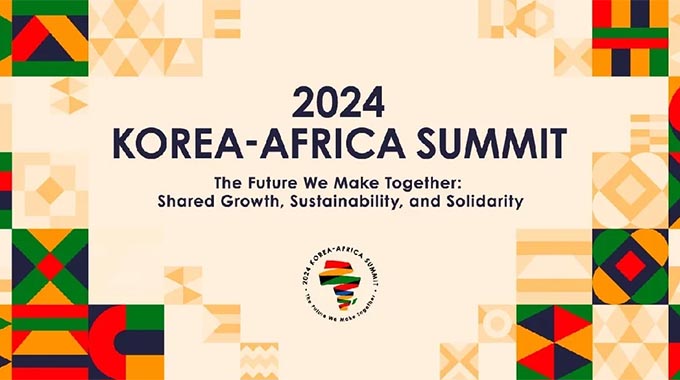
Hebert Zharare in SEOUL, South Korea
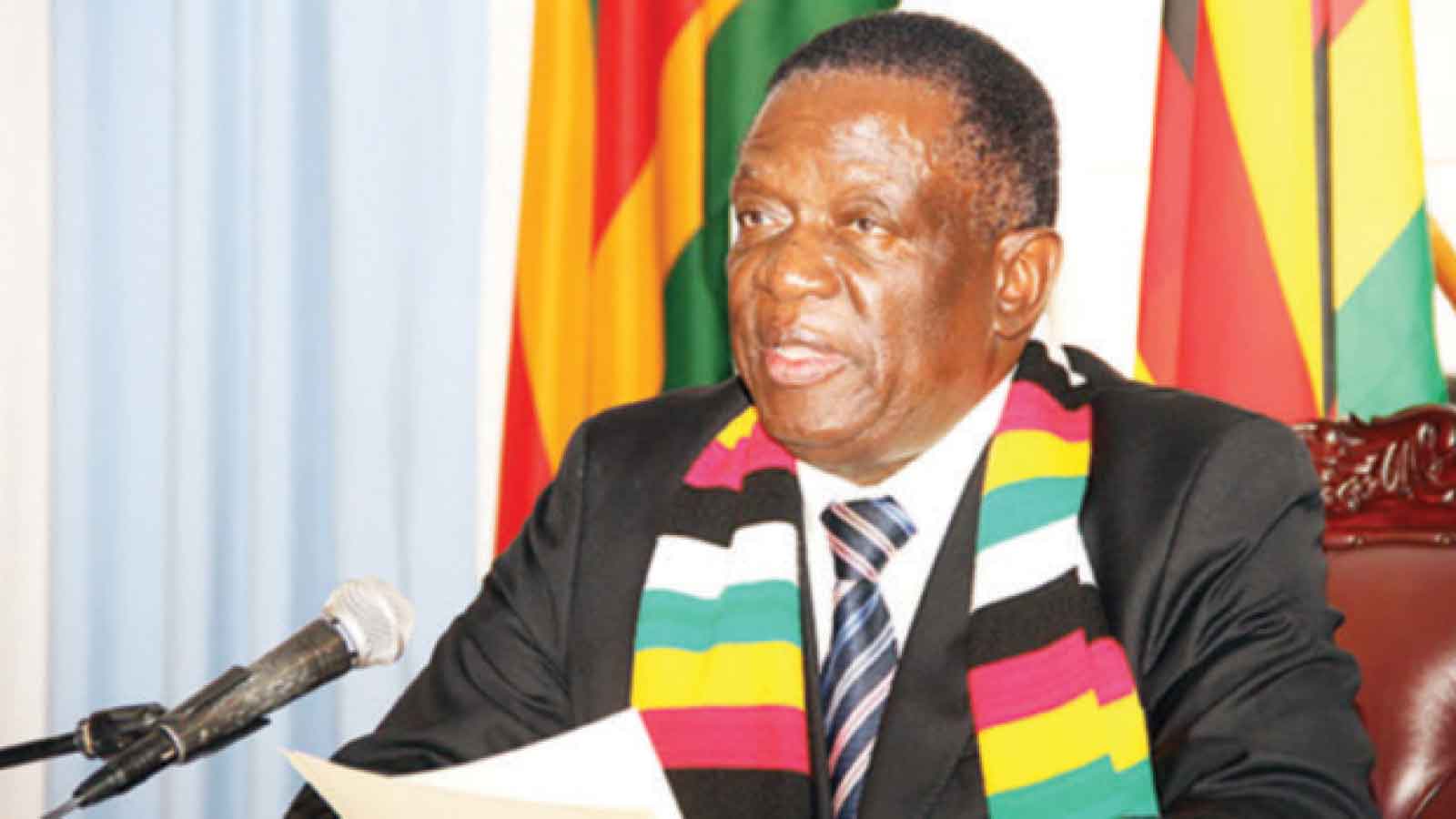
PRESIDENT Mnangagwa is among African Heads of State and Government set to attend the inaugural South Korea – Africa Summit here, where Zimbabwe is expected to pen mega deals with potential investors to boost the country’s economic development agenda.
The summit, which officially commences on Tuesday and ends on Wednesday, is being held under the theme: “The Future We Make Together: Shared Growth, Sustainability and Solidarity”.
It will be attended by delegates from African countries, representatives of international organisations, key figures from South Korea and the international business community.
South Korea is one of the fastest growing economies in the world on position 12 with a bulging Gross Domestic Product that is currently at US$1.7 trillion and Zimbabwe is set to emerge one of the major beneficiaries of this summit.
In an interview with The Herald here yesterday, Zimbabwe’s Ambassador to Japan, who also superintends over South Korea, Ambassador Stewart Nyakotyo, said President Mnangagwa’s participation bodes well with the country’s engagement and re-engagement agenda.
The President is expected here tomorrow.
The summit brings together African leaders and the South Korean leadership to discuss common issues of cooperation as well as trade, investment and cooperation in other important areas of economic development.
“As I indicated, this summit is the first of its kind and for Africa, it is very important in that it provides an opportunity to establish a partnership with South Korea, a partnership that is expected to benefit the African continent which as you are aware now falls under the African Continental Free Trade Area.
“For Zimbabwe, the areas that will be covered during this Summit include agriculture, mining, food security, trade, investment, ICT among other sectors. We expect to sign the Investment Promotion Framework — which is the main agreement. This is an umbrella agreement which will create conditions for cooperation in nine different sectors of the economy between South Korea and Zimbabwe.
“Then we will have the Bilateral Air Services Agreement that we expect to be signed. Besides the Bilateral Air Services Agreement, we have the agriculture one. Between Zimbabwe National Chamber of Commerce (ZNCC) and the South Korea Chamber of Industry, there is a ceremony planned to sign a memorandum of cooperation and also between ZNCC and the South Korea International Trade Association. So, these agreements which we are signing, will deepen and enhance our cooperation and create conditions for our businesses to cooperate with South Koreans for investment to come to Zimbabwe,” said Amb Nyakotyo.
The Second Republic has set an ambitious development agenda of attaining upper middle income status by 2030.
Under the national economic blueprint, the National Development Strategy (NDS) 1, targets have been set that Zimbabwe should achieve a number of milestones in various sectors including trade and investment.
As far as the foreign policy of the country is concerned, President Mnangagwa has been very clear that “Zimbabwe is a friend to all and an enemy to none.”
“Hence our President is here to broaden our friends as a country and we are engaging and re-engaging all countries in the world to create a better environment for cooperation with those countries which will benefit our citizens and our country. So that is the overarching goal and expectations from this summit,” said Amb Nyakotyo.
He said the Zimbabwe business community was expected to participate in the business forum to be held on Wednesday, where South Korean businesses will have the opportunity to interact with business representatives across Africa.
“We have with us some institutions from Zimbabwe such as ZimTrade (represented by Mr Allan Majuru), the Zimbabwe National Chamber of Commerce (represented by Mr Mike Kamungeremu) who will be in attendance at the business summit.
“We expect to sign a number of bilateral agreements between Zimbabwe and Korea which will enhance our cooperation. We have an interest as a country to improve our trade with Korea, to increase and attract investment. In the area of agriculture, we expect an agreement to be signed to increase co-operation and in the area of ICT, there will also be some discussions involving Zimbabwe and South Korea ICT companies,” said Ambassador Nyakotyo.
South Korea has been one of the leading countries in Asia and has managed to develop to be the 12th largest economy in the world with a Gross Domestic Product of over US$1.7 trillion.
It has a population of more than 50 million people.
After the devastating war in the 1950s, the country underwent a massive reconstruction process, and a lot of their achievements have been due to the industriliastion trajectory that it went through which enabled it to be one of the leading manufacturers in the world.
According to Fortune Global 500 ranking (2022), top South Korean companies are: Samsung Electronics reported to have revenue of US$234.13 billion, Hyundai (US$110.4 billion), SK (US$105.96 billion), KIA (US$67.06 billion), POSCO (US$65.85 billion), LG Electronics (US$64.95 billion), Korea Electronic Power Corporation (US$54.65 billion), Hanwha (U$$48.25), HD Hyundai (US$47.14 billion) and GS Caltex (US$45.34 billion).
Over and above these achievements, South Korea has developed modern and attractive infrastructure including roads, railways systems, sea and air transport and high rise buildings.
Said Ambassador Nyakotyo: “Now, Africa could learn a lot from the South Korean experience of transforming their economy from a war torn economy to a modern and prosperous economy. This has been attributed also to the South Korean specific focus on development of human capacity because South Korea does not have a lot of minerals. They have been able to tap into their greatest strength, which is the human capital resource development that has enabled this country to advance.
“So, Africa coming to South Korea can learn from that experience, how they have transformed their economy to be what it is today. The South Koreans are prepared to share this information and also their experiences, hence the Summit is being held under the theme: The Future We Make Together, Shared Growth, Sustainability and Solidarity. The idea is that Africa and South Korea share a lot in common in terms of their development trajectory and aspirations and can also help each other in mutually win-win situations”.
The Summit is receiving overwhelming support from private sector players here with some conglomerates chipping in with some materials resources to ensure the meeting is held without glitches.
According to local media, the Korea-Africa Summit preparatory office and the country’s largest automobile maker, Hyundai, signed a memorandum of understanding (MoU) for vehicles support.
The reports say both the Summit preparatory office and Hyundai acknowledged the significance of the meeting and took it as an opportunity to sustainably enhance collaboration between South Korea and Africa.
As part of the commitment, Hyundai will supply over 120 top-of the range official protocol vehicles to facilitate the transportation needs of African leaders and their spouses during the Summit.
Renowned financial organisations such as the International Monetary Fund note the resilience of the South Korean economy against various economic crises. They cite the country’s economic advantages as reasons for this resilience, including low state debt, and high fiscal reserves that can quickly be mobilised to address any unexpected financial emergencies.
Other financial organisations, like the World Bank, describe South Korea as one of the fastest-growing major economies of the next generation, along with BRICS and Indonesia. South Korea was one of the few developed countries that was able to avoid a recession during the Great Recession.
Its economic growth rate reached 6.2 percent in 2010, a recovery from economic growth rates of 2.3 percent in 2008 and 0.2 percent in 2009, during the Great Recession. The South Korean economy again recovered with a record-surplus of US$70.7 billion of the current account at the end of 2013, up 47 percent growth from 2012. This growth contrasted with the uncertainties of the global economic turmoil, with the country’s major economic output being the technology products exports.


 Online Reporter