admin
admin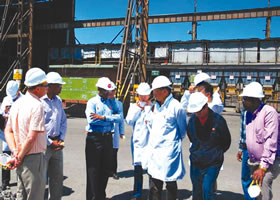
as the Chinese multinational plans to double output in the next three years.
Sinosteel has a 73 percent stake in Zimasco. As one of the leading ferrochrome producers in the world, it has already provided US$50 million for Phase One at Zimasco, which involves rebuilding of one of its furnaces.
A new 60MVA furnace will be installed in the second phase, alongside a 600 000 tonnes per annum pelletising and sintering plant.
Phase Two is, however, still in the planning stages. It is currently estimated that it will cost between US$250 million and US$300 million.
The phase one expansion project will see Zimasco’s ferrochrome annual production capacity increase from the current 170 000 tonnes to 235 000 tonnes.
In proportion, Zimasco’s chrome ore requirements will also rise to 700 000 tonnes from the current 500 000 tonnes.
Zimasco’s ferrochrome annual production capacity will go up to 330 000 tonnes after phase two while the mining output will double from the current 500 000 tonnes to one million tonnes of chrome ore.
In both phases additional jobs will be created in proportion to the increasing capacity at the smelter as well as the mining operations.
A Zimasco spokesperson said this week Phase One, which will take about 18 months to complete, will begin next month with production expected at to improve at the end of next year.
“Currently, the final contracts associated with the rebuilding of furnace number two are being finalised,” said the spokesperson this week.
“The funds for Phase One have already been committed by Zimasco’s majority shareholder, Sinosteel, and it is anticipated that funding for Phase Two will also be provided by Sinosteel Corporation.”
But Zimasco said it hoped that the current uncertainty on the country’s empowerment laws “will not derail these planned investments into Zimasco by our principal shareholder, Sinosteel Corporation”.
Zimasco and ZimAlloys are the two biggest producers of ferrochrome in Zimbabwe.
ZimAlloys, controlled by a local consortium, said it was targeting an annual output of 250 000 tonnes from 120 000 tonnes.
Zimbabwe and South Africa hold about 90 percent of the world’s chromite reserves and resources, according to the US Geological Survey.


 Online Reporter