Online Reporter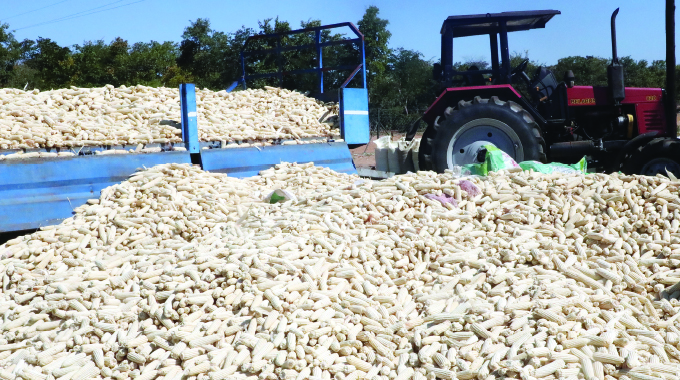
Mashudu Netsianda, Deputy National Editor
ZIMBABWE has sufficient grain stocks to last until March next year, with the Government confirming the disbursement of 30 metric tonnes of grain to the San Community in Tsholotsho District, to cushion vulnerable groups amid localised shortages.
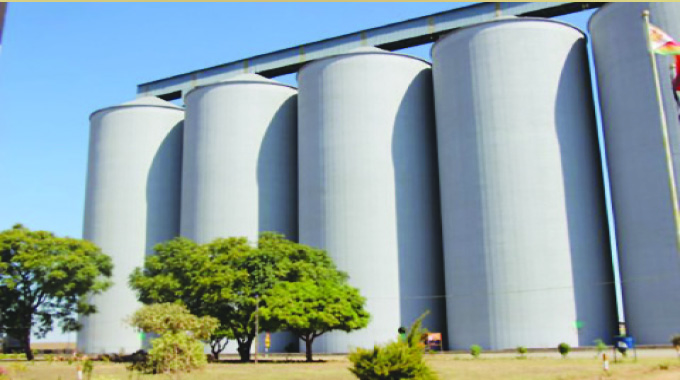
The Strategic Grain Reserve holds 133 115 metric tonnes, while the Grain Marketing Board (GMB) has established 1 804 mobile collection centres across all wards to ease delivery for farmers. Those supported under the Presidential Input Scheme are contributing 10kg per household as a gesture of appreciation for last year’s assistance, helping to bolster local reserves.
During his post-Cabinet briefing yesterday, Information, Publicity and Broadcasting Services Minister Dr Jenfan Muswere announced that the Government has approved the 2024–2025 summer crops marketing plan and the 2025 winter cropping strategy.
“The winter cereals plan has targeted 135 500 hectares comprising wheat 120 000 hectares, barley 6 500 ha and potatoes 9 000 ha, with an estimated production of wheat of 600 000 metric tonnes. Cabinet considered and approved the 2024–2025 summer crops marketing and 2025 winter plan,” he told journalists.
Dr Muswere said Zimbabwe’s updated food balance sheet to March 2026, based on the April 12, 2025 crops, livestock and fisheries assessment, confirmed national grain adequacy, although “local shortages are likely to be experienced in some areas.”
On crop marketing, he reported that a total of 272 870 metric tonnes of maize, soya beans, sorghum, wheat and sunflower had been formally sold, with additional volumes traded informally. The GMB’s intake of grains and oilseeds has increased from 12.8 percent to 21.6 percent.
“The cotton marketing season started on July 25, 2025 and a total of 27.9 million kilogrammes has been sold to six contractors. Meanwhile, tobacco sales stood at a record of 354.4 million kilogrammes as at 18th August, 2025 compared to 231 million kilogrammes sold at the same time in 2024, marking an increase of 53.07 percent. Tobacco seed sales are 12 percent firmer compared to 2024, which augurs well for the 2025/2026 season targeting of 360 million kilogrammes,” he stated.

Dr Muswere also noted that quelea bird surveillance is underway across provinces, with district teams activated and sufficient manpower, sprayers and chemicals available.
Cabinet further approved the 2025/2026 crops, horticulture, fisheries and livestock summer plan, which focuses on agro-ecological tailoring and climate-proofing. At household level, this will be implemented through Pfumvudza/Intwasa, while nationally, irrigation expansion will be prioritised.
“The crops targeted under the Presidential Input Support Scheme include maize, sorghum, pearl millet, soya beans, sunflower, African peas, groundnuts and sugar beans,” said Dr Muswere.
To strengthen food security, the Agricultural and Rural Development Authority (Arda) has been designated the country’s “food, feed, seed and oils security agent,” with a target of producing 500 000 metric tonnes of summer cereals from 100 000 hectares and 300 000 metric tonnes of winter cereals.
“The Arda scheme will provide seed, fertiliser and chemicals to farmers. Regarding oil self-sufficiency targets versus production, Cabinet advises that total oil seed production of 75 688 megalitres is planned for the 2025/2026 summer season, against the country’s annual oil requirement of 180 000 megalitres,” said Dr Muswere.
He added that emphasis will remain on sunflower oilseed production. Commercial crop production under the National Enhanced Agriculture Productivity Scheme (Neaps) will be financed through AFC, CBZ and NMB banks, targeting 45 000 hectares with an output of 247 000 metric tonnes.
The private sector, under the Food Crop Contractors Association, plans to contract 27 000 hectares of maize, 17 000 hectares of soya bean and 10 000 hectares of sorghum, expecting 224 500 metric tonnes.
Cotton will be financed through both the Government-enabled Cottco Scheme and private sector support.
“Crops such as sesame will be promoted and grown to complement cotton production in order to ensure improved livelihoods income. A total of 3 945 boreholes have been drilled to support Village Business Units, School Business Units, Youths Business
Units and Vocational Training Centre Business Units,” said Dr Muswere.
To enhance resilience, irrigation development remains a priority, with 15 000 hectares to be developed before the 2025/2026 summer season.
This will raise the total irrigated land to 232 000 hectares, of which 100 000 hectares will be available for summer crops.
Mechanisation is also in place, with over 15 576 tractors, 3 100 planters, 334 combine harvesters, 90 commercial dryers and 3 450 other units ready for deployment.
“In terms of marketing arrangements for the 2025/2026 season, it is advised that the planning, pre-planting and marketing prices will be announced to give direction on policy intent on food security.
“The Grain Marketing Board will purchase all summer crops financed under the Presidential Input Programme and Arda Scheme as well as by self-financed farmers and will be the buyer of last resort,” said the minister.
Dr Muswere said contractors will be obliged to buy back contracted grain at market prices, while farmers are encouraged to insure their crops.
“The 2025/2026 summer fisheries programme is targeting the stocking of 3 million fingerlings in 2 000 fish ponds and will be implemented under the Presidential Community Fisheries Scheme.
“Government is investing in the development of five strategic fingerling centres, namely: Henderson, Makoholi, Matopos, Bubi-Lupane and Chipinge Coffee Research Institute.”