Online Reporter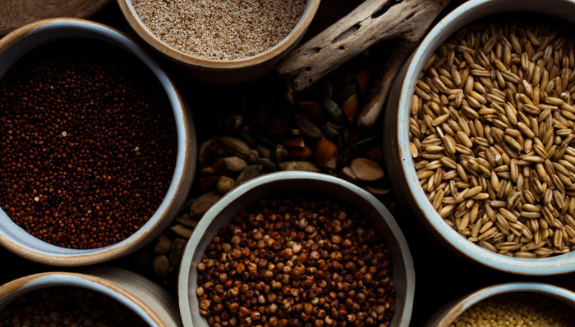
Precious Manomano
Herald Reporter
ZIMBABWE has declared itself food sufficient in all basic staples, ensuring that no citizen will go hungry before the next harvest, although some districts will still require targeted assistance due to localised deficits.
The milestone follows sustained Government efforts under President Mnangagwa’s agricultural production drive, which aims to strengthen national food security while enabling farmers to earn viable incomes and expand their operations.
Findings from the Second Round Crop, Livestock and Fisheries Assessment Report (CLAFA 2) for the 2025/26 summer season showed that most areas, particularly in the northern and western regions, are expected to maintain cereal stocks lasting more than 12 months—an indication of surplus at the national level.
However, the report also highlights disparities across regions, with several districts in the south and east projected to face cereal shortages, with stocks lasting as little as three to four months.
According to the assessment, Beitbridge, Buhera and Chivi will require immediate food assistance, while districts such as Uzumba-Maramba-Pfungwe, Mberengwa and Mutare will require support from October 2026, assuming no additional coping mechanisms are implemented.
The report further notes that most provinces are likely to require food assistance after 10 to 12 months.
In Mashonaland West, all districts are food sufficient for the entire year, except Kariba, which may require assistance after 10 to 12 months.
Mashonaland Central is expected to see Rushinga and Shamva needing support within seven to nine months.
Mashonaland East has a mixed outlook, with Seke, Goromonzi and Mudzi likely to require assistance within 10 to 12 months, while Marondera, Murehwa, Mutoko, Hwedza and Chikomba are projected to remain stable beyond a year.
In Manicaland, Buhera is expected to require assistance within zero to three months, Mutare within four to six months, while Chimanimani and Nyanga may need support after 10 to 12 months. Chipinge, Makoni and Mutasa are expected to remain food sufficient for over a year.
Midlands province also reflects varying conditions, with Mberengwa likely to need assistance within four to six months, Gweru and Zvishavane within seven to nine months, while Kwekwe, Gokwe North and South, Shurugwi and Mvuma are expected to remain stable for more than 12 months.
In Masvingo province, Chivi is projected to require urgent support within three months, while Masvingo, Mwenezi and Bikita may need assistance within seven to nine months. Zaka could face shortages within nine to 12 months, while Chiredzi and Gutu are expected to remain food sufficient for longer periods.
Hwange in Matabeleland North is likely to require assistance within seven to nine months.
In Matabeleland South, Beitbridge faces immediate shortages, while Mangwe and Bulilima may need support within seven to nine months.
Matobo, Gwanda, Umzingwane and Insiza are expected to remain food secure for over a year.
The report indicated that cereal stocks held by farmers from the 2024/25 season currently stand at 136 902 tonnes, with Manicaland holding 24 338 tonnes, Mashonaland East 25 039 tonnes, Midlands 21 916 tonnes, Mashonaland Central 18 941 tonnes, Mashonaland West 18 583 tonnes, Masvingo 19 525 tonnes, Matabeleland North 5 564 tonnes and Matabeleland South 2 996 tonnes.
At the national level, total cereal production for the 2025/26 season is projected at 2 739 712 tonnes, bringing total available cereals to 2 876 614 tonnes when combined with existing stocks.
“Based on this CLAFA 2 assessment, maize production increased by 2percent, from 2.29 million tonnes in 2024/2025 to 2.35 million tonnes in 2025/2026,” read the report.
“However, this overall growth masks significant provincial variations, with some provinces experiencing strong gains while others recorded sharp declines.
“Traditional grains are estimated at 390,272 tonnes, being sorghum, pearl millet, and finger millet: 290,216 tonnes, 87,677tonnes, and 12,379tonnes, respectively. Total cereal production for the 2025/26 season is expected to be 2,739,712 tonnes.
“Cereals in farmers’ stocks from the 2024/25 season have been estimated at 136,902tonnes, which gives total cereals available of 2,876,614tonnes.”
The agricultural sector recorded a five percent growth, with notable increases across several crops. Soyabean production rose by 129 percent from 41 919 tonnes in 2024/2025 to 96 129 tonnes in 2025/26, while cotton output increased by 26 percent to 77 212 tonnes. Tobacco production is estimated at 378 322 tonnes, a seven percent rise from the previous season.
The national cereal balance sheet to March 2027, which includes strategic grain reserves held by the Grain Marketing Board and current production, indicates an expected surplus ranging between 550 945 tonnes and 964 945 tonnes, depending on consumption patterns.
In addition to summer cereals, Zimbabwe continues to make strides in wheat production. The country harvested 562 591 tonnes last year and is targeting over 600 000 tonnes this season, maintaining its wheat self-sufficiency position.
Lands and Agriculture Permanent Secretary Professor Obert Jiri underscored the importance of climate-proofing agriculture through initiatives such as Pfumvudza/Intwasa, dam construction and irrigation development.
“The country is on course to secure adequate grain stocks and the assessment report showed positive outcomes of estimated crop, livestock and fisheries production for this season. Farmers should continue with agro-tailoring of crops. They should grow crops that are suitable for the region,” he said.
Zimbabwe Indigenous Women Farmers Trust president, Mrs Depinah Nkomo, emphasised the importance of collaboration in sustaining food security.
“The collaborative efforts between the Government, farmers, and the private sector are crucial for ensuring food self-sufficiency and securing a brighter agricultural future for Zimbabwe,” she said.
She commended the Government for timely input distribution, noting that the Pfumvudza programme continues to yield improved results and boost farmers’ confidence.
As part of efforts to share its success, Zimbabwe has engaged other African countries on its agricultural model. President Mnangagwa has already held discussions with Senegal on adopting the Pfumvudza/Intwasa concept.