Online Reporter
Rutendo Nyeve, Features Reporter
ZIMBABWE recently joined the rest of the world in commemorating World Wildlife Day with the main event hosted by the Zimbabwe Parks and Wildlife Management Authority (Zimparks) at Zimparks Gardens in Harare.
This year’s commemorations ran under the theme, “Wildlife Conservation Finance: Investing in People and Planet”.
Stakeholders within the wildlife conservation sector described this year’s theme as a reminder of the urgent need for collective action to close the conservation financing gap, fostering co-operation in the conservation business.
According to Zimparks’s wildlife population statistics, Zimbabwe has over 5 930 vascular plant species, over 670 bird species, over 270 mammal species, more than 256 known reptile species, about 120 amphibian species and approximately 151 fish species.
Zimbabwe deservedly prides itself in having the second largest elephant population in the world and fourth largest rhino population in the world.
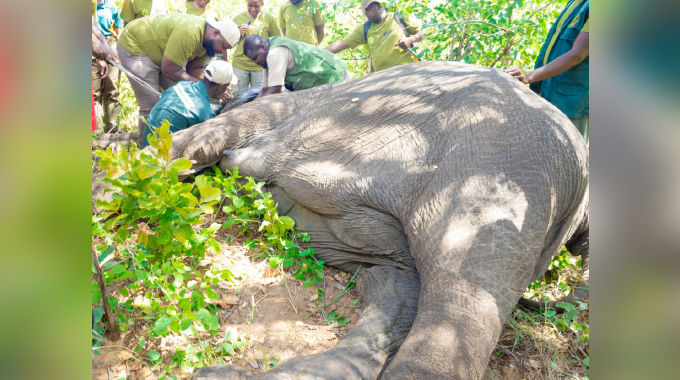
About 28 percent of Zimbabwe’s surface area is under some form of wildlife management while also boasting of the most successful crocodile conservation, crocodile ranching industry and a top exporter in the Southern African Development Community (SADC).
With such rich biodiversity and wildlife populations, the country has prioritised the conservation and protection of these species despite various threats and challenges. These include funding gaps, climate change, and human-wildlife conflicts, among others.
Speaking during the commemorations, Zimparks Director-General, Professor Elton Gandiwa revealed that a huge conservation funding gap exists in biodiversity conservation emphasising that investing in wildlife is a collective responsibility, recognising the whole-of society and whole of Government approach.
“We were in the process of reviewing our National Biodiversity Strategies and Action Plans (NBSAPs) and we have already realised that Zimbabwe needs about US$200 million annually for biodiversity conservation,” said Prof Gandiwa.
He said illegal wildlife trade and trafficking of animals is also a major threat to wildlife conservation and poachers and illegal traders use highly sophisticated techniques to avoid detection.
“To keep pace with these criminals, as wildlife protection and law enforcement communities, we have to adopt modern technologies. Zimbabwe is now using satellite technology and low-cost solar-powered signal extenders in our flagship Protected Areas like Chizarira, Hwange, Gonarezhou, Matusadona, Mana Pools National Parks and throughout the Zambezi Valley.
“Zimbabwe has also adopted and has commenced rolling out the use of specialised softwares like Spatial Monitoring and Reporting Tool (Smart) and Earth Ranger to improve patrol effectiveness of our rangers. We continue to invest in capacity development and training of our staff, particularly rangers who operate at the frontlines of our war against poachers,” said Prof Gandiwa.
He applauded local communities for the role they play as the first line of defence in combating wildlife crime, helping them to remain motivated to improve community livelihoods.
“Our wildlife continues to face many threats, which include habitat loss and fragmentation, illegal trade and poaching hence the need for investment is needed more than ever before,” said Prof Gandiwa.
Regardless of these threats, the collective efforts undertaken by Zimparks, various organisations and the community has, however, seen Zimbabwe maintaining a world class track record in conservation and protection.
“I want to assure you that our wildlife remains well protected both within and outside protected areas and continues to be a significant attraction to tourists for both consumptive and non-consumptive use.
“Zimbabwe has Africa’s big five game that is, lion, elephant, buffalo, leopard and rhino. The precious international endorsement as a prime destination is deserved and it is our collective responsibility to conserve,” said Prof Gandiwa.
Responding to questions from Sunday News, International Fund for Animal Welfare (Ifaw)’s Country Director Mrs Alleta Nyahuye, said climate change is fast emerging as the primary threat facing all aspects of life and the most difficult to address.
She said climate models indicate that the Zimbabwean component of the Kavango-Zambezi Transfrontier Conservation Area will become warmer and receive less rain. Weather events are expected to be more severe, including more concentrated rainfall (leading to flooding), frequent and more prolonged droughts and generally, an environment less conducive to agriculture and pastoralism.
“This leads to declining crop productivity, high livestock and wild animal morbidity and mortality and water scarcity.
“The situation negatively affects the livelihoods of communities that live alongside wildlife-protected areas and may worsen their poverty. Studies indicate that climate change aggravates human-wildlife conflict, which is becoming more complex and intense,” said Mrs Nyahuye.
In response to this pressing challenge, she said Ifaw continues to champion nature-based climate solutions.
“Together with our partners, we help Government authorities and communities understand the risks climate change poses and develop effective conservation management plans that can adapt to climate change in the short and long term. These solutions include restoring ecosystems, managing land sustainably and empowering communities,” said Mrs Nyahuye.
She said human-wildlife conflict has also emerged as a significant conservation challenge and is the symptom of a suite of interrelated issues. With burgeoning human populations and one of the largest concentrations of elephants in Zimbabwe, Hwange District, in particular, has a significant human-wildlife interface that leads to conflict.
“Human population growth rates are estimated to be four to five percent in the Hwange and Binga districts, and the human-elephant conflict situation is likely to worsen over time. To address this challenge, Ifaw, in collaboration with Zimparks, is implementing various interventions, including the promotion of predator-proof mobile bomas.
“This simple yet innovative conservation initiative utilises thick plastic sheeting to help reduce human-lion conflicts.
As a result, livestock predation has significantly decreased. To date, more than 60 predator-proof bomas have been installed in communities surrounding Hwange National Park to mitigate human-wildlife conflict,” said Mrs Nyahuye.
The Ifaw-Zimparks partnership has also established Primary Response Teams – a first line of response against human-wildlife conflict. PRTs are groups of community level incentivised youths that serve as the first line of defence in conflict situations and provide support to families affected by conflict.
Mrs Nyahuye said conservation efforts aimed at safeguarding Zimbabwe’s rich biodiversity come at a cost and without reliable, predictable and innovative financing mechanisms, the country’s wildlife, critical habitats, and the people who rely on them will sadly face consequences that cannot be undone.
As such, she said the Government’s ongoing efforts to prioritise conservation finance through Public-Private Partnerships and climate finance policies such as the carbon credit frameworks are commendable.
“These initiatives have helped protect and enhance wildlife resources, for the benefit of both current and future generations.
“More resources are, however, required given the emerging threats to biodiversity, and it is important for the country to continue exploring diversified, innovative funding mechanisms that are economically viable and environmentally friendly,” said Mrs Nyahuye. — @nyeve