Chronicle Editor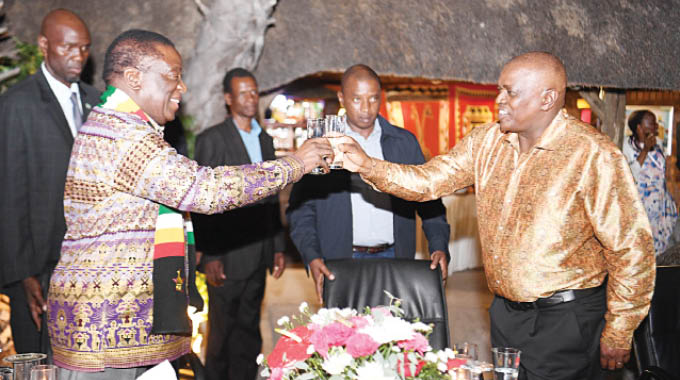
Prosper Ndlovu recently in Maun, Botswana
ZIMBABWE and Botswana have vowed to keep piling pressure in their quest to have the two countries and the region at large enjoy exclusive rights to trade in wildlife products.
The two countries have resolved to scale up collaborative efforts in addition to setting aside substantial portions of their countries for wildlife conservation.
This collaboration is expected to facilitate the contribution of the wildlife estate towards sustainable economic and ecological benefits for the local communities.
Such a model is envisaged to benefit Africa as a whole.
Speaking during the just ended Botswana-Zimbabwe Bi-National Commission (BNC), leaders from the two countries said environmental conservation efforts, including wildlife, would not be fully realised given the restrictive conditions governing global trade in wildlife related products.
President Mnangagwa said wildlife resource rich countries like Zimbabwe and Botswana must be allowed to trade and realise benefits of their conservation efforts.
He commended Botswana and regional sister countries on the preservation and defence of the wildlife economy, whose full dividend has not been realised because of restrictions in wildlife trade.
“Let those who co-exist and help in the preservation of our wildlife enjoy benefits accruing from the effective wildlife management strategies they have adopted. We reiterated our common position of this very sensitive and emotive matter to have exclusive rights to trade in our wildlife products.”
His Botswana counterpart, Dr Mokgweetsi Masisi, weighed in saying the regional leadership was on the right direction in terms of environmental conservation and that such efforts need to be supported by enabling wildlife trade rules and regulations.
Last year in May, Botswana hosted the historic Elephant Summit in the Kasane area, which was followed by the Africa Wildlife Economy Summit in Victoria Falls, Zimbabwe, in June 2019.
“These will indeed go a long way in improving regional advancement for the Kavango Zambezi Transfrontier Conservation area (Kaza). It will also contribute significantly towards sustainable economic and ecological benefit for local communities and Africa as a whole,” said President Masisi.
Several Sadc countries have voiced their concern over the restrictive Convention of Trade in Endangered Species’ (CITES) provisions concerning live elephant and rhino trade, ivory and rhino horn trade bans and the contentious listing of the unthreatened giraffe population.
Speaking on the same issue, Foreign Affairs and International Trade Minister, Dr Sibusiso Moyo, said CITES “has done more harm than good” in terms of assisting developing nations on the conservation front.
“In 2019 that fraternal spirit was demonstrated as our two countries joined hands towards a common position at the CITES Cop 18 meeting where our two countries once again called for the review of the 1989 CITES ban on global ivory trade, which has done more harm than good to our elephant conservation efforts,” he said.



 Online Reporter