Online Reporter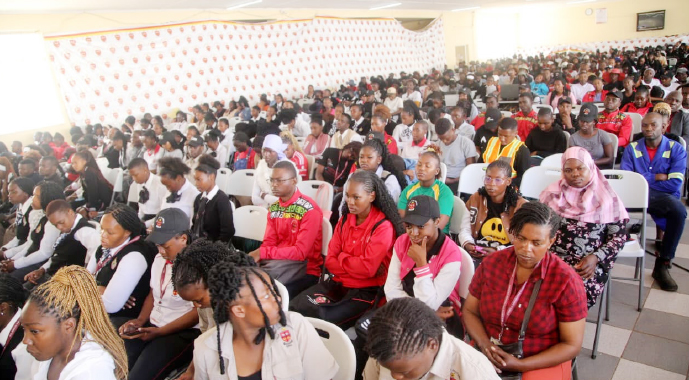
Nqobile Bhebhe, Zimpapers Business Hub
Zimbabwe has the potential to manufacture goods for a regional market of more than 1,4 billion people, leveraging its vast iron and steel resources and growing industrial capacity, Industry and Commerce Minister Nqobizitha Mangaliso Ndlovu has said.
Speaking at a public lecture at Bulawayo Polytechnic on harnessing students’ potential for sustainable industrialisation and Vision 2030, Minister Ndlovu said Zimbabwe should align its productive capacity with manufacturing opportunities presented by regional and continental markets.
He said the country’s strategic location, mineral resources and participation in regional markets provided a significant platform for expanding domestic manufacturing and building competitive value chains.
“Whether you are in the textile sector, in iron and steel, just know that the biggest opportunity you have is to align what you do with the manufacturing services.
“Others can come and support, but this country has potential to manufacture for 400 million people in the SADC region, for more than 700 million people in COMESA, not to mention the African Continental Free Trade Area of 1.4 billion people,” said Minister Ndlovu.
He said Zimbabwe should take advantage of its natural resources to move beyond exporting primary commodities and develop industries capable of supplying finished and intermediate products to domestic, regional and continental markets.
“The commencement of production at Dinson Iron and Steel Company at Manhize represents a major step in rebuilding Zimbabwe’s heavy industrial base.
“Steel is a foundational industrial input, and its availability creates opportunities in engineering, fabrication, construction materials, mining equipment, agricultural implements, machinery and automotive components.
“Our objective must therefore be to ensure that the steel produced in Zimbabwe stimulates downstream manufacturing rather than simply leaving the country as a primary product.”
The emergence of Dinson Iron and Steel Company (Disco) at Manhize has been positioned as an important catalyst for the revival of Zimbabwe’s heavy industrial base, with the project expected to create opportunities beyond steel production itself.

The Government sees the development of downstream industries around major investments such as Disco as critical to retaining more value within the local economy, creating opportunities for local suppliers and expanding the manufacturing ecosystem.
This includes engineering, fabrication, mining equipment, construction materials and other industries that rely heavily on steel as a key input.
Minister Ndlovu said the automotive industry also presented an opportunity to rebuild an ecosystem that had been severely weakened during the years of economic challenges.
“The motor industry similarly presents an opportunity to rebuild an ecosystem that was severely weakened during the years of economic crisis,” he said.
“The future of automotive manufacturing must go beyond assembly. We need local businesses producing components, batteries, wiring systems, seats, glass, plastics, metal components and other parts, together with diagnostic, repair, maintenance and other specialised services.
“This is an area where our engineering and technical institutions can play a major role.”
He said the Government’s Spatial Development Initiatives, industrial parks and Special Economic Zones were important platforms for spreading industrialisation across the country.
“This is also why our Spatial Development Initiatives, industrial parks and Special Economic Zones are important. Industrialisation cannot be concentrated in only a few cities.
“Where we have agricultural production, mining activity or other economic resources, we should increasingly build processing, manufacturing and service businesses around them.
“These platforms can provide infrastructure and common facilities that enable young businesses to move from an idea or small workshop into commercial production.”
Minister Ndlovu said local enterprise development was equally critical, particularly in ensuring that micro, small and medium enterprises became integrated into industrial value chains.
“Our local enterprise development initiatives are equally important. We want to see MSMEs becoming genuine participants in industrial value chains rather than operating permanently on the margins of the economy.
“Where large investments are taking place, we must identify the opportunities for local suppliers, build their capabilities and ensure that a greater share of the expenditure associated with those investments is retained within Zimbabwe.”
The minister said Zimbabwe’s manufacturing sector had recorded a significant recovery in capacity utilisation following years of economic difficulties.
“Manufacturing capacity utilisation, which had fallen to extremely low levels during the crisis, has recovered significantly.
“Capacity utilisation rose from approximately 36 percent in 2019 to above 56 percent in 2021 and 2022. Currently, the capacity utilisation is around 61.2 percent as a result of new investments and production projects that came on stream.”
He said the broader economy had also returned to growth, although the recovery had not been uniform.
“The broader economy has also returned to growth, although the recovery has not been linear. Following strong growth in 2021, 2022 and 2023, the economy was affected by drought and other pressures in 2024.
“It subsequently rebounded strongly, with the economy recording growth of approximately 8.3 percent in 2025. Manufacturing accounted for 10.9 percent of GDP in 2019 but has been increasing, reaching 17.1 percent in the first quarter of 2026, demonstrating that industry remains at the centre of our economic transformation.
“Manufactured exports reached approximately US$584 million in 2025, up from around US$300 million in 2019.”
Minister Ndlovu said the growth in manufacturing and exports was reflected in increased productive activity, market access and investment.
“These figures are not abstract. They mean more active factories, companies reaching markets beyond Zimbabwe, additional employment pathways and productive investment responding to opportunity.”
He said the country’s priority should now be to consolidate the gains made in industrial recovery by strengthening domestic supply chains and widening participation in manufacturing.
“The larger message is that momentum already exists. Our responsibility is to strengthen it, deepen local supply chains and ensure that industrial growth creates opportunities for more firms, more communities and more young people.”
The minister’s remarks come as the Government intensifies efforts to transform Zimbabwe from a predominantly resource-based economy into one that derives greater value from its minerals, agricultural output and other natural resources through processing and manufacturing.
With Manhize emerging as a major source of steel, the emphasis is increasingly shifting towards building downstream industries capable of consuming locally produced steel and supplying products to the domestic market, SADC, COMESA and the wider AfCFTA market.
ends