Chronicle Editor
Nathan Muchemwa
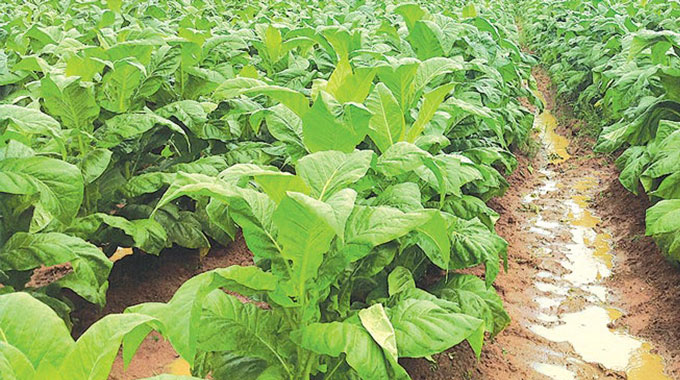
ZIMBABWE may become one of the biggest producers or exporters of cannabis sativa in Southern African as it is already one of the biggest producers of tobacco in the region.
A successful value chain will make industrial hemp production viable, but also the good policies and regulations being put in place to allow for the production, bring hope to the agricultural economic growth in the country.
The Government legalised the production of cannabis for medicinal or scientific purposes in which the Dangerous Drugs (Production of Cannabis for Medicinal and Scientific Use Regulations) 2018 came into effect in May 2018. In terms of these 2018 regulations, persons interested in the production of the cannabis plant must apply for the producer’s license which would only be valid for five years and may be renewed before its expiry.
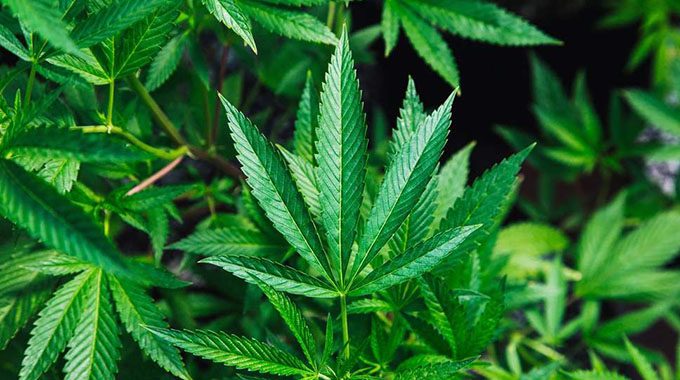
It is noteworthy that the 2018 regulations allow for the production of cannabis, which is defined to include fresh or dried cannabis, cannabis oil, cannabis plants or cannabis seeds. The cannabis plant also includes the whole or any portion, whether green or dry, of any plant of the genus cannabis.
Furthermore, in September 2020 a new law being Statutory Instrument 218 of 2020, (SI218/20) saw the Agricultural Marketing Authority gazette the regulations. These regulations were put in place to regulate and provide a conducive environment in the production, procurement, distribution possession, sale, provision, transportation of industrial hemp.
Agronomist Mr Shepherd Mukange gave a detailed explanation on how the regulations work and what it would where production of cannabis is concerned.
“In my own view, this limits the producer to only produce a cannabis plant with a delta-9 tetrahydrocannabinol concentration of not more than 0.3, whereas the 2018 Regulations allow for the production of cannabis as defined above, though it is only meant for medicinal and scientific use.
“Section 2 of the Regulations define ‘industrial hemp’ as ‘the plant cannabis sativa and any part of the plant including the seeds thereof and all derivatives, extracts, cannabinoids, isomer, acids, salts and salts of isomers, whether growing or not with a delta-9 tetrahydrocannabinol concentration of not more than 0.3 on a dry weight basis,” said Mr Mukange.
Demand for cannabis is projected to grow worldwide while tobacco output is expected to decline 15 percent by 2030.
Former Minister of Finance Patrick Chinamasa undertook a tour of a US$9 Million cannabis investment in the Mt Hampden area. The project is owned by Swiss Bioceuticals Private Limited; the brainchild of Nigel Drummond and his local partners, which was commissioned by President Emmerson Mnangagwa in May last year.
The project which started in May 2020 is operating on 5 hectares but the promoters of the project have plans to expand the project to cover 36 hectares if and when the viability of the project is established.
The investment is to grow cannabis for medicinal purposes and the plant variety being grown is for medicinal purposes only.
The cannabis is grown under greenhouse conditions and has a growing cycle of three months. It is processed on site through extraction of cannabinoids which are produced in the form of oil and exported to pharmaceutical companies in the United Kingdom and Europe. The US$9 Million investment went primarily towards putting up the security fencing, greenhouses and the fertigation section. The sector has the potential to lure new investment which has great potential to grow the economy provided that Zimbabwe maintains the global security requirements that govern this industry.
One of the advantages is that it is going to create thousands of jobs in the farming areas, just like what tobacco has done for decades. Hemp has many advantages for its medicinal interests at the moment.
However, there are other composites that can be available that it can be used such as textiles, pulp and paper. It’s a nitrogen supplement to the soil, it eliminates weeds. It has so many advantages to smallholder farmers and of course the value chains, which stretches to hundreds of thousands of dollars of opportunities.
“The global cannabis industry is expected to be a US$46 billion business worldwide in three years, up from US$16,47 billion this year,” said a source from the Zimbabwe Investment Development Agency (ZIDA).
The cannabis industry is growing fast and it is going to be a game-changer for this country. Zimbabwe has gone a little step further to show that it is willing to work with its partners and investors by coming up with an investor agreement which further protects the farmer against anything like expropriation and change or changes in law.
Due to the new cannabis regulations, Zimbabwe has attracted investors from the U.S, Britain, Germany, Switzerland and other countries. That might be a needed shot in the arm for Zimbabwe’s economy.
Zimbabwe exported 30 tons of industrial hemp to Switzerland in 2022, its first foray into the European market. As of now, the Government has licensed 57 foreign and local entities to grow medicinal cannabis in the country according to a recent statement by ZIDA. As a result, production has already begun at some of the licensed farms which are spread across the country.
Cannabis, also called mbanje in Zimbabwe, is not an unknown word to people today. It has many health benefits like fighting cancer, and 22 countries around the world legalised it for medicinal use. South Africa, Malawi, Zambia, and Lesotho have also legalised medicinal cannabis.
A booming hemp industry in Zimbabwe wouldn’t just help individuals that work directly in the industry. It would also help create ancillary hemp companies, from security to storage to just about anything else that the mind can imagine. The domestic hemp industry bringing in money from afar via exports would help boost local economies, with hemp industry workers spending their wages in the areas in which they live.
Everyone would benefit from an economic butterfly effect from such activity, in addition to the public benefitting directly from increased industry tax and fee revenue.
Cultivating tobacco results in degraded soil and threatened biodiversity. Tobacco farming on a large scale often involves pesticides and fertilizers that are bad for the environment. Conversely, the hemp plant requires very little inputs and actually improves the soil in which it is cultivated via a process known as soil remediation.
Furthermore, roughly 4,5 trillion cigarette butts end up in oceans, rivers, soil, and other places every year, and presumably that will not be the case with hemp products. With all of that in mind, any hectare in Zimbabwe that transitions from tobacco to hemp is a great thing.



 Online Reporter